Transforming Lives Through Fitness, Health and Wellness: Why Sapphire is Thrilled to Once Again Back Tonal

We’re excited to announce today that Sapphire Sport and Sapphire Ventures have teamed up to back Tonal in their Series E financing.

At Sapphire, we believe a defining trait of many successful businesses is having a founder with a powerful personal connection to what they’re building and a genuine desire to improve people’s lives. Aly Orady, founder and CEO of Tonal1 is one such leader. He’s a passionate Silicon Valley veteran, engineer and entrepreneur on a mission to make personalized strength training accessible to all.

Let’s put this into context: Picture the most advanced gym and personal training system that all fit into a compact home space. Tonal2 makes this happen by providing a unique blend of equipment, technology and AI-powered guidance so that anyone, anywhere, can effectively reach their fitness goals. With truly evangelical zeal, Aly has turned a unique idea into what’s become the heart and soul of his organization–and into thousands of customers’ lives too. 

We were so impressed with Aly and his vision for Tonal that back in 2018, Doug Higgins and the Sapphire Sport team invested in the startup’s Series B when the company was still pre-revenue. In 2019, Sapphire reaffirmed its commitment to Tonal by participating in its $45 million Series C, and once again in 20203 by participating in the company’s $110 million Series D. 

Today, we couldn’t be more excited to back Tonal a fourth time. This time the Sapphire Ventures team, Sapphire’s investment team dedicated to primarily investing in growth stage technology companies, is participating in the company’s $250 million Series E. What’s more is that with this latest round, Tonal surpasses unicorn status with a valuation of $1.6 billion.4

The art of early-stage trend spotting

At Sapphire, we seek big markets being disrupted by innovative technologies. So in 2018 we created Sapphire Sport to apply our vast expertise to early-stage consumer technology startups. Tonal was one of Sapphire Sport’s first investments, and what made Tonal attractive at the time was the excitement around the democratization of digital health, driven by companies like Fitbit and Livongo, both Sapphire portfolio companies that later went public. Particularly compelling was how Tonal was putting personalization and technology into people’s hands to improve their lives.

We also loved the personal story behind Tonal, and how it was inspired by Aly Orady’s own health journey of navigating through injury and recovery. We were deeply moved by how he innovatively applied his freshly gained fitness knowledge and 20 years of deep technology expertise to lose 70 pounds while in the process of creating what is now Tonal.

For Sapphire, Tonal has become a prime example for supporting a company of consequence from its early stages into its later and more advanced stages of growth. Since Sapphire Sport’s initial Series B investment, Tonal has sprinted from pre-revenue to become a large-scale growth-stage business. Consistently, Aly’s passion and dedication in creating a great company have been matched only by his passion for his customers.

Tonal continues to blaze a path for intelligent fitness, while further establishing itself as a clear leader in the connected strength training category. Its expansion has been accelerated by huge demand for at-home fitness equipment during the pandemic with gym closures or restrictions. This resulted in Tonal’s sales surging 800%5 from December 2019 to December 2020, coupled with the highest engagement and retention rates in the industry.

In fact, Aly’s future vision of connected fitness has materialized faster than anyone could have anticipated. It’s becoming a persistent trend with products once considered too expensive, now viewed as long-term health investments. Backing this is Tonal’s thriving community of tens of thousands of paying subscribers including notable celebrities, olympians and athletes.

Powering up to reach growth potential 

Since Sapphire Sport’s initial investment, we’ve connected Tonal to notable brands, sports names and investors. Once Tonal began to achieve greater scale, it was only natural for Paul Levine and the Sapphire Ventures team to come on board as partners and participate in Tonal’s Series E–a real milestone in the company’s history.

For Tonal, the Sapphire Ventures team brings the right kind of expertise to continue supporting Tonal on its hyper-growth journey and reaching its full potential. We’re excited to help Tonal continue to build out their leadership team and ramp up investment across the whole organization. We’ll also help them work out how to scale up new product innovations, partnerships and marketing in order to sustain and grow the consumer base.  

Looking ahead, we feel the future is bright for Tonal. Just as Netflix allows people to watch movies and video content without leaving home, Tonal brings all the benefits of a gym into the home. And Netflix didn’t kill the movie theater, it just gave people more options. The same goes for Tonal. It won’t kill gyms, it just fits a new lifestyle and set of consumer preferences that have been accelerated by the pandemic. We’re looking forward to helping Tonal capitalize on this massive shift taking place in fitness.

1www.tonal.com/about
2www.tonal.com
3www.crunchbase.com
4www.cnbc.com
5techcrunch.com

 

Best Practices for Planning an Exit Strategy from the CFOs of JFrog and Segment

When Jacob Shulman joined JFrog as CFO in May of 2018, the topic of going public wasn’t front and center. The company was growing fast and the right infrastructure was being put in place to manage growth at scale. Jacob’s appointment was primarily to ensure JFrog remained on the right track as it grew, for whatever the capital markets had in store for the company.

Two and a half years later, the company went public on Wednesday, September 16th, 2020, raising $509 million with an IPO that exceeded expectations for the developer of software tools. All this during a pandemic at that.

Sandra Smith’s appointment as CFO at Segment, however, came with very different expectations. The conversation during her hiring process was focused on readying the business for exit, and her core objectives were to implement the best practice processes and systems of a scalable and predictable SaaS business.

Just like Jacob with JFrog, Sandra is fresh from helping navigate Segment through its noteworthy recent exit: an acquisition by Twilio for approximately $3.2 billion. 

But what is the secret behind delivering a successful exit strategy?

We were fortunate enough to be joined by Jacob and Sandra in a webinar last month, which was moderated by Rob Krolik, General Partner at Burst Capital and former Yelp CFO (during its IPO), Finance Fellow at Aspen Institute and longtime CFO champion.

It was an incredible conversation, which I had the privilege of introducing, packed with insightful tips and experiences as the group shared their respective journeys and fielded questions from an engaged audience of private company CFOs and other C-Suite leaders. 

To recap, three key themes emerged, which I’d like to share here. And below this article, you’ll find a link to access the webinar itself on-demand.

1. Build a company of consequence

A long-term mantra of our Sapphire Ventures ethos ran through the first half of the webinar as our guests explained that whatever your eventual exit strategy looks like, it has to begin with a predictable business model, atop a solid foundation of a viable business providing a unique solution to the market.

“The board and investors were committed to scaling and growth so it was really upon me to come in and deliver the rigour and discipline to do that,” said Sandra. “We had to build a sustainable company and that began with inspecting our performance and introducing the tools and metrics to continually improve our outcomes.”

Jacob shared in Sandra’s experience, adding, “The IPO is really just a milestone and a result of doing things right, eliminating risk and putting the right things in place to grow.”

In other words, build a “company of consequence” and the successful exit will follow; it is a derivative not a primary goal in itself.

2. Think long term with your planning

When Sandra took the realm at Segment, one of the company’s focus areas for improvement was its ability to move thinking beyond the next quarter or the next half and into a much longer term view.

“When I joined Segment the business was growing well, but there really wasn’t any formal FP&A or forecasting,” explains Sandra. “Forward visibility was incredibly limited and so my primary objective was to build the discipline and the muscle within the business to go beyond planning for the next few quarters.”

This included shifting the metrics that the business was focused on to be more in line with where it wanted to be in 12 or 18 months, rather than short term objectives. This shift in approach proved essential in helping the business grow in a more sustainable way.

“JFrog was focused heavily on revenues when I joined. We hired a lot of revenue generating roles and enhanced all our revenue processes,” explains Jacob. “But, as we continued to grow and head towards IPO, we took a step back to explore more of the pre-requisites to make us a viable proposition and began engaging with investors, banks and tax experts.”

3. Build a network of investors and bankers

Ahead of any exit strategy, you need to understand the appetite and the viability of your value proposition, as well as glean any information you can from those who understand your sector, either as investors or gatekeepers to investors. 

“At JFrog, we are category creators and so there really was nobody like us to compare us to,” explains Jacob. “There was a lot of education to do with investors and bankers as to our market proposition and so we had to build in that time to do the education and build a network.”

At Segment, which was already on a path towards an exit strategy, Sandra’s focus was working with the board, sharing insights and looking for more investors to help the company grow.

“All of the conversations were well underway when i joined, but we spent time fostering these relationships and doing the necessary groundwork to ensure that when the time came we were ready,” explains Sandra. “We worked with investors, the board and other independent advisors to build pitch decks and everything else we needed and stress tested our plans all the time.”

Watch the webinar in full

Whether you’re planning for an M&A exit, investigating the potential of going public or are just eager to explore this topic further, this webinar is packed full of learnings and practical advice from experts who have been there and done it. To hear what else they had to say and all of the advice they had to give on how to plan an exit strategy, make sure to watch the webinar here!


‘Data Driven’ Starts with Data: Why We’re Excited to Back SafeGraph, a Leading DaaS Company for Places

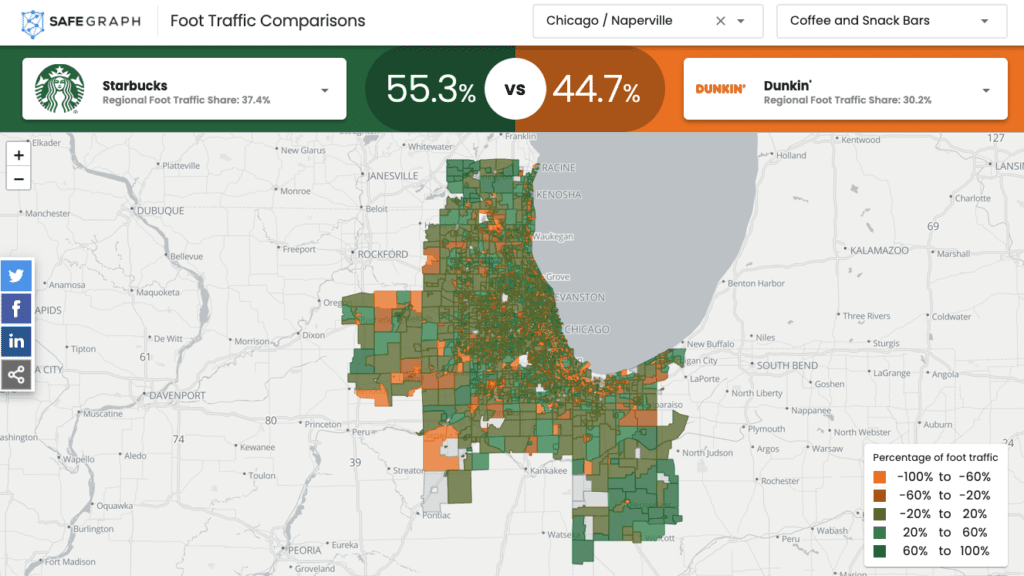
How would you describe your local Starbucks? A typical coffee drinker may say it’s on the intersection of x and y streets, across from the Walgreens and is open from 7am to 6pm on weekdays. But if you’re an urban planner, commercial insurance provider or rival coffee shop owner, it might also be important to know the exact perimeters of the building, where the closest parking lot is, foot traffic patterns around this particular Starbucks and the hundreds of other attributes that can be tied to a physical place

Today’s businesses are increasingly leveraging data, including data about physical places, to glean insights to better understand customers and improve decision making. But the process of collecting, verifying and cleansing large data sets is not only time consuming and expensive, but also prone to errors. It has been estimated that 80% of the time spent on data projects goes to cleaning the data, and of course, as the adage goes, “garbage in, garbage out” applies to data projects. 

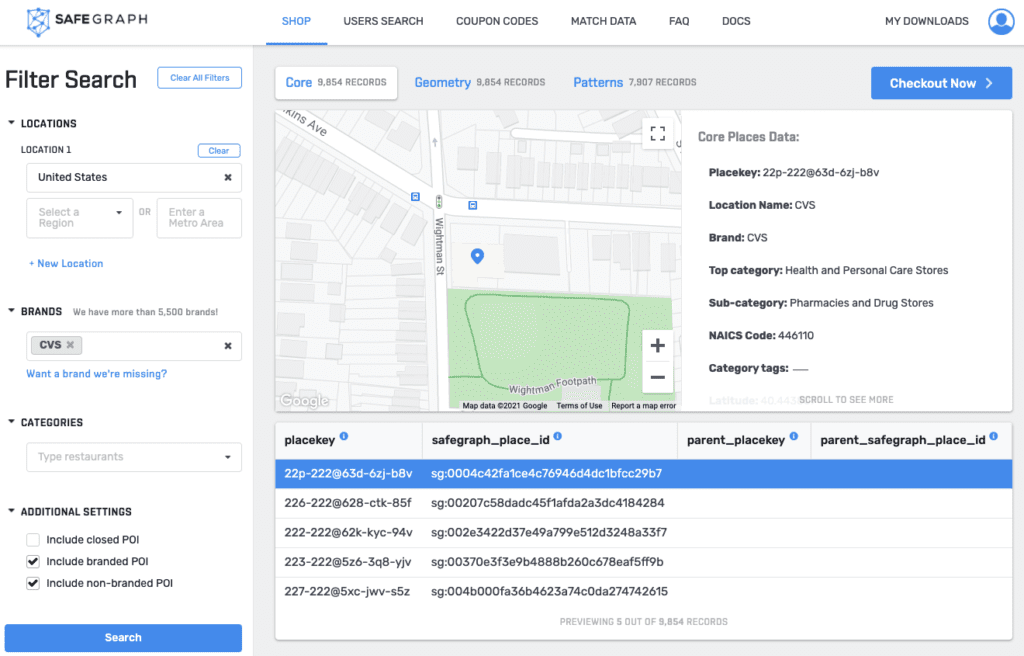
Enter SafeGraph, a pure-play data-as-a-service (“DaaS”) company focused on providing the most accurate information about physical places to data scientists. SafeGraph provides valuable data on over eight million physical places in the U.S. and Canada, and across three broad categories: point-of-interest (POI), spatial hierarchy and foot traffic data. Today, SafeGraph supports global enterprises across multiple industries and customers including Amazon, ESRI, Pepsi, Starbucks, Verizon and United Health. 

That’s why we are excited to back SafeGraph and lead the company’s $45M Series B, supporting the team’s mission to democratize access to clean, accurate and comprehensive geospatial data on physical places

Growing demand for data on physical places

Today, geospatial data is extensively used in applications across agriculture, construction, transportation, utilities, retail and public health. COVID has highlighted the importance and value of accurate places data, which is why since the onset of the pandemic, SafeGraph has provided free data to government organizations, non-profits, academic research institutions and researchers. The CDC, for example, uses SafeGraph data daily to analyze movement of communities most at risk for virus transmission, capacity limits for healthcare sites across the U.S., foot traffic to businesses and the efficacy of social distancing measures.

We expect both the supply and demand for location data to increase. Vast amounts of spatial and non-spatial data are being created and integrated through mobile phones, wearables, IoT, robots and drones. In addition, advancements in 5G technologies and the deployment of 5G networks is also expected to increase the supply of highly accurate and precise geospatial data. 

In the past, location data was primarily used by the advertising industry, which has had lower thresholds for accuracy. SafeGraph’s ability to deliver industry leading accuracy has and will continue to unlock new use cases. At the same time, data science as a function is growing rapidly as companies seek to unlock value from their proprietary first-party data and augment with quality third-party data. In 2020, 67% of companies expanded their data science teams and the demand for data scientists increased by an average of 50% across major industries. 

At Sapphire, we evaluated hundreds of businesses over the past decade that enable companies to use first-party data more effectively. More recently, companies in this space have seen rapid growth across categories, including data infrastructure (data warehouse and data lake) companies like Snowflake, Cloudera, Databricks and Dremio**, middleware companies like LiveRamp, consumption layer (BI, data science and analyst) companies like Alteryx*, Looker*, Tableau and Thoughtspot**, data operations tools like Matillion** and Alation** and log management solutions like Sumo Logic* and Splunk. The confluence of market needs and the simultaneous existence and growth of all these tools will propel the need for high quality raw data. 

Leadership and differentiation in the DaaS space

Increasing quantities and sources of data directly benefit SafeGraph as more geospatial data means broader use cases and better insights for its customers. But due to the sheer quantity of attributes across multiple hierarchies that make up a place, it’s very challenging to tie geospatial data together. Location data is also constantly changing, which has been especially evident during the pandemic as businesses shut down–some temporarily and others permanently. SafeGraph is able to alleviate this problem by maintaining a database of highly accurate location data and offering it in a way that’s easily digestible for data science teams. 

Despite having SaaS-like metrics, SafeGraph is not a SaaS company. Instead, it’s a DaaS business that doesn’t sell applications, only data. SafeGraph’s competitive advantage is that it automatically collects and cleanses large quantities of data through advanced in-house machine learning capabilities that yield high veracity data. The platform continues to improve as remediated errors are fed back into the system to make it smarter. For these reasons, SafeGraph operates a low-cost model with great gross margins and impressive agility–particularly in adding and updating information more frequently than other data providers that rely on human verification.

* Sapphire portfolio companies that have exited

** Current Sapphire portfolio companies

Building an industry standard for places data 

SafeGraph is taking the additional step to democratize data access by creating a new industry standard. A common challenge with places data is the lack of standardization when referring to a place. Customers that purchase from multiple vendors have to match different datasets together by name, address, geocode or data-provider IDs. The more data is generated and the more fragmented the data provider market is, the more painful this process becomes.

That’s why SafeGraph introduced PlaceKey, a free open source universal standard identifier for any physical place so that any data tied to those places can be easily shared across organizations–just like Dun & Bradstreet’s DUNS number or LiveRamp’s unique ID for people. 

Placekey was made available to the public in October 2020, and has already seen tremendous interest and traction with over 1,000 companies signed up already, including big data companies like Neustar and ESRI. We believe that PlaceKey will significantly advance the movement towards open data that will benefit everyone using place data.

An iconic leader and company builder 

SafeGraph founder and CEO Auren Hoffman is a seasoned entrepreneur with over 15 years of experience in the data space. Prior to starting SafeGraph in 2016, Auren built and sold five companies, including LiveRamp, which was acquired by Acxiom in 2014. Today, LiveRamp is the biggest middleware business for customer data for the marketing ecosystem. It’s also a public company (NYSE:RAMP) with $400M+ in revenue and a $5B market cap. In addition, Auren has been an active angel investor in over 120 companies, many of which are in the data space.

We believe Auren is one of those rare leaders who has the elusive triple threat we often look for: experience, vision and execution. Auren is on a mission to build a Company of Consequence at the intersection of data and place, and we at Sapphire could not be more thrilled to partner along SafeGraph’s journey. 


Fueling the Microservices Revolution with Enterprise-Ready Service Mesh: Why We’re Excited to Partner with Tetrate

We’re excited to share that Sapphire Ventures is leading Tetrate’s $40 million Series B funding round. What Tetrate does is complex, but essential. The company helps power the cloud-native container based applications that we use daily. While these applications are easy to use, bringing them to life requires a lot of work in the background, including frequent code updates, security, data and more.

To build these next-generation applications, developers are increasingly turning away from monolithic architectures and towards microservices, which are individualized components that take care of specific functions and run on containers. To illustrate what that means, it’s like moving to an assembly line method of writing and deploying software code, rather than having developers work on one big mass of spaghetti code. Thanks to the rise of microservices running on containers, developers are able to build more scalable applications and release them faster.

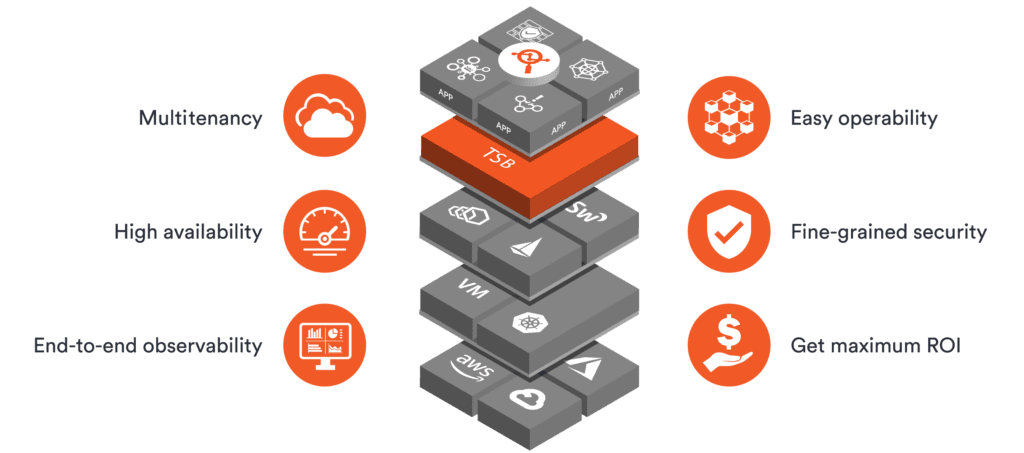
As microservices grow in popularity, there’s a new demand for service mesh technologies that help route traffic between microservices, add visibility and enhance security. Istio, an open source service mesh first developed by the founders of Tetrate and the team at Google, has emerged as the winner in this space, and Tetrate is scaling the platform by making it enterprise-ready. 

Tetrate’s central management platform handles multi-site deployments across public and private cloud, and comes with enterprise-level features around security and reliability. What’s more is that the team behind Tetrate has already earned developer trust with its deep and longstanding commitment to open source, making it a technology today’s software architects are hungry for.

Here’s more on why we’re so excited about Tetrate:

A fundamental shift toward microservices

As mentioned, developers have been moving away from building applications using monolithic architecture and toward a cloud-native ecosystem based on container deployments. In fact, Gartner estimates that more than 85% of global organizations will be running containerized applications by 2025, compared to fewer than 35% in 2019. Containers allow companies to split applications into decentralized microservices, enabling developers to work on multiple functions simultaneously, isolate errors or bugs and release incremental updates. 

The rise of microservice-based software architecture has created the need for tools that allow for visibility and management into this complex infrastructure, particularly among enterprises. Similar to an API gateway, but designed for microservices, a service mesh is a framework that adds a layer of traffic management, observability and security. According to 451 Research, nearly 90% of organizations have adopted service mesh technology or are considering doing so. 

Bringing Istio to the enterprise

For developers, the open source tool of choice for service mesh offerings is Istio, which is exactly what Tetrate is built on top of. According to StackRox’s “The State of Container and Kubernetes Security” report from Winter 2020, a majority of IT professionals say they are using or looking into Istio. The tool’s performance on Github, where it has earned more than 26,000 stars, is another sign of its popularity and rapid adoption.

Launched in 2018, Tetrate builds on the success of Istio by making the tool more manageable and reliable for enterprise users. Although Istio can run in different environments, it was built as an open source product to support Kubernetes and can be challenging to scale. Tetrate offers a service mesh that takes Istio to the cloud and multi-clusters, expanding it beyond Kubernetes. 

In addition, Tetrate takes over the application network management so that internal teams can focus on their core application and business logic. It also offers features designed for enterprises, including login management, security enforcement, routing, autoscaling, load-balancing and analytics. Enterprises that aren’t cloud-native can use Tetrate to leverage Istio as part of their technology stack, connecting applications that are running on on-prem data centers to their cloud-native applications. As Istio takes off amid the microservices revolution, Tetrate is poised to bring this tool to the mainstream enterprise.

A trusted team committed to open source 

We believe that no team is better suited to lead Tetrate as it expands the usability of Istio. Tetrate co-founder Varun Talwar was the co-creator and founding product manager of Istio at Google, while his co-founder Jeyappragash “JJ” Jeyakeerthi lead the Cloud Infrastructure Management platform for Twitter. Tetrate’s leaders have demonstrated a deep commitment to open-source and they have recruited an impressive team of technical contributors with expertise in the Istio ecosystem and related open-source projects. In addition, the company’s advisory board includes Matt Klein, founder of Envoy, an open-source edge and service proxy often used hand-in-hand with Istio. 

Left to right: Co-founders CEO Varun Talwar and Jeyappragash “JJ” Jeyakeerthi

This latest round of funding will enable the Tetrate to ramp up its sales and marketing teams. The company will also invest in building out proprietary and enterprise-focused features that will help take the startup to the next level.    

We’re thrilled to have Tetrate join Sapphire’s list of portfolio of companies that specialize in API-first platforms including recent investments such as Kong, Contentful and PubNub, and exits such as Auth0, Segment and MuleSoft. We’re also excited to continue our longstanding support of open-source companies such as Red Hat (now part of IBM) and MySQL (now part of Oracle), and recent Sapphire IPO JFrog and current portfolio company InfluxData.


Bringing Governance and Security to Democratized Data: Why We’re Partnering with Privacera

The volume of data that companies collect and analyze is ballooning–a trend with no end in sight. The more data that companies manage, the more they can analyze it to better inform business decisions and deliver personalized product value to their end customers. Along with this data tsunami, companies are being pressured to not only use this data optimally, but to also comply with a growing number of privacy regulations that govern the usage of this data. 

That’s why we’re excited to partner with Privacera and participate in their $50 million Series B financing. The company’s data governance platform helps enterprises provide data access to those users that need it while ensuring access is consistent and secure across all cloud and on-premise platforms. Founded by the creators of Apache Ranger, Privacera extends the open-source project into the modern cloud ecosystem for enterprises.

Here’s more on why we’re excited to back Privacera:

Enabling secure data access for all employees and teams

The amount of data being created globally is exploding with the volume expected to grow from 45 zettabytes in 2019 to 175 zettabytes by 2025. Increasingly, this takes the form of unstructured data stored across multiple platforms in the cloud, as well as in legacy on-premise systems. With so much data available for companies to leverage and analyze, companies are racing to figure out how to make the most of it. 

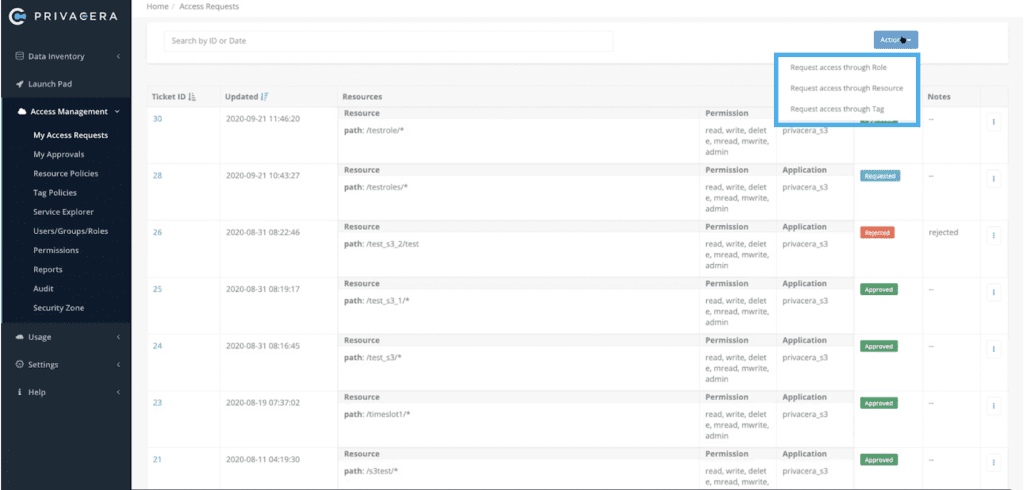
To efficiently and safely use all this data, enterprises must find a way to manage the access to this data in a secure and compliant way. Previously, access was rigidly controlled through centralized IT teams that fielded queries from across an organization. Now, many companies are giving employees direct access to huge caches of data, enabling them to work faster and be agile while also saving IT resources. While democratizing data access makes it more usable, it also creates challenges around governance, security and compliance.That’s why enterprises have started turning to platforms like Privacera, which enable them to centralize data access control regardless of where it lives. With Privacera, IT operations and analytic teams have the data visibility and accessibility they need, while being able to easily manage privacy and compliance controls. 

Data management and security have always been a priority for companies, but ensuring data compliance and security has become an even greater area of focus in the context of recent regulations such as the California Consumer Privacy Act (CCPA) and GDPR, as well as the vulnerabilities that come with having a fully remote workforce amid the pandemic. According to Gartner’s 5th annual CDO survey, data governance is a top-3 priority for most enterprises.

A single platform for managing data, privacy and compliance

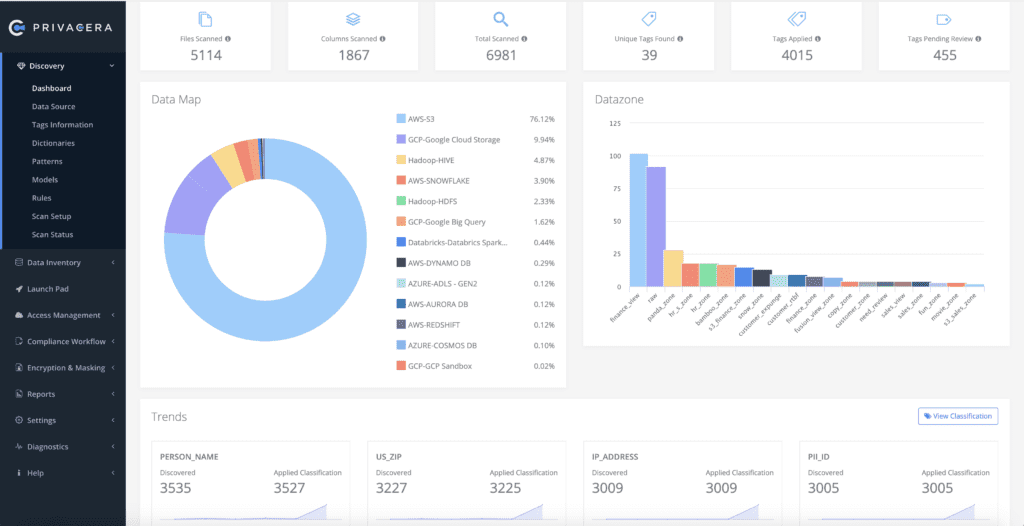
Privacera helps enterprises keep data easily accessible to all users while taking control from a privacy and compliance standpoint. The platform provides companies with visibility into sensitive data discovery and classification, and provides centralized access management and anonymization, regardless of whether the data lives in the cloud or in an on-premise data center. 

Built on a leading open-source data governance and security framework, Privacera expands the functionality of these tools for enterprises with multi-cloud and hybrid data environments. At the same time, it strengthens privacy controls and provides a unified view for data management.

Privacera allows companies to scan and tag sensitive information to form a data catalog, define and enforce detailed data management policies and monitor data access patterns, regardless of the source. Whether it’s uncovering data at risk of not complying with regulations, enforcing nuanced policies about who has permission to access which datasets or setting detailed rules for encrypting sensitive information, Privacera solves a number of critical problems for businesses increasingly relying on data.

In speaking with Privacera customers, we heard incredibly strong feedback about the product and its capabilities. The consensus was that Privacera was the most scalable and robust solution on the market, and that the deployment and automation of policies was seamless.

Building on the success of leading open-source frameworks

Privacera’s founders, CEO Balaji Ganesan and CTO Don Bosco Durai, are also the creators of Apache Ranger and Apache Atlas, which is deployed in over 500 enterprises. Balaji’s and Don’s combined expertise and passion makes them the perfect team to take these successful open-source projects to the next level. Balaji and Don are also experienced entrepreneurs in the data and security space, having founded XA Secure, which was acquired by Hortonworks in 2014. 

Privacera’s success to-date was recently highlighted in the 3rd annual Enterprise Tech 30 (ET30) list, where the company ranked #2 in the early stage category. As Privacera continues to grow in popularity, the latest round of funding will help the company expand its sales and marketing teams, and will enable it to bolster its SaaS data governance and security product features to seamlessly support ease of data access without compromising compliance. 

Privacera is the latest addition to Sapphire’s large number of data-focused investments which includes current investments like Dremio, ThoughtSpot, DataRobot, InfluxData, Alation, Matillion and SumoLogic as well as past investments like Alteryx, Looker (Google), Segment (Twilio) and MySQL (Oracle).


Mobile Coaching and the Employee Renaissance: Why We’re Excited to Back BetterUp

We’ve all been there: Looking to accelerate our career, trying to get to that next level professionally or simply seeking advice from someone who has had a similar experience. You hunt for an elusive mentor or coach, or wait for an annual performance review and ultimately resolve to do nothing. These frustrations, which can often lead to employees leaving their jobs, have only intensified during the past year as we juggle an entirely new work-life balance and come to grips with rising mental wellness concerns in an increasingly complicated workplace. As the lines of our professional and personal lives blur more than ever, the need for guidance on navigating career development and overall wellbeing has become of paramount importance.

Enter BetterUp. Launched in 2013, the high-growth startup takes a behavioral science approach to make workplace coaching and mobile learning accessible for every employee with clear alignment to business strategy. Its mobile-first, on-demand solution offers personalized and scalable coaching whenever and wherever an employee wants, addressing topics from career development to mental health, nutrition, sleep, and diversity and inclusion. As enterprises increasingly invest in the employee experience, BetterUp not only meets today’s employee demands for professional development and care, but also lets HR leaders keep track of impact and progress with a concrete ROI.

With its unique approach to employee coaching, BetterUp has leaped to the head of the pack among employee professional development and wellness platforms. That’s why we’re thrilled to back co-founder and CEO Alexi Robichaux and his team, and are excited to invest in BetterUp’s $125 million Series D funding round. 

Employees crave development opportunities 

In recent years, companies have been increasingly focused on the employee, providing them with opportunities for personal development. This trend has been driven by a generational shift in the workplace and by data that shows that employee engagement, development and wellness correlate with concrete business results.

  • Millennial and Gen Z workers, who make up at least 40% of the labor force, expect much more than a paycheck. They are empowered and want to work for companies that care about them and invest in their professional growth. According to Deloitte, nearly 30% of millennial and Gen Z employees would leave their jobs in the next two years if they could because of a lack of learning and development opportunities. 
  • Businesses are also responding to research that links employee well-being to customer satisfaction and, ultimately, revenue. As companies compete to hire and retain talent, programs around employee development, engagement and coaching are in demand. The past year has only escalated this focus on wellness, as employees face unprecedented stress while working from home amid COVID.

It’s no wonder that companies budget more than $50 billion per year for leadership development. But when it comes to coaching, a critical aspect of development that is highly effective for driving behavioral change, most still rely on expensive consultancies that are limited to executive ranks or one-size-fits-all seminars—both of which are tough to scale and seldom effective. With professional development clearly correlated with employee performance and business results, companies are looking for a next-generation solution like BetterUp. One that is not only accessible to a broader swath of employees, but is also truly scalable and drives behavioral change. 

Professional coaching where, when and how you want

BetterUp’s platform has transformed how employees at any level can learn, grow and improve professionally. Its team is committed to building the largest online coaching platform on the market, already connecting employees with a network of more than 2,000 certified coaches.  

Built for mobile, BetterUp uses a proprietary algorithm to match workers with the best coach for them, a key factor in the success of any coaching program. Employees can interact with coaches in real time or asynchronously through mobile and web apps using video chat, texts and a robust content library. They can also access bite-sized content on topics such as resilience and team-building in the platform’s on-demand library. 

BetterUp offers a number of different coaching options ensuring a personalized experience, including individual and group sessions on professional development, plus specialized options in areas like diversity and inclusion, sales performance and mental health. With mental health a priority for both the employer and employee, just today, BetterUp introduced BetterUp Care, a comprehensive mental health offering, which provides access to coaching with behavioral health specialists, curated content, on-demand support, parenting specialists, nutrition specialists, sleep specialists and more.  

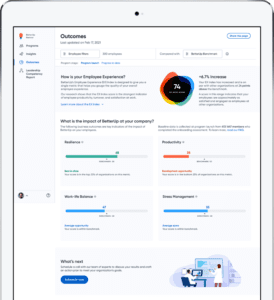
BetterUp comes fully personalized to each and every employee—with individual assessments, goal setting and digital learning programs—while also being easily scalable for HR leaders. In addition, BetterUp offers extensive analytics around metrics like adoption, usage and satisfaction to help HR teams and managers evaluate concrete business outcomes. 

Passionate leadership dedicated to helping employees find purpose

Alexi Robichaux, CEO & Co-Founder, BetterUp

After spending several years at enterprise companies like the Walt Disney Company and VMWare, co-founder and CEO Alexi Robichaux saw first-hand an opportunity for companies to improve employee wellness and invest in development. For him, helping employees find purpose has been more than a business—it’s a calling. Hence the company’s mission to help people everywhere live with greater clarity, purpose and passion. We believe that Alexi is one of those rare and unique executives who is going to take this mantra and change the world.

Sapphire is proud to invest in companies we believe to be of real consequence. With Alexi and his team deeply committed to supporting employee wellbeing, growth and success, BetterUp aligns squarely with Sapphire’s values. We are dedicated to supporting the growth of our employees and are here to help our portfolio companies such as BetterUp along their journey. We couldn’t be more thrilled to be partners.

If your job is to cultivate impassioned and hard-working employees as an HR leader, BetterUp is a must-have product you don’t want to sleep on!


A SPACtacular Future: The Rapid Rise of SPACs & What Comes Next

SPACs. You can’t read the news these days without hearing about them. This time last year, SPACs were mostly a curiosity, but today, with 128 SPACs having gone public in the first 40 days of 2021, they’ve become a phenomenon–one that clearly speaks to public demand to invest in earlier-stage growth companies. But why have SPACs exploded on the scene? And how can they benefit entrepreneurs? The answers will say a lot about whether they are here to stay or whether they become a footnote to the post-pandemic stock market boom.

A quick SPAC tutorial first. A SPAC is a so-called “blind pool” of capital raised by a SPAC sponsor from investors in the public markets. A SPAC sponsor contributes money up front to operate the SPAC (typically about $6-12M in today’s markets) in exchange for a 20% stake in the initial SPAC. 

According to SPACInsider, SPACs have raised more than $38 billion since the start of the year, with an average of $296 million per SPAC IPO. So we’re looking at about $300 million raised per SPAC, which is then held in trust for up to two years, unless and until the SPAC sponsor finds an appropriate target to merge into the SPAC. In exchange, hedge funds that invest in the SPAC receive a guaranteed interest rate on the cash, plus equity warrants that have upside option value if the SPAC completes its mission to buy and operate a company. 

All in all, a SPAC can be a good deal for all parties involved, but like anything in life, there’s no free lunch, so let’s examine in what circumstances do SPACs really work to support the entrepreneurial enterprises we care about here at Sapphire.

SPACs 1.0: Birthed in the nether reaches of Wall Street

 In order to understand SPACs today, you’ve got to understand how it used to be. If you go back 10-20 years, SPACs existed in the nether reaches of the finance world. They rarely happened, and when they did, it was normally the last hurrah of an aging CEO who was looking for a new gig. This CEO would partner with a dodgy investment bank with a boiler room akin to Stratton Oakmont in The Wolf of Wall Street. From there, said SPAC CEO would find a sleepy, low-growth business that had scale, but no hope of going public on its own. The SPAC would buy the business and insert the CEO in an attempt to improve the performance of the business as a public company. But no shock, more often than not, the performance of these “de-SPACed” companies in the public markets usually wasn’t great.

SPACs 2.0: SPACs become professionalized with PE firms at the helm

About 5-10 years ago, private equity firms realized that a SPAC could be used as another way to raise capital to do exactly what PE firms do: buy a company, shake up the management, cut costs, juice growth and reap profits for the PE firm. They figured that aging SPAC 1.0 CEOs might not have the specific expertise or the back-office support needed to make a SPAC succeed, but as professional investors with a stable of operating executives on retainer, a PE firm could use a SPAC as a higher-risk, higher-reward one-shot private equity fund.

With the arrival of PE firms like TPG and Gores Group to the SPAC party, major tier investment banks like Credit Suisse and Citi moved into the SPAC game, as well. Still, SPACs are relatively uncommon, as most companies with good metrics and predictable performance chose the IPO route, and most quality companies with future IPO potential in the hands of a professional private equity investor chose the cloak of being private to execute a messy turnaround, prior to debuting as an IPO on the public stage.

SPACs 3.0: VCs enter the SPAC game and shake things up

But then came the boom market of the late 2010s, characterized by high growth technology companies fueled by venture capital. In this market, SPACs have become a seemingly viable–and in some cases very attractive–exit strategy for portfolio companies and VCs. It’s difficult to say what exactly caused the timing of this spike in SPACs over the past year, but there have been a few trends bubbling up that have pushed SPACs into the limelight. 

  • Back in the 1990s, companies could go public with a market cap of $200-$400 million. After the dot-com bubble burst, the bar was raised, and after the Great Recession in 2008, the bar was raised still higher again. That said, even as recently as 10 years ago, it wasn’t uncommon to see a $750M IPO. In the 2010s the bar moved north of $1B. Today, the bar for quality companies with first-rate investment banks is closer to $2B. This continued raising of the IPO threshold has created a large umbrella under which an aggressive entrepreneur or an opportunistic SPAC sponsor can succeed.
  • The ongoing easy money environment created by the free-spending U.S. government and fostered by an accommodative Federal Reserve means that institutional investors earn little to no interest on uninvested cash. During most of the 1990s and early 2000s, at least they could get 4-5% total return from cash sitting on the sidelines(1). At under 1% total return for cash assets currently(2), the incentive to enhance those cash returns (with SPAC warrants) is strong, in my opinion. 
  • The VC game has changed with larger funds chasing an ever-increasing number of unicorn companies, pushed along by strong cloud tailwinds. In this highly competitive environment, some innovative VCs figured out that a SPAC could be used like a one-company VC fund with capital (from the public markets) and expertise (from the VC firm) brought to bear in support of a high growth company in a huge market run by a strong entrepreneurial CEO. This insight has flipped the SPAC world upside down. It’s no longer about replacing a mediocre management team, but instead it’s about supporting and supercharging an existing solid C-suite. The SPAC-sponsor VC firm’s promise to the market and to the entrepreneur is to deliver board-level guidance and a set of value-add services–just as they do for any private portfolio company.

When are SPACs a viable option to go public?

 With all of this in mind, where does that leave us in thinking about SPACs, and how they can be useful in backing Companies of Consequence? There are many recent articles reporting the entry of white shoe firms such as Goldman Sachs and JPMorgan into SPAC underwriting and the tsunami of capital entering the market. But few have delved into what really makes a good SPAC these days.

In our view, the IPO market works best  when valuations are based on comparable companies that are already public, known as “comps” on Wall Street. With no clear comps, a traditional IPO can be a risky proposition for some companies that may not fit the mold–and one that may significantly undervalue future upside. SPACs help solve this problem by bypassing the normal underwriting process, replacing it with a more bespoke, almost private-market solution. 

Let’s take a look at three examples where SPACs may make sense.
  1. Over the past year, Wall Street has shown that SPACs are an effective tool to take frontier tech companies public, including companies that are pushing boundaries in the space and EV sectors. Our friends in healthcare VC investing have historically financed biotech investments in the IPO market with no revenues, so it’s good to see this same paradigm applied to tech companies trying to tackle similar long-range problems facing society.
  2. There’s a rising trend in the success of using SPACs to acquire high growth sports gambling, eSports and connected fitness companies such as DraftKings, Skillz and Beachbody. What do these companies have in common with frontier tech companies? No clear public market comps. 
  3. Disruptors in highly-regulated industries are also good candidates for SPACs. Take Sapphire portfolio company 23andMe, for example. 23andMe recently announced a transaction merging with a SPAC (known as a “de-SPAC”). So why a SPAC and not a typical IPO for 23andMe? It’s initial business model was based on achieving high growth by selling consumer DNA test kits. As 23andMe evolved, it made plans to use that never before aggregated genetic data for novel therapeutic drug discovery–a business model pivot without comparison. With no clear comps, it’s our belief that the customized investor education process inherent in the de-SPAC process became the obvious choice for 23andMe.

The full story on SPACs is still being written

If SPACs continue to be used to take disruptive companies public, we believe their future will be bright as a useful tool for entrepreneurs and VCs alike. But the SPAC market should also have a “proceed with caution” sign on it. VC-backed SPACs can be a great idea when only a handful of them exist, but with so many now pursuing the same SPAC dream, hundreds of SPACs are in search of great companies to acquire and take public. With about 50 traditional tech IPOs happening in a typical year, there are simply not enough winning companies ready to enter the public markets via a SPAC transaction. 

Furthermore, because SPACs provide the opportunity for companies to go public that would otherwise not be able to via the typical underwriting process, it feels inevitable that we will start seeing companies go public that don’t necessarily deserve to be public–either because the underlying economic model is not yet working or because the company’s systems and procedures aren’t yet up to meeting Wall Street’s demand for predictable quarterly reporting. Ultimately, if there are too many companies crashing the SPAC party, the party will get broken up and everyone will have to go home.

While we don’t know what the future holds, here at Sapphire we are excited by the opportunities SPACs offer as part of the toolkit to finance entrepreneurs in building great technology companies. SPACs provide the prospect of the public markets returning to a paradigm of accepting incredible companies as IPOs earlier in their capital raising lifecycle–a return to the days of The Four Horsemen of Growth

If promising enterprise software companies don’t need to cross the $100M ARR threshold to go public as a result of the SPAC boom, then SPACs will have done us all a great service in nurturing innovation in the U.S. capital markets. Only time will tell, but if tech start-ups have another option to grow and flourish, then we see that as a good thing and we look forward to seeing how SPACs evolve as a vehicle to finance innovation.


(1) “cash returns” refer to 3 Mo T bills over the time period from January 1990 to December 2008, source https://fred.stlouisfed.org/series/TB3MS (2) “cash returns” refer to 3 Mo T Bills as of January 1, 2021, source:https://fred.stlouisfed.org/series/TB3MS

A New Way to Achieve Board Diversity: Announcing Our Founding Partnership with All Raise’s Board Xcelerate Program

Despite the known benefits of diversity in the workplace, and on boards, women hold only 17% of board directorships at global companies in the MSCI ASWI Index, and 21% of board seats in the S&P 500. People of color, and in particular, black leaders are even more so underrepresented on boards. Data from 2019 shows that 37% of S&P 500 firms didn’t have any black board members and black directors comprised just 4.1% of Russell 3000 board members.

While this data shows some improvement from years prior, the numbers are still far too low, and they don’t capture the private company landscape, which likely brings these figures down even further. The challenge to diversify boards is perplexing to us. Numerous studies and plenty of companies with diverse boards show that board diversity is critical to driving innovation and organizational change. 

We recognize board diversity is an issue, and we know we can help solve it for the benefit of our portfolio companies, the technology ecosystem and society as a whole. That’s why Sapphire Ventures is proud to share that we have partnered with All Raise, alongside GGV Capital and Sequoia Capital, to launch Board Xcelerate, a brand new program specifically designed to diversify the boards of private, venture-backed companies.

Introducing a Better Way to Uncover Diverse Board Members

One of the most challenging aspects of being a CEO at a high-growth company is ensuring they can successfully anticipate the company’s changing needs, including how to best optimize operations and keep the company ahead of the curve. Leveraging the company’s board is a hugely effective way to do this at scale. And leveraging a diverse board propels a company from good to truly exceptional with fresh perspectives that can unlock key growth and expansion opportunities. Savvy startup CEOs know that their boards are the backbone to their success, so they’re constantly thinking about building and improving them in order to have that additional leverage, helping their companies to break new ground and drive growth. 

For private companies and their CEOs, building a board is a process. More often than not, the search to find a qualified board member is narrowly focused on candidates within the board’s existing network, which is why most private boards remain homogeneous. Board members are well-connected, and know plenty of accomplished leaders. Naturally, this becomes the starting ground for new board member searches. Board member searches are also not as immediate as filling c-level operator roles, for example, and typically takes at least or more than nine months to complete. 

Board Xcelerate was architected to address these challenges, re-orienting companies to more intentional, efficient and effective recruitment efforts for building private company boards. The program aims to add high-calibre independent directors with diverse backgrounds, specifically women and under-represented groups, to private company boards in record time. With its unique process, Board Xcelerate minimizes disruptions to the CEO’s time and brings together key stakeholders in an optimal way to select the right, diverse board of directors. What’s more is that we know the program works. While in beta over the last few months, Board Xcelerate has added five diverse board directors to private company boards and introduced all finalist candidates to companies within the first 45 days of the search.  

A Partnership Between VCs, CEOs & Executives to Bring Diversity to Boards

Board Xcelerate takes a different, yet what we believe to be incredibly effective approach to diversifying boards by focusing on three distinct stakeholders: 

  • The company CEO
  • VC partners who are active board members 
  • Diverse, board-ready operators   

Board Xcelerate starts by bringing together company CEOs and VC partners, aligning them on priorities and holding both parties accountable for finding and hiring diverse board members in order to help grow the company. Board-ready operators who have minimal time outside of their demanding executive roles and who don’t want to be token diversity board hires know that the company they are speaking with is serious about diversifying their board for the long haul because they’re part of this larger program. 

At Sapphire Ventures, we believe in moving the diversity needle forward. As a founding VC partner for the Board Xcelerate program, our investors and talent team actively connect our portfolio company CEOs who prioritize diversity with the program. And our sitting partners, in particular play a driving role throughout the evaluation and recruitment process. Sapphire has also been a key force in driving overall awareness around the program, and in encouraging diverse, board-ready leaders to join the program’s network as they look to join boards. 

How Sapphire Helped Co-Architect Board Xcelerate

While there is a lot more work to be done when it comes to diversity and inclusion across the VC and tech ecosystems and here at Sapphire, it’s an important topic to us personally. Sapphire’s close working relationship with All Raise dates back a number of years and runs across many of the firm’s initiatives. They’ve known about our commitment to diversity, and so when Pam Kostka, CEO of All Raise approached us about helping to create a unique program aimed at diversifying boards, we knew we wanted to be involved in any way we could. We not only wanted to be part of the program, but we wanted to work in partnership with All Raise, GGV and Sequoia to craft what the program should look like, and, importantly, how it could operate and scale to ensure long lasting impact.

As a co-architect of Board Xcelerate, Sapphire helped All Raise identify the right search partner, specifically 3Forty3, a long-trusted executive search firm. We also connected dozens of diverse, board-ready, C-level executives to the program and brought numerous Sapphire portfolio companies who were ready to prioritize bringing on a diverse board member into the program’s first group of companies. As a result of our involvement, Sapphire portfolio companies, Contentful and InfluxData have brought on two exceptional leaders, including Christine Heckart and Vidya Peters, and numerous advisory roles into their board rooms in record time.  

As Pam Kostka, CEO of All Raise notes, “Sapphire Ventures is an invaluable partner to the All Raise Board Xcelerate program. They’ve demonstrated a deep commitment to giving women and people of color access to opportunities at their portfolio companies. We are thrilled to have placed new board directors at Contentful and InfluxData and look forward to collaborating on even more board searches.”

This is Only the Beginning 

While Board Xcelerate is just getting started, the program is proven to work, and is in the process of expanding to additional VC firms and private equity firms, which in turn means more CEOs ready to diversify their boards.

There’s also a shift happening within the broader tech ecosystem as the economic and cultural benefits of diversifying boards is more widely understood. Goldman Sach’s announcement in July 2020 is emblematic of this shift as they indicated, “[We] will only underwrite IPOs in the US and Europe of private companies that have at least one diverse board member. And starting in 2021, we will raise this target to two diverse candidates for each of our IPO clients.” 

Requirements like these, plus legislation such as those recently passed in California (SB 826 and Assembly Bill 979) to increase diversity, will help to further move the already-strong momentum to diversify private boards forward. We are thrilled to have been a part of the origination of the Board Xcelerate program, which is crucial in helping companies diversify their boards and build companies of consequence.

If you are a CEO interested in diversifying your board or a board-ready, diverse operator interested in exploring board opportunities and would like to learn more about the Board Xcelerate program, please contact [email protected] to learn more.  


The Black Swan Year: How 2020 Impacted Venture Investing and Performance

2020 was a year that profoundly disrupted nearly every aspect of life, so it’s no surprise that the pandemic’s effects made ripples throughout the venture landscape too.

Sapphire Partners invests in a portfolio of early-stage venture funds across the U.S., Europe, and Israel, comprising over 2,000 underlying portfolio companies. We believe this provides us with a unique, bird’s eye view of the venture ecosystem.1

In the spirit of our #OpenLP initiative, and leveraging our proprietary dataset, we took the opportunity to examine how this groundbreaking year altered the venture and startup scene.

So, without further ado, here are the four key take-aways we gleaned from Sapphire Partners’ portfolio:

Among VC’s, COVID-19’s initial impact was a story of losers and winners. Then came the tailwind.

With the initial shock of the pandemic, including a sharp sell off in public markets, record unemployment claims, global lockdown on travel, and shelter-in-place mandates, we anticipated that Q1 would be most impacted by COVID-19. 

To our surprise, Sapphire Partners’ portfolio net asset value in Q1 2020 was more or less flat quarter-over-quarter, speaking to the overall strength of the technology sector compared to the broader market.2 Peeling one layer back, however, revealed a more barbell-like distribution of performance, with winners netting out a similar number of losers, ultimately resulting in flat performance for the quarter.

To illustrate this point, around 40% of our underlying funds reported a valuation shift greater than 5%, with exactly half reporting positive performance and half reporting negative performance. A very bifurcated story! (As comparison, in Q1 2019, only 26% of our underlying funds reported a 5%+ value change and among those that did, only 14% reported negative performance.)

As the year progressed, however, we saw the resilience of the tech sector truly bear out within our portfolio. In keeping with the conventional narrative of the technology sector remaining relatively immune to, and in some cases benefitting from, COVID-19, the pandemic acted as a broader tailwind to our portfolio in Q2 and Q3 2020. This tailwind was widely felt, with 70% of the 5%+ movers exhibiting positive performance in Q2 and 86% in Q3.

While we don’t yet have a full picture of 2020’s performance (LP’s receive data one quarter lagged), we are very optimistic about Q4 and 2020 in general. The technology and software sectors have proven to be a boon during these unprecedented times, and we anticipate that ultimately being reflected in the final tally. 

No surprises – venture continues to be a power law business. Outlier breakouts are still needed for outsized performance.

Among our funds that are marked at 3x TVPI or higher, the top value driver company currently represents ~50% of the funds’ total value on average. The top two value drivers represent a whopping ~60%, and the top three drivers represent ~70%.

Across Sapphire Partners’ entire portfolio of over 2,000 underlying companies, the top five companies represent 15% of our total value and the top two companies represent 11%. 

Swing for the fences everyone!

What recession? Investment pacing picks up and fundraising cadences compress further.

LPs often use capital calls as insight into the investment pacing of a specific manager and/or fund. It’s a useful input, as it’s real-time and not subject to the quarter-lagged nature of standard GP reporting. 

In early-to-mid March, as the pandemic hit the public markets in full force, we wondered if our funds would increase capital calls to help bolster their companies through a down-turn.

While we did not see a drastic uptick in the rate of capital calls in 2020 (moving from 24% in 2019 to 25% in 2020), we saw a continued, longer-term trend of increasing rates of capital calls more generally. For example, the aforementioned 2019 and 2020 capital call rates are substantially higher than the ~20% rates we saw in 2018 and earlier.3

While the data illustrates a somewhat muted effect on capital calls in aggregate, initially we observed our managers call capital to support strong existing portfolio companies, while slowing down investments in new companies. By summer, however, our managers were off to the races, making new investments at rates similar to, or in some cases higher than, pre-COVID rates.

As one would expect, increased investment pacing has resulted in quicker fundraising timelines. Among our 2020 vintage managers, the average time between the first capital call and the prior fund’s first capital call was 2.4 years. By comparison, this number was 3.3 years for our 2019 vintage managers. 

Keeping it local. While U.S. managers held off on ramping up international investment, domestic geographic diversification took flight.

Given the rise of remote work, we expected (and anecdotally observed) a de-emphasis of geographic investment mandates, with investment teams more willing to take meetings and run fully remote diligence processes with entrepreneurs regardless of their physical location. 

Contrary to what we expected, however, our managers based in the U.S. did not substantially increase their investing internationally. On average, 14% of our U.S. managers’ new investment in 2020 was deployed internationally, essentially flat from 2019. It is worth noting that, despite the 2020 plateau, this number has been steadily rising in recent years, from sub-10% in 2016, to around 10% in 2017 and 2018.

While our U.S. funds did not drastically expand international investment in 2020, our California-based U.S. funds did invest substantially more in other states. Among our California-based funds, 43% of new investments were deployed outside of California in 2020, a steady and consistent increase from 37% in 2019 and 29% back in 2016.

We continue to believe the Bay Area will be an important ecosystem for venture capital and technology. But, echoing Fred Wilson’s argument, the pandemic has clearly catalyzed a growing comfort in making investments remotely, leading to a widening in geographic scope for many venture investors. 

While it is unclear to what degree this dynamic will persist post-pandemic, with many teams now comfortable operating remotely, we believe this is a reality that is here to stay.

This is the first time we are publicly sharing insights from the proprietary data our team has compiled over the years. Keeping in mind obvious confidentiality/privacy implications, this is something we hope to do more of going forward.

1 While the Sapphire Partners’ portfolio spans the better part of a decade, multiple geographies, and various stages, it is important to note that our portfolio is not necessarily representative of the venture market as a whole. The data presented are compiled under internal analysis conducted by Sapphire Partners using proprietary data that is not regularly made available to the public.

2 Performance methodology used in internal analysis and presented in this article accounts for any impacts due to interim cash flows by subtracting out capital calls and adding back in distributions and is calculated on a gross of fees basis.

3 At any given point in time, funds can have drastically different rates of capital calls/investment pacing depending on if a fund is in its investment period versus harvesting period. To account for this, we looked at capital calls as a percentage of fund size on a three-year cohort basis. For example, for 2020 pacing we only calculated within the 2018, 2019, and 2020 vintage funds.


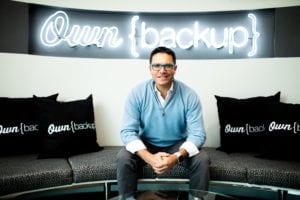
Bringing Mission-Critical Data Protection to the Cloud: Why We’re Thrilled to Partner with OwnBackUp

Despite conventional belief, the protection of mission-critical data stored in Salesforce and the majority of popular SaaS applications is the user’s responsibility. Since end users, developers, administrators and even Salesforce updates are prone to creating errors, without appropriate recovery strategies and processes, organizations may suffer irreversible data loss and potential negative business impact.

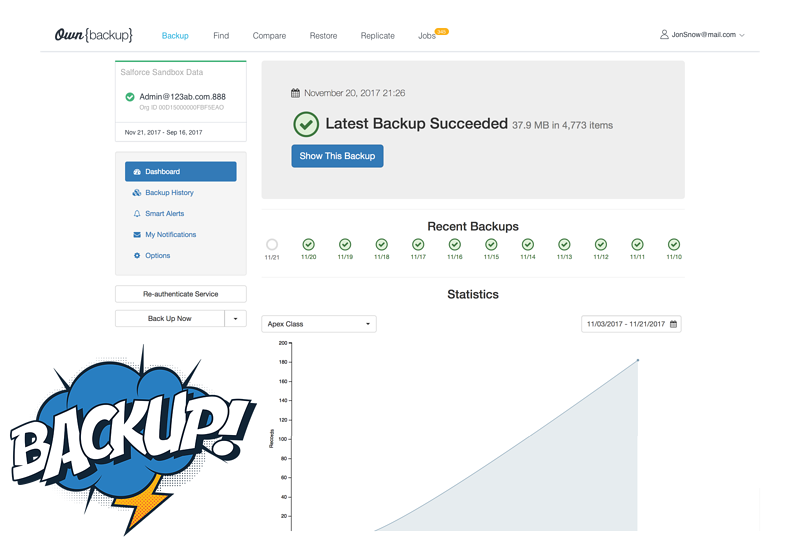
OwnBackup uniquely solves this challenge, which is why we’re excited to co-lead the company’s $167.5 million Series D funding round. OwnBackup offers admins and developers peace of mind around SaaS data loss and corruption recovery, providing a comprehensive solution to backup, compare, recover, archive and manage large, complex, SaaS-based data sets. OwnBackup’s primary goal is to enable its nearly 2,500 customers to take full ownership of the data they create in SaaS platforms, while capturing all the historical changes made to the data and keeping it accessible.

The Emergence of Backup for the Cloud

With the widespread adoption of cloud-based SaaS apps, customers have come to believe and expect that data stored in popular SaaS applications, like Salesforce, Microsoft Dynamics, ServiceNow, Workday, etc., is protected in the event of human error or a disaster recovery scenario. Unfortunately, it’s not.

In instances where data is preserved by a particular SaaS vendor as a “last-resort,” more often than not, it takes days or weeks to backup, causing significant business disruption. OwnBackup provides cloud backup, ensuring data protection and enabling the complex data recovery process that restores data in a targeted and nuanced method that a full rollback doesn’t provide. OwnBackup’s restore process protects mission-critical data and ensures business continuity in the event of data loss.

Companies can’t afford to lose their invaluable data, which is why the market opportunity for OwnBackup is massive. The structured data backup market has experienced rapid growth with the rise in adoption and maturity of SaaS solutions. According to Gartner, by 2023, 40 percent of enterprise customers will implement third-party backup solutions to protect SaaS application data, up from 10 percent in 2019. 

OwnBackup: A Category Leader for Cloud Data Protection

Most SaaS apps like Salesforce share responsibility for keeping customer data safe, but customers are responsible for the errors and corruption they create themselves. OwnBackup provides a comprehensive solution to backup, compare, recover, archive and manage large, complex SaaS-based data sets. OwnBackup allows customers to maintain business continuity, relieving them of the burden of worrying about the loss of their valuable data stored in their SaaS apps.

Today, the platform currently supports Salesforce, nCino, Veeva and Sage, but the team has substantial plans to expand to additional cloud apps with this new funding round.

An Experienced Team Focused on Growth

OwnBackup CEO Sam Gutmann has worked in backup for nearly 20 years. Prior to OwnBackup, he founded Intronis, a backup company that ultimately sold to Barracuda in 2015. Sam has impressive domain expertise and excellent execution. Early-on, he saw the missing piece in the cloud transition: effective data backup and restore. 

In addition to Sam, we have been very impressed with OwnBackup’s Head of Product and Strategy, Adrian Kunzle, who before joining OwnBackup was the EVP of Platform Products at Salesforce.  Together, Sam and Adrian make a formidable team that Sapphire is thrilled to partner with in their vision to bring SaaS backup to further ecosystems.

OwnBackup is a fantastic addition to our growing list of portfolio companies. We’re thrilled to partner with OwnBackup in its mission to bring data protection to the cloud!