
email

Out-Reaching for Consequence — Why Outreach and Sapphire Ventures Are Excited to Partner

Woman attending virtual meeting on laptop

Today, I’m excited to announce our Series D investment in Outreach, a fast-growing provider of the leading SaaS customer engagement platform. At Sapphire, we have a mantra of backing “Companies of Consequence” and we believe Outreach fits the bill. Beyond me telling you why, Manny Medina, CEO at Outreach, was gracious enough to also share his thoughts on why he chose to partner with Sapphire Ventures.

But first, what does a customer facing engagement platform really mean? In my view, engaging with prospects and customers, for a variety of purposes, should be the #1 activity of any go-to-market organization. Outreach has created the engine that powers smarter and more scalable customer communication. This ultimately enables sales and other customer-facing teams to scale their day-to-day workflow in an automated, yet intelligent and still personalized manner.

While we see Salesforce.com and other CRM providers as the prevailing systems of record, there is a significant opportunity for a system of engagement that activates and potentially improves that underlying CRM dataset — enter Outreach.

Why Partner with Outreach?
I first met Manny in late 2015 and have been tracking him since. While It was clear that Outreach was on to something special, what really intrigued us at Sapphire was Manny and the rest of the team. After our latest discussions, I walked away impressed that he had executed on the goals he set back in 2015 — remarkable for any entrepreneur, but especially for a company in its earlier stages, as they were back then.

What truly distinguishes Manny in my view, however, is his unique combination of product vision and go-to-market understanding. Most mid-to-late stage SaaS entrepreneurs I meet tend to be either technical, product-driven founders or sales-first execution maestros. Manny encompasses both. This is critical because while GTM execution is key, having a strong product-led company and vision is what creates a longer-term moat and sustainable differentiator.

Further, Manny is relentlessly obsessed with his customers, his team and his business. He has an intensity of focus and work ethic (4:30 am emails from Manny is commonplace) that is coupled with his ability to authentically and passionately tell the Outreach story. This inspires customers, employees and investors to buy-in to his vision.

Look no further for evidence of this than the talented team that surrounds Manny. Andrew (co-founder), Anna (COO), Matt (Sales), Mike (Customer Success), and the rest of the employees all march to the same energetic, customer-focused beat.

Finally, what really sealed the deal for us was Manny’s maniacal focus on what we believe should be the primary KPI for SaaS businesses — user engagement. More on this North Star metric below from Manny.

Why Partner with Sapphire Ventures?
When I met Rajeev Dham a few years ago, Rajeev was a rising star at Sapphire with uncommon knowledge about our space. Most VCs know a lot about marketing or ad tech, but very few have more than passing knowledge of sales tech. Many have been burned betting against Salesforce, so they stay away from anything that comes even close to CRM.

However, our first conversation with Rajeev piqued my interest — let me explain. For me, Outreach is a labor of love and my life. I am not a serial anything. Outreach is it. I expect the same level of commitment and knowledge of the space from a potential partner. Rajeev proved to be just that kind of partner. From the get go, he understood the landscape and the customer pain CRM left unsolved. He not only understood it, he had the conviction to bet on it. Mind you, this is a very competitive space and is growing rapidly as it is being defined. That drives away timid investors. Not Rajeev.

Also, given Sapphire’s track record backing world-class enterprise companies, Rajeev understood our unorthodox approach to B2B SaaS: at Outreach we care deeply about active users and tracking engagement with the application. We fundamentally believe that if we provide value to the users, they will reward us by taking more actions on Outreach to drive their customer relationships forward. The more actions taken on Outreach, the more data our members generate that we can use in machine learning models to automate those actions and give our members time back. Automation in turn creates higher engagement.

This virtuous cycle of engagement-driving-automation-driving-engagement is common in consumer applications like Facebook, but rare in business applications. But that is our secret sauce: consumer-like thinking drives customer obsession across Outreach. Seeing Rajeev and the Sapphire team’s excitement about pushing the envelope in customer engagement by using a consumer approach to enterprise applications was the genesis of this exciting partnership.

A Perfect Partnership
The feelings here are mutual and we’re thrilled to welcome Outreach to the Sapphire family. We look forward to partnering with Manny and the Outreach team on their journey of becoming a Company of Consequence.

Sapphire LP insights

What LP’s are Saying About Emerging Venture Manager Funds

Follow me @samirkaji for my random, sometimes relevant thoughts on the world of early stage venture and start-ups.

This post serves a part one of a two part series that Beezer Clarkson at Sapphire Ventures and I are co-authoring to help VC’s (specifically emerging managers) navigate through fundraising cycles and engender better and more relevant relationships with LP’s.

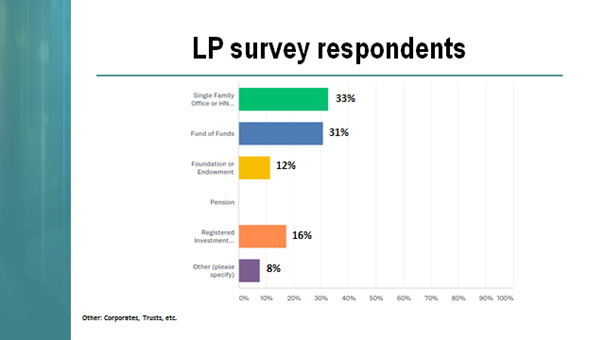
During the 3rd annual emerging manager focused RAISE conference, I presented the results of an LP survey that was conducted with RAISE LP conference attendees prior to the event. The primary goal of the survey was to better understand the current temperament of LP’s as it related to venture allocations in emerging managers. The sample size of the survey was approximately 60, and represented a good cross section of LP profiles with fund of funds, foundations, endowments, family offices, and wealth managers all participating.

LP Survey Respondents

Without question, there are many components to a successful fund raise. An important factor in mitigating fundraising friction is a keen sense of the profiles of LP’s, their typical preferences, and sensitivities, and then using this knowledge to build a fundraising strategy centered on LP/GP fit.

We’ll discuss how to assess LP/GP fit in part two of this series, but in this post, we’ll review the findings of the LP survey in detail.

I’m linking the entire presentation here for reference.

Survey Findings

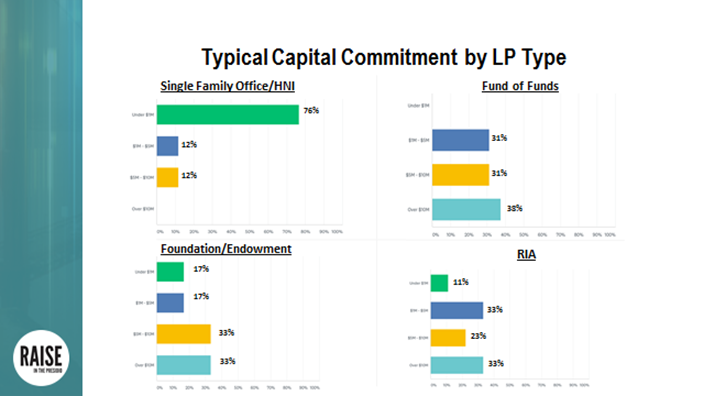
  • For new venture managers (many Fund I/II profiles), family offices and high net worth individuals are unequivocally going to comprise the majority of the limited partner base and time should be accordingly spent to this finding. For all of nearly 150 venture funds on Fund I and II that we’ve tracked since the beginning of 2017, nearly 50% represent funds that currently have <$20MM closed. As the chart below shows that >60% of institutional allocations are $5MM+ and recognizing that LP’s rarely want to constitute more than 20% of the fund, institutional LP’s often represent poor fits for those that are raising funds of $25MM and lower. This further highlights the importance of thinking realistically when setting fund targets as to avoid too many unnecessary conversations with those LP’s that aren’t immediate fits.

Typical capital commitment by LP type

Apologies for the fuzzy output; see link above for actual slide

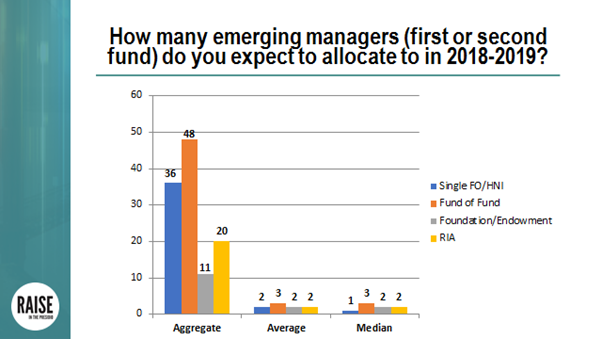
  • Although no LP type indicated that they expected to allocate extremely actively to emerging managers (Fund I/II) during the next 18 months, Fund of Funds appear to be the most active allocators on average. It’s important to note that there are any more single family offices than fund of funds and we expect that if examined universally, that the majority of emerging fund allocations by volume will likely come from family offices. In an informal survey we conducted with emerging GP’s earlier in the year, fewer than 35% of GP’s indicated they had raised a Fund I in which the LP base was even 50% institutional by dollar amounts.

emerging managers do you expect to allocate to

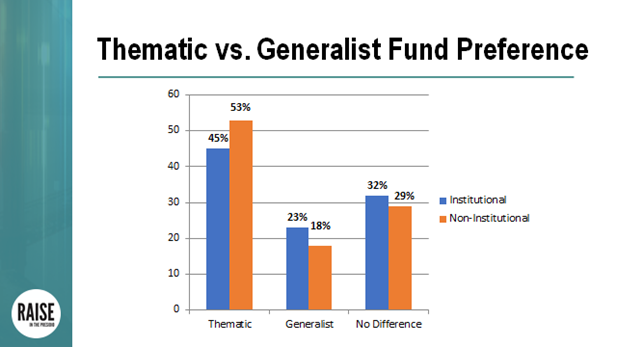
  • Thematic fund profiles are very clearly preferred as nearly 2x as many institutional LP’s and nearly 3x of non-institutional LP’s indicated they’d prefer investing in a thematic fund (defined as fund that has a (very) specific, and sometimes narrow investing thesis/model). While it is not surprising given the strong push for managers to have some level of tangible differentiation, we have seen LP’s expressed concerns around thematic funds that seem too narrow in scope or manufactured for marketing purposes only.

Thematic vs Generalist Fund preference

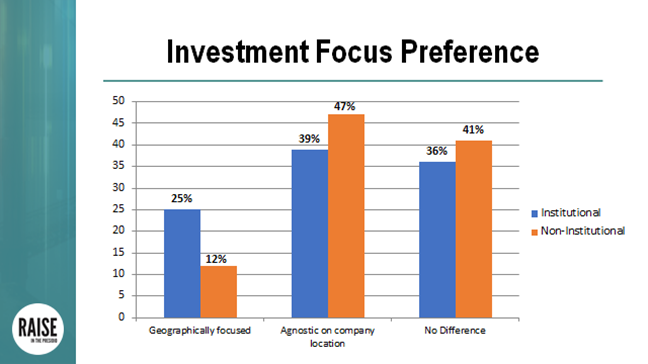
  • The LP’s we surveyed were generally apathetic about geographical focus of the fund. We were a bit surprised to see that such a small minority of LP’s preferred a fund with a specific geographical mandate. Given the valuation bloat that naturally occurs in the Bay Area along with rise of technological hubs across the US, we expected that more LP’s would be actively seeking out managers that had geographically centric themes. Although these results may be a bit distressing for managers that have a specific geographic thesis, the results may be construed simply as geographic focus alone isn’t a compelling enough reason to allocate. We have seen many LP’s who want exposure internationally and in non-silicon valley US cities, but hold GP’s to the same standard as non-geographically focused funds.

Investment focus preference

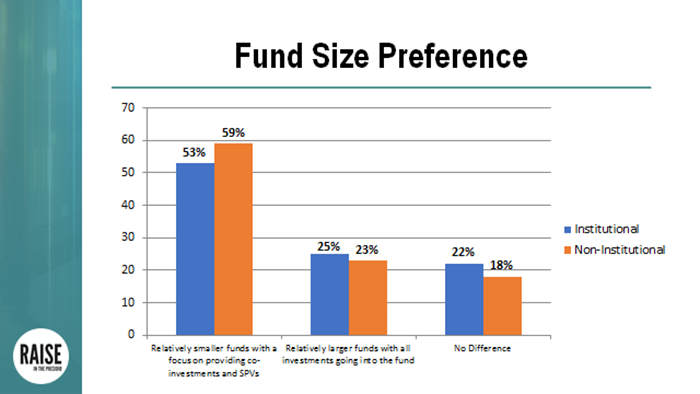
  • Small funds (<$50MM) where follow-ons are done via SPV’s or co-invest were slightly preferred over larger funds where follow-ons were largely done through fund reserves. One could rationally attribute this to the difficulty of generating successful venture returns (2.5X+ net) for larger funds. For us, we were somewhat surprised initially by the institutional LP data as most generally speaking institutional LP’s do not actively participate in SPV’s or co-invests. We think our particular findings could have been due to the fact that Fund of Funds were the prevalent institutional LP type represented in the survey, many of which have adopted active co-investment practices. Additionally, given the need for endowments, pensions, and other large institutional investors to require large allocations, we believe the numbers below would be deviate greatly if the survey respondents weren’t simply the inclusive of those attending an emerging manager conference, but rather included a broader universe of institutional LP types. That said, it’s instructive to recognize the appeal of smaller funds for emerging manager focused LP’s This is particularly true for those LP’s who are smaller in size than the larger established institutional LP’s who typically carry more risk adversity and are often subject to the realities of large capital pool management.

Fund size preference

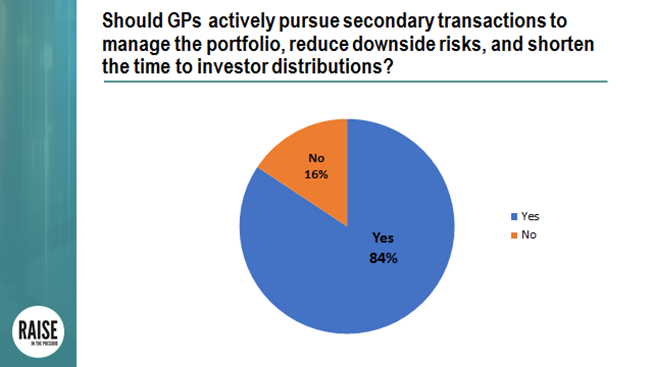
  • Liquidity remains a serious concern for LP’s. Although venture (unrealized) performance as an asset category has been strong over the last decade, illiquidity continues to be omnipresent as M&A and IPO activity remain stagnant, and the time for significant venture exits to occur continues to protract. As such, the vast majority of LP’s conveyed that they prefer that fund GP’s develop a portfolio management strategy that considers secondary transactions to accelerate returns and mitigate risk, even if this strategy results in some forfeiture of medium to long term upside.

GPs actively pursue secondary transactions to manage portfolioWhile we realize it’s acknowledged that survey results contain inherent deficiencies, we believe that many of the survey findings should be instructive for those raising funds. In our next post, we’ll cover how best to identify and create GP/LP fit.



joining sapphire

I’m Joining Sapphire Ventures!

I’m excited to announce that I’ve joined Sapphire Ventures to invest in transformational consumer technology companies and partner with CEOs to navigate hyper-growth.

Over the past two decades, I’ve been fortunate to be a part of some amazing consumer tech companies. I got my start in the Valley as a product and marketing manager at E*TRADE, later led a business unit at Yahoo!, and most recently, was Trulia’s President and COO from our Series C, to IPO, to our eventual $3 billion merger and integration into Zillow Group.

Trulia Team

At Trulia, we grew the business from a start-up with 100 employees and $20 million in revenue into a stand-alone public company, eventually merging with Zillow to create a 3,000-person company that generates more than $1 billion in revenue. Together with fantastic founders and an amazingly talented team, we navigated the mobile platform shift, iterated our way to a strong and diverse revenue model, and built one of the strongest cultures the Valley has seen. At Yahoo! and E*TRADE, I led teams with a similar focus of connecting consumers to the online products and resources that help them better accomplish things that mattered in their lives.

In my own journey, I’ve wrestled with many of the challenging issues that inevitably come with hyper-growth: How to launch new product lines without distracting from a successful core? How to add sales and revenue orientation to a strong but largely product-centric culture? When does M&A make sense and how to manage a successful integration? And most importantly, how to scale oneself as a leader and maintain an entrepreneurial culture as a startup grows to hundreds and eventually thousands of employees?

These are nuanced and challenging questions, and ones that all breakout companies must navigate. For growth-stage founders, getting trusted advice on these topics can make all the difference. I’ve learned a ton from my own efforts tackling these issues head-on, and from working closely with some amazing founders and execs — Jerry Yang, Jeff Weiner, Pete Flint, Sami Inkinen, Spencer Rascoff and Rich Barton, to name a few. Now I hope to be a helpful and supportive resource to the startup community that has given so much to me.

sapphire team

I’m excited to join Sapphire Ventures — a fantastic VC firm with proven success (50+ exits since 2011) and an outstanding team that is smart and aggressive, yet still humble and thoughtful. Sapphire cares deeply about its companies, and supports them with a powerful network of resources. As a managing director at Sapphire, I’ll be investing in growth-stage ($5–10m+ revenue) companies in the consumer, marketplace and fintech spaces. These are sectors where I’m passionate, have first-hand experience to share, and yet still have lots to learn.

To be honest, I never expected to become a VC. I thoroughly enjoyed my time in the trenches at E*TRADE, Yahoo!, Trulia and Zillow Group. Over the past year, however, spurred by a joint executive-in-residence at Accel Partners and Greylock Partners, I met dozens of talented founders and came to realize the value I can provide, as well as benefits I can gain, by working with a portfolio of companies. I look forward to partnering with the boldest, most talented entrepreneurs in the world to navigate company hyper-growth, especially the challenging aspects of leadership and organizational scaling that often don’t get the attention and discussion they deserve.

I can’t wait to roll up my sleeves, meet Sapphire’s existing companies, and identify and grow the next generation of winners. You can find me at [email protected] or on Twitter @plevine. I look forward to connecting.

login screenshot

Auth0: Bringing Identity as a Service

login screenshot

Digital transformation involves bringing different thinking, innovation, business models and strategy into all aspects of the business to improve experiences of employees, customers, suppliers and partners. At Sapphire Ventures, we believe that an identity and access management (IAM) strategy is crucial to the success of digital transformation. However, the growth of cloud computing and an increasingly distributed mobile world make IAM more complex every day.

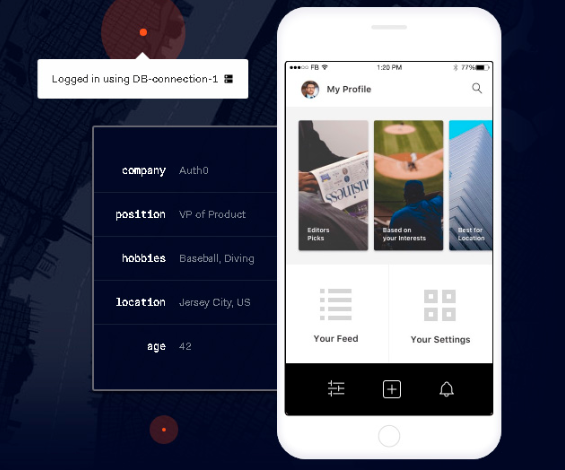
Today, we are privileged to announce that we have led the $55M Series D investment in Auth0. We have a long history of supporting developers with investments in DevOps platforms that simplify the life of the developer. Auth0 has grown and solved complex and large-scale identity use cases for more than 3,000 global customers with their easy to use API-based platform. When we had a chance to partner with them, we jumped at the opportunity.

We were already excited about Auth0’s rapid growth, scale of the business, and global customer reach. As we embarked on the due diligence process, we developed a further appreciation for management’s attention to values, the tirelessly-working global team and Auth0’s open and transparent culture — something that resonated well with us.

So, why is identity and access management so important for the enterprise? IAM solutions provide the ability to manage electronic identity for accessing information and resources. In other words, IAM solutions secure content from unauthorized access by injecting authentication layers between the users and the critical apps and data. With the growth of cloud-based and Software as a Service (SaaS) applications, users now have the power to log in to critical business apps like Salesforce, Office365, Concur, and more anytime, from any place, using any device.

Auth0 was built with developers in mind, eliminating the need to create and maintain an authentication codebase through its API platform. Its identity platform offers building blocks and SDKs to enable customers to build what they want. The platform is built with a broad spectrum of use cases in mind, covering identity and access management for consumer applications (B2C), SaaS software (B2B) as well as internal employees (B2E) and partners. Auth0’s customers span some of the largest B2B SaaS, financial services, healthcare, retail and media companies — providing them reliable, secure and scalable support.

When I first met Auth0 co-founders, Eugenio Pace and Matias Woloski, it was inspiring to see their mission of unifying the current siloed approach to identity management. They’ve since grown Auth0 to power more than 40 million daily logins, providing single sign-on and user management for web, internal applications and APIs. We are excited to bring our experience and resources forward, and partner with Auth0 on their journey to become a company of consequence and completely change the Identity-as-a-Service market.

map

Why CIOs Must “follow the money” — When It Comes To Startups

CIOs can avoid kissing a lot of frogs on their quest for winning new tech, by borrowing some noise filtering tricks from VCs

map

Sapphire Ventures’ data shows that there are anywhere from 2,000 to 4,000 VC-backed enterprise software startups that get funded annually in the U.S. alone. In 2017, this equated to over $16B in dollars invested into enterprise startups. The winners from this large crop of funded startups will surely transform enterprise IT in momentous ways, presenting CIOs (Chief Information Officers) with exciting opportunities to find new innovation externally. But, in an overcrowded startup landscape, there is just as much risk to bet on the losers and the “me-toos” and miss out on the transformative players.

CIOs routinely tell us that one of their biggest challenges in making innovation bets is in navigating the dense startup ecosystem to correctly determine who the winners are, who are the has-beens — and which tech categories matter at all? To be effective “investors” in next-gen disruption, CIOs need to adopt filtering mechanisms. The good news is that CIOs aren’t alone.

We’re all on the same quest for “signal”
Just like CIOs, VCs need to parse the “signal from the noise” in the hunt for startups that will truly differentiate in crowded categories or create entirely new categories of enterprise technology. At Sapphire, we often say that CIOs are like VCs — except they bet with corporate dollars and IT resources.

As financial investors on a similar journey, here are some guidelines we can pass on to CIOs seeking “noise-reduction” strategies to whittle down the cacophony that surrounds them.

Follow the money: 3 ways in which CIOs should assess startup funding
The funding behind promising startups holds important clues that can translate into useful strategies for CIOs. Here’s how:

(1) How much money and how often?

Enterprises and CIOs partnering with young startups should closely track the funding cadence of their partners to make sure that they’re generally raising capital at the pace one would expect.

Size and frequency of venture funding is ultimately a proxy (albeit not a perfect one) for company quality and technology traction with enterprise customers. This is because top VCs will always make revenue-metric driven decisions around funding enterprise software startups, only funding companies that can boast double-digit growth in enterprise accounts and net-negative customer churn. Startups meeting their expected funding milestones track well in the above dimensions — and are more likely to be durable partners for enterprise customers and CIOs. It also means they will have ample capital available to continue investing in their products and platforms to the benefit of customers.

funding chart

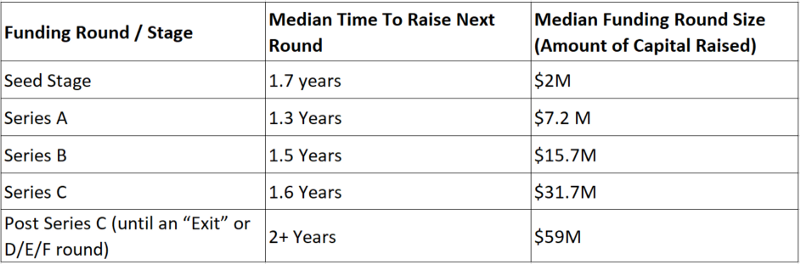
Specifically, data from Sapphire Partners’ investments platform shows that in today’s environment startups on strong footing will raise venture capital every 18–24 months. Below is a quick snapshot of how this progresses across funding stages.Ultimately, 45% of enterprise startups that receive a Series A or seed round will either cease to exist entirely, stagnate and fail to either have an “exit” (IPO or acquisition) or raise further funding. With every subsequent round of funding raised, the startup is validating its business, technology and durable value to the CIO. CIOs should roughly benchmark the funding success of their startup partners against the above brackets to minimize the possibility of betting on a company that might go out of business, or become a “zombie” operation and stagnate.

(2) Whose money is it anyways?

The quality of the VCs backing a startup is an important indicator of startup quality. It is especially useful if the CIO is trying to assess the quality of an early-stage startup that may not have raised much funding or be generating revenues that s/he can use as a proxy for traction. An early-stage startup that has raised funding from “smart money” VCs is one that has a much better shot of becoming a ubiquitous technology across the enterprise — and a game changer for the business. Sources such as CBInsights, Crunchbase and Pitchbook are good references that enterprise IT teams can use to stack through the huge population of VC firms and parse for indicators of quality — such as those that have had the highest shares of IPOs across the board or have excelled in funding winners in individual enterprise categories (eg: cloud or security).

(3) Finding like-minded VCs and portfolios

In the simplest terms, CIOs should find venture capitalists that have made a name for themselves investing successfully in the categories CIOs care about. Need to build a future-proof security strategy? Look for VCs that have funded now-mainstream security companies. Consumer marketplaces is the next big bet? Reach out to the investors that have funded category creators and disrupters in this domain.

CIOs should “interview” a series of VC investors (like they would interview any other partner) by simply taking time to talk to each VC about how they view the market. Do they view the market in ways that complement their own? If they differ, is it a valuable counterpoint to their strategy? And are they only interested in positioning their own portfolio companies– or are they looking to build a meaningful dialogue and lasting relationship with the CIO as an IT executive? Answers to all these questions will help CIOs identify VCs that can truly aid them in the long term in placing good bets on winning tech, and also serve as sounding boards and “noise filters”.

A note on funding stage selection
Startups come in all kinds of stages and each organization knows its own stage sensitivity and risk tolerance. Earlier-stage technologies and those that are built on top of hot buzzwords (“AI”, “blockchain”) will inevitably involve more noise because more venture dollars will go towards creating more startups, and also because the Darwinian shakeouts of startups haven’t happened yet. With mega-rounds and high valuations still being the norm, CIOs should note that a successful early-stage startup can very quickly graduate from seed stage to becoming a “late-stage” mature startup, in terms of capital raised and revenues. Ultimately, CIOs and their teams should know the “noise patterns” of the domains that are of interest to them — and select partners accordingly.

CIOs need to care — even if they don’t
Enterprise CIOs have a crucial stake in VC funding and startup ecosystems, whether they realize it or not. They must reflect on what their “signal” looks like and then build a sensor network and noise filters that helps them repeatedly place winning bets in the startup ecosystem. Someday, being able to say “we were early adopters of [insert name of now ubiquitous tech company]” will help them to be seen in a distinct class of innovators — while giving their company a technological leg up over peers in the industry.

graphs screenshot

ThoughtSpot  —  Empowering The Enterprise To Be Analytical And Data-driven!

With the current set of Business Intelligence (BI) tools that are used in an enterprise, a knowledge worker today simply gets a set of dashboards of graph and charts, with no information about the underlying data. If they want to drill down on any information, they’re stuck waiting for an answer from a data analyst, BI professional or data scientist. Unfortunately, waiting isn’t an option in a day and age when competition is global, 24×7 and extremely cut-throat. As a result, many revert to gut based decision-making without leveraging all the data that is available and the insights that it could provide them.

Today, we are privileged to announce our investment in ThoughtSpot which empowers knowledge workers in the enterprise with its simple search & AI-driven analytics platform. The company’s search-driven analytics empower knowledge workers to answer the questions they want to ask, but are unable to with the current set of BI tools. ThoughtSpot took this further with SpotIQ, the company’s new AI engine, which provides these same knowledge workers with insights to questions they care about, but wouldn’t even know to ask. With ThoughtSpot, the enterprise user becomes highly analytical, productive and able to make a meaningful positive impact to the bottom line.

We have known Ajeet Singh (CEO and co-founder) since his days at Nutanix, a Sapphire Ventures portfolio company, where he was the chief product officer and co-founder. He then went on to found ThoughtSpot to realize his vision of enabling knowledge workers and business people to look for insights and analyze enterprise data in the same way that all of us use Google to search the Internet. Ajeet assembled a stellar team of engineers and product managers that not only built his vision of a search-driven metaphor for analyzing data, but also made the platform extremely scalable and easy to deploy and manage on the cloud or on-premise. On top of this, the team has built AI and machine-learning capabilities to answer questions that a knowledge worker had never thought of asking, but which makes the analysis much more accurate and insightful.

ThoughtSpot is now entering the phase where it must scale and grow globally so that it can continue to empower thousands of enterprises and millions of their knowledge workers to be data-driven and analytical, just like the knowledge workers at Capital One, Celebrity Cruises, Chevron, Miami Children’s Hospital, OpenTable, Sterling National Bank, and ServiceNow all of whom are current customers. We are excited to help ThoughtSpot continue its rapid growth and help the Company scale globally, with the help of our Portfolio Growth team, which will tap into its enterprise CXO network to help ThoughtSpot navigate the complexities of partnering with and selling to large enterprise corporations on a global scale.

ThoughtSpot is democratizing analytics and boosting productivity by enabling knowledge workers to make sound, data-driven decisions even though they don’t have the time, ability, or interest to be a Business Analyst or a Data Scientist. We are looking forward to partnering with ThoughtSpot on their journey to become a company of consequence and completely change the analytics market.

Next-Gen Tech Stack Forum

Legos, Lazy Developers And Robots On Facebook: Reflections From Sapphire’s Tech Stack Forum

We recently hosted our Next-Gen Tech Stack Forum, a technologist summit in San Francisco bringing together startups redefining the foundational tech stacks of the enterprise with technical executives from Sapphire Ventures portfolio companies and large enterprises.

Here’s a quick rundown of the day’s memorable moments:

Microservices as the (successful) evolution of SOA: Composability has been a journey throughout the history of software. But without the right cloud-native technologies and toolsets, the SOA practitioners of years past were at a loss to effectively implement composable architecture — despite useful foundational concepts. Several speakers, including Chad Arimura, co-founder and CEO of Iron.io, described microservices as improved avatars of SOA, this time powered with a tech stack (APIs, containers, cloud infrastructure) that could do justice to the original principles.

  • Microservices as the gateway to leaner organizations: William Morgan, CEO of Buoyant, talked on a microservices panel about his first-hand experience handling the storied breakup of the Twitter monolith in 2010. Beyond the increased code ownership and agility, the biggest and most unexpected benefit he sees for any engineering organization making the microservices shift is around sharply-clarified and efficient communication protocols between teams owning discrete services. Illumio CTO and Founder PJ Kirner talked about how continuous delivery and containerization place additional pressures on existing security approaches. There was general agreement that security is an under-served portion of the microservices ecosystem, and companies that can effectively secure these new environments could unlock a key opportunity.
  • From Legos to Minecraft — all about abstraction: Chad Arimura from Iron.io drew parallels in his keynote talk between how different generations of children play and the technical paradigms of each era. The “deep connection with the physical world” experienced by the Lego connoisseurs of years past (read: any technologist 25 and over) is giving way to the world of Minecraft and abstracted, purely digital experiences for the next breed of developers. Software will be written increasingly in an abstracted environment, amid a “serverless” context where coders will be able to create without thinking of hardware.
  • “If you’re lucky, your best developers will be lazy”: In the words of Jos Boumans, VP of technical operations at Krux and speaker on our DevOps panel, the most creative developers will often seek easy ways to do repetitive things so they can focus on the fun stuff — writing new code and building cool stuff. Now, talented slackers across enterprises have the toolset and proven methodologies at hand to make automated delivery a reality. Smart enterprises will embrace this desire to automate repeatable tasks and leave their best minds to focus on innovation.
  • DevOps will succeed because robots aren’t on Facebook: In an animated talk on how the singularity is extending to the enterprise, Baruch Sadogursky, chief developer advocate at JFrog, expanded on the drastic benefits around productivity, accuracy and version control of having bots (versus web-surfing humans) drive code creation and deployment. Still, areas remain where human intervention is optimal, such as QA testing, which requires greenfield thinking about myriad possible failures. Ultimately, though, JFrog envisions a future with zero human intervention from development to production. And while it’ll require an interim reskilling of developers, automation will ultimately drive the industry forward.
  • Code ownership as critical: Across both the microservices and DevOps tracks, the rallying cry for “you built it, you fix it” mantra was unanimous. Code ownership and developer accountability are the name of the cultural game with DevOps, and microservices architectures are a necessary enabler. The infamous 2am bug-fixing call that all developers know, and uniformly dread, can go a lot more smoothly when code ownership is drastically clarified.
  • NOC, NOC — anybody home? Todd Vernon, founder and CEO of VictorOps, talked about the changing reality for NOCs (Networking Operations Centers) on the infrastructure panel. Life was simpler when companies deployed every month or even weeks. With continuous delivery and distributed architectures, centralized NOCs grapple with daily deploys and face a new set of questions about how to remain relevant. A new set of tools and structural changes in the NOC model could well be the answer.

At Sapphire, we firmly believe the new enterprise tech stack is fundamentally different and full of potential. Our recent investments in the likes of Iron.io, JFrog, PubNub and CloudHealth Tech are a reflection of this belief.

Companies should waste no time in charting their own roadmaps for adopting the new world. The cycles of creative disruption in our industry are shrinking from 5–10 years to 18–24 months, and only those that truly embrace the new stack are well positioned to come out on the right side of the next cycle.


campaign analysis screenshot

Punchh-ing For Retailers

Brick-and-mortar retailers are increasingly worried that ecommerce (AKA Amazon) will take their customers and leave them bankrupt. And, they’re not wrong to fear this outcome with so many retailers, like Toys’R’us, Sears, RadioShack, Payless, etc., going bankrupt. Paradoxically, Amazon recently made its largest acquisition when it acquired Whole Foods, a brick-and-mortar grocery store, and it is also opening retail stores across the country. Why the sudden interest in brick-and-mortar? Amazon knows that 90% of worldwide retail spending is still in brick-and-mortar stores, and will likely stay that way, because online shopping can never provide the same experience as a retail store where customers can touch and feel the goods they are looking to purchase.

Brick-and-mortar retailers are much more worried about this latest development from Amazon, since it has the chance to change and dominate brick-and-mortar retail by tailoring the retail experience for each customer through automation and data-mining technologies from its ecommerce business. To compete, traditional retailers need a friend on their side who can provide them with the same automation and data-mining technologies for in-store customer experience that Amazon has built and refined in ecommerce.

Today, we are excited to announce our investment in Punchh (“Company”), which enables brick-and-mortar retailers to acquire and retain customers while increasing the total amount that a customer is spending with that retailer. The Company’s AI and machine-learning driven products allow retailers to analyze, communicate and grow relationships with customers by incorporating and acting on the right data at the right time. Punchh has built its enterprise-grade products on a cloud-based platform that works for both retailers with nascent IT capabilities and the ones with deep IT capabilities. By tapping into Punchh’s comprehensive out-of-the-box functionality and significant customizability, retailers can roll out bespoke solutions in just weeks — in other words, compete at the “speed of Amazon”.

Gartner estimates that only one-quarter of retailers have a consistent, unified view of customer information across the organization. Punchh not only unifies all the customer information data into one “system of record” but also enables retailers to build behavioral loyalty with their customers by understanding who their best customers are, how they behave, and identifying ways to tap into and stay attuned to their evolving needs.

The world of brick-and-mortar retailers is moving towards an era where stores will be check-out free — cameras and sensors will track what shoppers remove from the shelves and what they put back. Cash registers and checkout lines will become superfluous — customers will be billed after leaving the store using credit cards on file. Attracting the customer to the store, stocking the right type of goods for these customers and being able to upsell these customers with impulse purchases while in the store all become tantamount to success. The Punchh product roadmap over the next several years is specifically designed to help retailers on this journey.

The founding team at Punchh built their business without the luxury of raising mega rounds, and battled against bigger and more well-financed competitors, all of whom have since fallen by the wayside. This frugal beginning has allowed the Punchh founders to truly understand how it feels to be the underdog, empathize with the brick-and-mortar retailers it sells to, and build a very efficient business model.

In the past, we at Sapphire Ventures have helped businesses with efficient business models i.e. high net revenue retention rates and very efficient sales models, scale into global category leaders. We are excited to help the Punchh team scale and expand internationally on their journey to become the savior of brick-and-mortar retailers in their fight to stay relevant.

Innovation strategy

How Startups Power PepsiCo’s Innovation Strategy

Innovation in large enterprises once occurred over the course of decades, but today, that’s a luxury many enterprises no longer have. In 1965, the average company on the S&P 500 remained for 33 years. By 1990 it shrunk to 20 years, and by 2026, it’s expected to shrink to 14 years.

Rapid innovation is a prerequisite for survival.

Yet, many say enterprises don’t have what it takes. They take too long to adopt solutions and get bogged down by legacy systems. Their progress is incremental rather than disruptive.

But the biggest companies in the world aren’t sitting still. They can be catalysts for innovation and first adopters of new technology, if they understand how to create a framework for innovation within their company. At Sapphire Ventures, we collaborate regularly with corporate innovators that seek to navigate dynamic new ecosystems often populated by disruptive startups and emerging technologies.

Shakti Jauhar, head of Global HR Operations and Shared Service at PepsiCo, talks about the importance of constant innovation and created a program that helps his team evaluate and bring in new technology innovations from startups in the HR space. Called the 90/90, the program has seen early success, so I sat down with Shakti to learn more about the framework he uses to speed up startup collaboration — one that any enterprise can leverage to make fast-moving innovation part of their ethos.

Below is an excerpt from our conversation in which Shakti shares the initial steps a company should take to create a framework for working with startups.

Step 1: Create Alignment and Agree on Objectives

This first step may seem obvious, but is often overlooked. Misalignment can and will kill every attempt to innovate in the enterprise. Enterprises are complex machines that rely on many systems running in tandem. If the legal team, IT department and procurement each have conflicting priorities, it will be difficult to succeed. With the increasing trend of business driving tech adoption independent of IT, CXOs would also do well to align closely with CIOs and IT leadership on questions of specific innovation priorities, where to partner vs. build, speed of adoption, appetite for technological risk and so on.

At PepsiCo, an important alignment step is to identify a need or areas of opportunity and then present them to the startup and innovation communities for solutions. Problem statements ranged from CoEs looking to implement a new program to efficiency plays. Every six to nine months, the team would identify a small group of startups and invite them to gain alignment with stakeholders aligned to the agreed-upon problem statements. This alignment is a key enabler in the eventual success of startups graduating through the program.

Achieving alignment will put in place a realistic understanding both of what is possible and how it will play out across an organization. Working out internal problems is the foundation of an internal framework for innovation and CXOs should do this well before they bring startups into the equation.

Step 2: Ready Internal Infrastructure and Platforms

Another critical step is reviewing the infrastructure that a company has in place and updating it if necessary. As a key first step, PepsiCo has re-architected its core HR system onto a single platform across 83 countries for ~260,000 employees. This, along with other technology deployments enabled it to create the equivalent of a “plug and play” system, where new solutions could be adopted into the core platform.

Allowing some experimentation on this platform can also be an enabler of startup success. For example, partners adopted some of the ideas for startups where they have launched an app store or made an environment available for Startups to write their own APIs into an HR platform. Taking a platform-based approach has been a holy grail in the enterprise for some time, and for PepsiCo HR this infrastructure is a key ingredient to accelerate serving up innovation at scale for employees.

Step 3: Build a Blueprint

The next step is to create a blueprint which enables finding, incorporating and scaling new processes. This allows enterprises to lock in their ability to innovate for years to come and continually work with the best emerging startups in their field.

As part of the 90/90 program, participating startups commit 90 days to both deploy their solution within PepsiCo and demonstrate their ROI. This provides a clear framework for all parties to quickly evaluate success. That means PepsiCo is evaluating solutions based on how they drive broader business goals and address problem statements. For the startups, that means quickly assessing their readiness to scale to enterprise grade.

To assemble a system for scaling innovation by partnering with startups, enterprises should:

  • Use their connections with VC firms, founders and angel investors to scout partnership opportunities. For example, PepsiCo’s partnership with Sapphire Ventures has exposed the company to a wide range of startups and emerging technologies that fuel its innovation roadmap.
  • Specify a hard timeline for testing innovation and partnerships. This helps focus the system on accomplishing set goals. It also standardizes the process for bringing on new tech, making it repeatable.
  • Focus on finding fit. When dealing with a shorter timeframe, like the 90/90 framework, big investments are not necessary. The real ROI might come from finding something that continually pays for itself in a short time.
  • The goal in making a blueprint for a framework like 90/90 is to keep things moving for the enterprise and to make partnerships easier by laying out a clear vision of how successful adoption of new technology will work out.

Step 4: Lean All The Way In

Setting the wheels of innovation in motion is only half of the work in a program like this. The other half is building long-term relationships with the best new companies out there. The companies that find success in a startup-enterprise relationship are open, proactive and willing to make an investment beyond the short-term.

Enterprises also need to keep a close eye on the startups in their industry. But when so many startups fail, enterprises can be wary of spending too much time trying to dissect the space.

That’s a huge mistake. Yes, many startups don’t survive. But, over time, startups will evolve the way organizations think about innovation and agility. And ultimately one of them will end up disrupting business in a way that will be unprecedented. Leaders need to be paying close attention to their market to stay on that curve.

Set Up for Success

It’s up to large enterprises to carve out their own future. In today’s world, that means finding ways to innovate at high speeds. Although they certainly have more to coordinate than smaller companies, this doesn’t mean they’re doomed to lag behind.

Instead, savvy global enterprises like PepsiCo, are putting themselves on the forefront of innovation in their industry. They’re building long-term partnerships within the startup and venture communities, and creating a way for innovation to regularly cycle through their companies. They’re streamlining their internal processes to scale novel solutions and as they’re doing these things, they’re securing the legacy of their company for years to come.

technology

Matillion: Changing The Data Integration Game

Manchester has long been known as the birthplace of iconic bands and great football. So far, it has not been known for great software companies, but we see that changing because today we are pleased to announce our lead investment in Manchester-founded, Matillion.

I was first introduced to Matthew Scullion, the Matillion CEO and co-founder, by Brain Gentile, the former CEO of Jaspersoft, a portfolio company that was acquired by Tibco in 2014. As Matthew and I started talking we quickly connected over a shared sense of values, culture and drive. This first impression was reasserted when Matthew presented to the rest of the Sapphire team in the typical Monday morning meeting. What was not typical was how he got to the meeting. Due to adverse weather, his flight was delayed, then canceled; he then had to reroute, stopover in NY and transfer between airports; he ended up sleeping on a bench at Newark and instead of arriving a day ahead, he arrived just 15 minutes late to our meeting. Without mentioning his Odyssey, he briefly apologized for being slightly late due to traffic. He continued completely unfazed presenting Matillion and his vision with true passion and honest conviction.

So, Matthew is great, but what does Matillion do?

Matillion solves a sophisticated data integration problem delivered through a user friendly, almost consumer-like experience with high performance and in a freemium model.

Most enterprise data is distributed and often stored on-premise in application silos. Matillion enables the movement of data assets via its integration with those on-premise data stores to cloud-based data warehouses such as Amazon Redshift, Snowflake and Google BigQuery.

What really sets Matillion apart is its product, which offers customers the flexibility to use it as a traditional three-step ETL tool or as a more efficient two-step ELT tool where data is transformed in the target system. This dual offering is critical because with the advent of cheaper, infinitely scalable and fast cloud-based analytical databases, there is an increasing demand for ELT based tools. Matillion combines a user friendly and intuitive interface with sophisticated collaboration functionalities that allow for projects to be shared and collaborated on in real-time. The Matillion tool is delivered via a cloud image and does not require any additional infrastructure, making it easy to deploy and scale in a self-serve model. And, customers can purchase Matillion directly from AWS or Google marketplaces and its adaptive pricing model (“pay by the drink”) allows for incremental adoption.

With a growing need for cloud integration tools, we see an emerging market opportunity created by a major shift from conventional to modern data integration tools, and we believe Matillion is well positioned to seize this opportunity with its great team, unique product and easy to consume business model. We are very excited to partner with Matthew and the rest of the Matillion team to help with the next steps of their exciting journey.