Video chat digital accessibility example

Digital Accessibility Series, Part 2: How to Get Started with Digital Accessibility

Part 1 of this series provided an overview of digital accessibility and why it is important. This post will cover how to get started with digital accessibility, as well as the organizational shifts required.

Digital Accessibility is a Journey Not a Destination

Making digital products accessible requires organizational change. Everyone involved in the design and development process must be bought in and properly trained. In addition, accessibility best practices must be embedded end-to-end for the best outcome. With this context, it is best to think about digital accessibility as a system – a way of conceptualizing and building products on an ongoing basis.

Think in terms of people and personas

Digital accessibility is fundamentally about people; and making digital products available to all people regardless of how they interact with the web. Practicing digital accessibility requires being even more “people-obsessed” than in traditional design and development. Organizations that practice digital accessibility as a system use phrases like “disabled user” less frequently in favor of people-centric terms like “person with a disability.”

The shift stems from internalizing the fact that there are approximately 1.85 billion people with disabilities (or a whopping 1 in 4) that are constantly faced with poor online experiences because 97.4% of websites have an accessibility issue.

Inevitably, people-obsessed businesses approach design and development differently from traditional organizations. These companies think in terms of personas – hypothetical archetypes of real people that help designers and developers better understand how people with disabilities experience the web. Here are some examples of personas from the World Wide Web Consortium (W3C), the UK Government and the a11y Portal.


The image above shows how those with blue-blind (Tritan) color blindness see images. Source: wearecolorblind.com

Begin with digital accessibility in mind

Digital accessibility should be treated as a core component of the product development process not as an afterthought. Incorporating digital accessibility best practices from conceptualization all the way through to the production release ensures that products are designed and developed in such a manner that they can be used by all people. Bringing digital accessibility considerations as early as possible into the design and development process is often referred to as “shifting left.” This approach is advantageous because it not only leads to a better product for all (also known as the “curb-cut effect”), but also avoids the costs and challenges of attempting to retrofit a product that was never built to be accessible in the first place.

Getting Started with Digital Accessibility

Familiarize your team with digital accessibility standards

The Web Content Accessibility Guidelines (WCAG) are the most widely accepted standards in digital accessibility. WCAG comes in 3 levels: A, AA, AAA. In the U.S., WCAG 2.0 AA is considered the minimum standard. However, legal experts recommend that organizations work towards conformance with WCAG 2.1 AA, which extends WCAG 2.0 by providing guidelines for mobile applications, which were not as widely used in 2008 when WCAG 2.0 was first introduced.

To be successful, it is important that all team members involved in the design and development process – from writers, designers and developers to project managers and senior leadership – are trained and held accountable for upholding digital accessibility standards. Digital accessibility must be integrated into every step of the design and development process until it becomes intrinsic to how the organization builds its products.

There is no getting around the fact that the WCAG is a robust set of guidelines. However, there are a number of tools that automatically scan for accessibility issues and come with knowledge bases and even code samples that help development teams get up to speed quickly. For instance, Evinced, an enterprise-grade digital accessibility platform, offers a public knowledge base that includes instructions and code snippets for remediating accessibility issues.
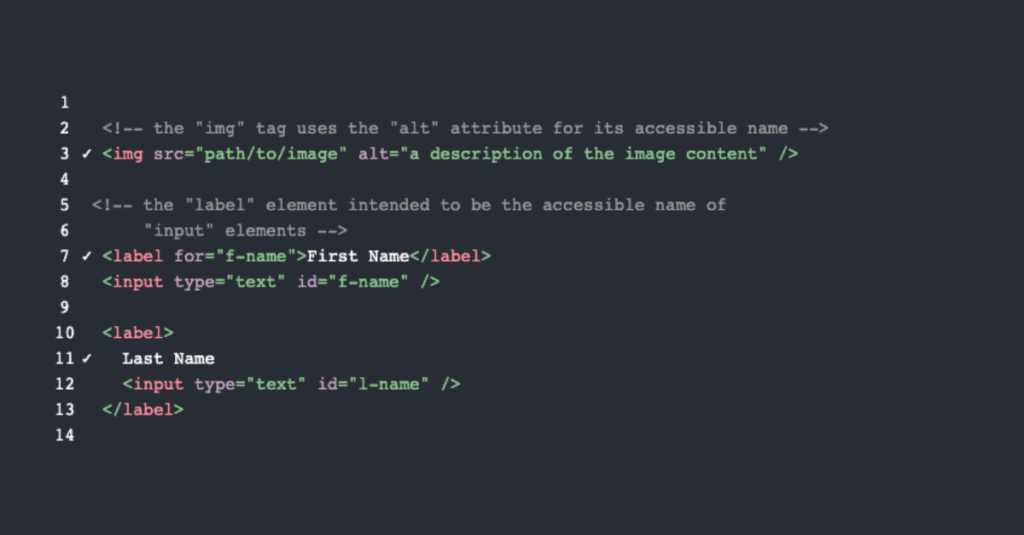

The image above shows how to use the “alt” attribute to provide text that describes an image. It also shows how to provide an explicit text label when a user is expected to input information such as their first/last name into a form for example. These best practices make websites accessible for people using screen readers.

It is important to note that buy-in from the C-suite plays a significant role in delivering accessible products. A commitment to accessibility from the top signals that even amongst competing priorities, accessibility is an important part of the development process that must be factored in. One way leaders are signalling this shift is by incorporating digital accessibility into diversity and inclusion programs, as well as publishing public accessibility statements that demonstrate their commitment.

Assess your level of readiness using tools and testing

Testing for conformance to WCAG guidelines requires a mix of automated and manual testing. The W3C maintains a list of tools that can test if web content meets accessibility guidelines. While automated testing tools provide rapid time to value, they only detect a small percentage of digital accessibility issues which creates a need for manual testing. Combining automated testing with manual testing is the only way to get a complete picture of conformance across all digital media including websites, PDFs, videos, images and audio files.

As mentioned earlier, at least 97.4% of websites have an accessibility issue. In its report, WebAIM provides a list of the common accessibility issues it found in February 2021 as does Silktide in its May 2021 evaluation. A few issues teams can focus on right away include:

  • Avoid using the same link text for different destinations
  • Ensure images have alternative text
  • Ensure text has sufficient contrast
  • Update empty links and empty buttons with descriptive text

For an in-depth list of accessibility issues, as well as best practices, look no further than these 101 digital accessibility tips and tricks.

Research and evaluation should include people with disabilities

Design and development teams should include people with disabilities in their user research and manual testing processes to ensure the perspectives and experiences of people with disabilities are reflected in their product decisions. Fable, as an example, is a relatively new vendor primarily focused on this.

Prioritization is key

While all accessibility issues should be addressed it’s best to attend to the most critical issues first. Prioritization can be based on factors such as user impact, litigation risk, effort required and cost. This two-part article from accessibility vendor, Deque Systems, outlines a robust system for addressing accessibility. It explains why businesses should start strategically by mapping the user impact of their accessibility issues against litigation risk in order to prioritize the issues to tackle first. It then offers tactical steps for development teams tasked with making accessibility updates, suggesting developers first focus on site-wide templates and then reusable components.

Track your progress

Digital accessibility is an ongoing journey. Most organizations should start by prioritizing their existing digital footprint while embedding best practices into their design and development process so that new products are built to be accessible from the get-go. While remediating accessibility issues in existing assets, it is important to track your progress towards your desired level of compliance.
Source: deque.com

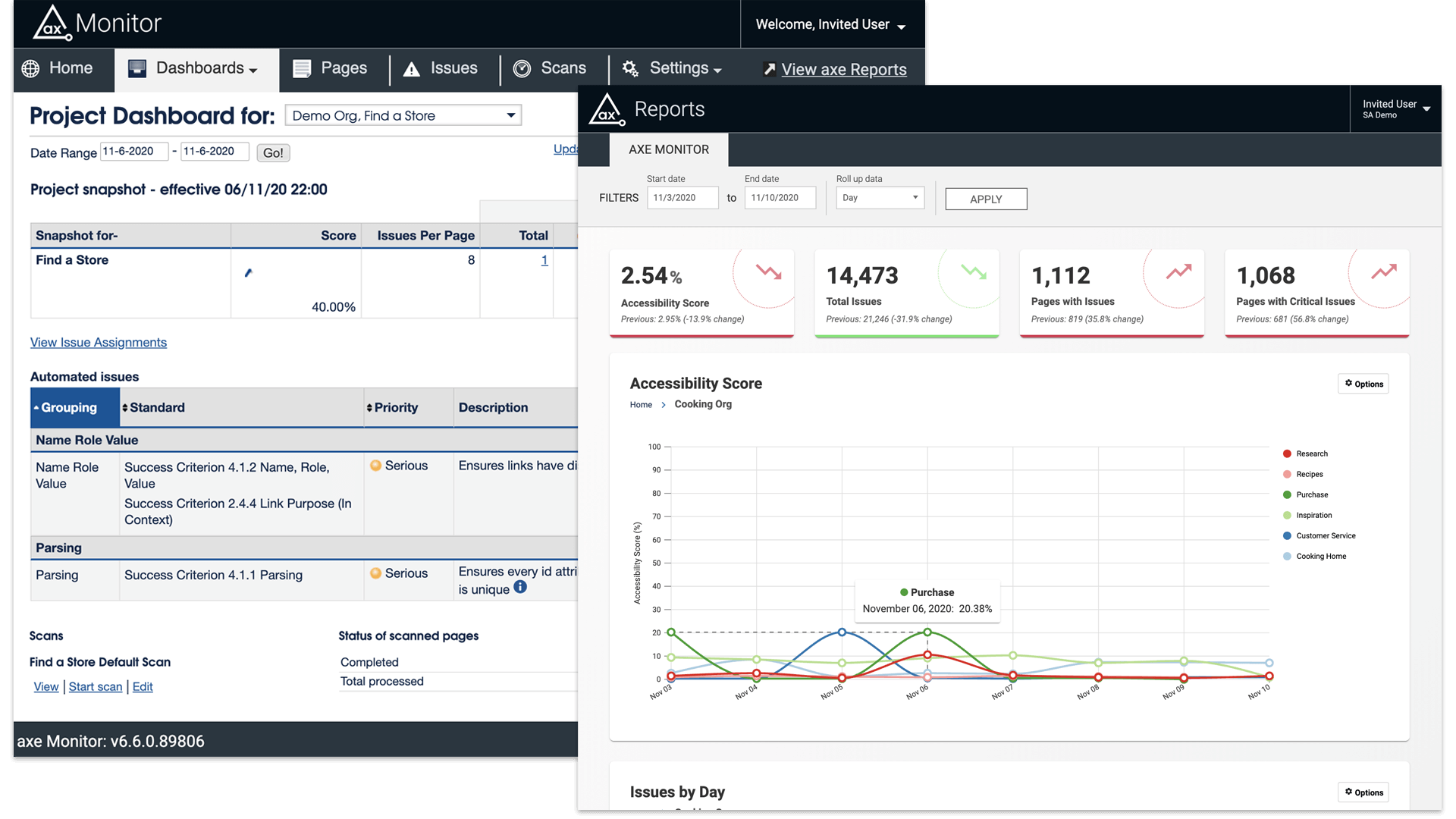
In addition, constant monitoring is critical as every new release or update could introduce new accessibility issues that need to be detected and fixed. Many accessibility tools, such as Deque Systems’ accessibility platform, come with dashboards that provide a quick snapshot of the number of issues and their severity, as well as reporting capabilities for an in-depth evaluation of the accessibility program.

What Does Success Look Like?

If you can never be “done” with digital accessibility, then what does success look like? Companies will know they have achieved success when digital accessibility is no longer thought of as separate from the design and development process, but rather embedded into it. Eventually the term “digital accessibility” will disappear because it will inherently become part of the way the business is run. However, at this point, there is still a lot of education that needs to happen in order to increase awareness of digital accessibility, why it’s important and how to get started.

This is part 2 in a 3-part series on digital accessibility. See part 1 for an introduction to digital accessibility and why it is important. Look out for part 3 in the coming weeks, which will take a close look at vendors offering various digital accessibility products and services.
 

Transforming DevSecOps Starting with Real-Time Secrets Detection: Why We Are Excited to Back GitGuardian

As a DevSecOps company operating in a very complex and dynamic ecosystem, we found in Sapphire the perfect partner for GitGuardian Series B. The Sapphire team and our dedicated partner Andreas have demonstrated a very deep understanding of our industry, which will help us make the best and most informed strategic decisions.

– Jérémy Thomas, co-Founder & CEO, GitGuardian


With 1,291 data breaches in 2021, the number has already exceeded 2020 figures. It’s no wonder that business data breaches, potentially causing millions of dollars in damages, are a top fear amongst many organizations today.

But what’s shocking to note is that over 80% of company data breaches within hacking involve brute force or the use of lost or stolen credentials, which can easily be prevented with real-time monitoring. In response, we’ve seen the evolution of an entire industry take shape: DevSecOps. The convergence of security and development has shifted from a buzzword into a significant spending priority.

As background, DevSecOps relates to security protocols that are baked into the development process rather than added as a “layer on top,” allowing developers and security professionals to harness the power of agile development without short circuiting the goal of creating secure code. Global 2,000 companies are embracing this trend with increasing momentum as more and more companies adopt “shift left” developer-focused security tools.

Today, we’re excited to partner with GitGuardian, which focuses on real-time secrets detection (API keys, certifications, usernames/passwords, etc.) and security policies enforcement by scanning a company’s external and internal code repositories. The solution helps developers fix vulnerabilities while also educating them by focusing on coding errors and prevention. By empowering developers, GitGuardian eases the burden on security teams, providing them with the enforcement capabilities, visibility and control they need.

Here’s more on why we are excited to back GitGuardian:

Addressing a Large and Rapidly Growing Problem

According to the 2021 State of Secrets Sprawl on GitHub report, the number of secrets found on GitHub are growing at an annual rate of 20%. The report also finds that 15% of leaks on GitHub occur within public repositories owned by organizations, and 85% of the leaks occur on developers’ personal repositories. Secrets in these repositories can be either personal or corporate, which is a huge risk for companies as some of their corporate secrets are exposed publicly through current or former developer’s personal repositories.
This problem continues to grow and be exacerbated because of number of key reasons:

  1. The growth of GitHub: GitHub gathers more than 50 million developers working on their personal and/or professional projects, creating c.60M repositories per year and adding nearly two billion contributions, annually.
  2. Shift to the cloud: As architectures move to the cloud and increasingly rely on components and applications, the growth of commits occurring, and the use of digital authentication credentials, has increased the number of secrets being mistakenly leaked.
  3. Continuous development – As companies continue to push for shorter release cycles, the risk of mistakes and secrets leakage only increases.
  4. Company growth – As companies grow, so do the number of repositories, number of developer teams and typically, their geographical spread, which increases the complexity of enforcing good security practices and the likelihood of secrets leakage.

As more organizations look to adopt “shift-left” developer-focused security tools, GitGuardian is able to capitalize on these tailwinds given their developer-first focus.

An Ingenious GTM Approach

GitGuardian has built an innovative flywheel sales motion, enabling the team to build strong developer market awareness and bottoms-up adoption.

GitGuardian sends approximately 3,600 free alerts to new developers daily to alert them when they may have mistakenly leaked a secret, driving downloads of their free product, which now has more than 110,000 installs and is the #1 most installed security app on GitHub.

GitGuardian is able to take advantage of its product-led growth model with strong bottoms-up developer adoption to then sell their paid products through developer recommendations to security teams. Through this, GitGuardian has won sector-leading customers including the likes of DataDog, Genesys, Instacart and Talend.

Breadth of Platform

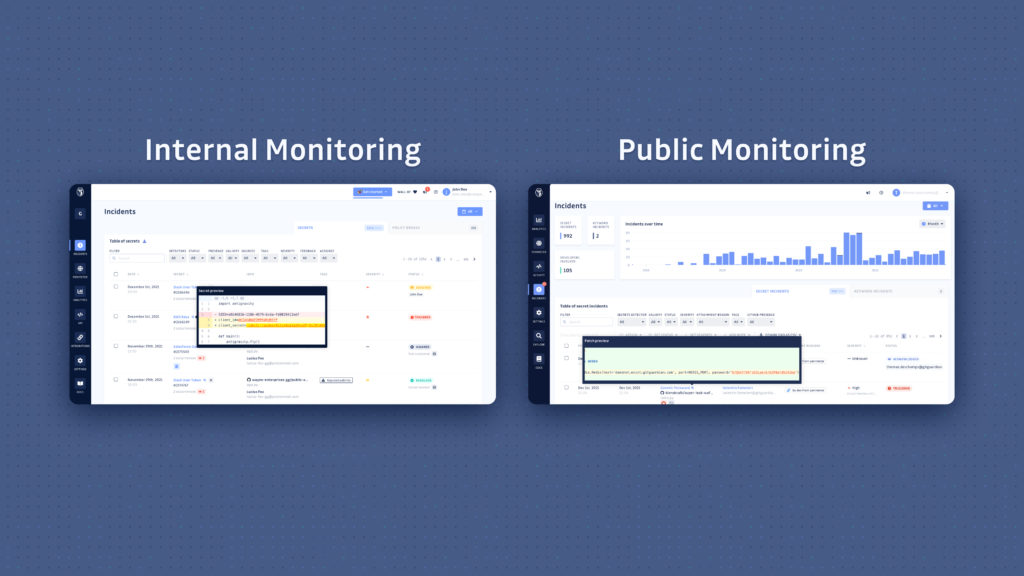
GitGuardian’s proprietary secret detection algorithms were originally built off public repositories. What soon became clear was the importance of not only monitoring public repositories, but also private ones. Internal systems within companies are often treated with complete trust and as a result, secrets are more freely shared.

GitGuardian offers the ability to monitor both internal and external repositories, and the product’s technical strength when doing so has enabled GitGuardian to repeatedly win against competition to-date.

The DevSecOps market was valued at $2.2B in 2019 and is expected to grow at a CAGR of 30.8%. We believe GitGuardian is disrupting this huge, rapidly growing market, and that through GitGuardian’s free alerts, existing products and product roadmap, the platform has strong developer awareness and differentiated positioning.

A Visionary Team with Strong Industry Experience


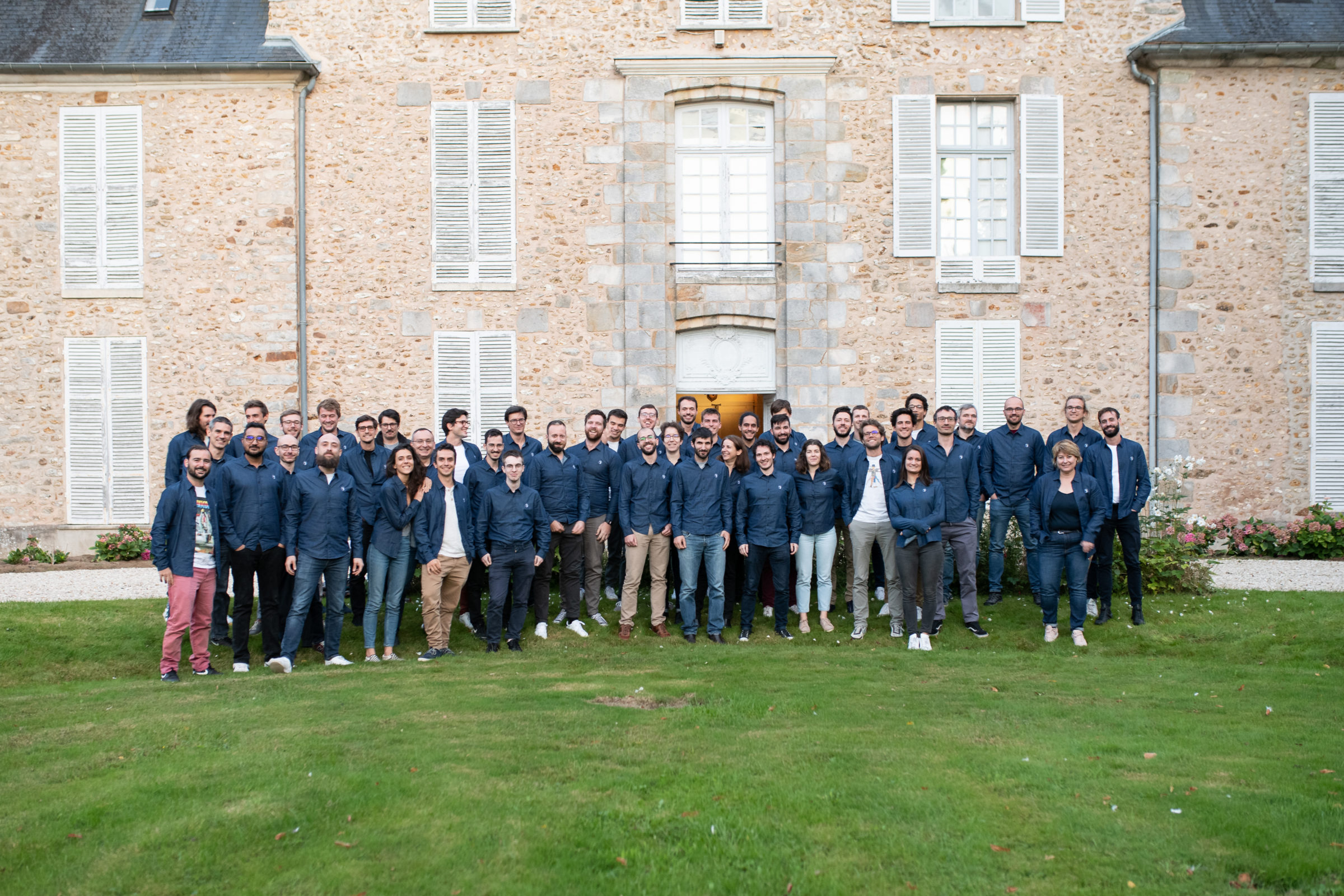
We are thrilled to be backing co-founders Jérémy Thomas and Eric Fourrier who immediately impressed us with their drive, experience and the strong technical talent they have recruited. The two are gifted leaders driven to build a globally leading developer security platform having previously co-founded a data-science development agency together and both graduates in applied mathematics and artificial intelligence.

At Sapphire, we have a long history of investing in and building companies of consequence within the DevOps category. We immediately knew from the first meeting that Jérémy and Eric, that the GitGuardian journey is one we wanted to play a part in. We are therefore thrilled to join our friends at Eurazeo and Balderton in their Series B round and are excited to help GitGuardian continue to successfully execute on their vision to become a company of consequence within DevSecOps.

Unveiling Sapphire’s 3rd Annual CIO Innovation Index: Reimagining the Enterprise and Finding Corporate Purpose

When Sapphire introduced the CIO Innovation Index in 2019, it was the first of its kind research for CIOs and enterprise technology leaders to benchmark emerging technology adoption, startup engagement and their personal connection to startups. Since then, the report has served as a guidepost for how, when and in what industries enterprises are innovating and adopting startup technologies. For example, last year, our CIO Innovation Index uncovered that enterprise spend with startups would grow from 10% of their overall vendor budget to 15%. And just as expected, that prediction came true.

Each year, in addition to our year-over-year research on areas including technology spend across categories, share of budget going to startups and the proof-of-concept process, we aim to address overarching, top-of-mind themes affecting our corporate network. In years past, we explored topics such as the future of the CIO role, the impact of the pandemic on enterprise innovation and what the next normal of work will look like. This year, we’ve found that the inflection point for our network concerns corporate purpose.

As a venture capital firm investing in high-growth startups, our goal is to partner with companies that share our values and emphasize the employee experience. We’re proud to have backed founders like Auth0 CEO Eugenio Pace who imbue their leadership with clear values. Many argue that part of the startup ethos that attracts and inspires employees and investors alike has to do with establishing a shared purpose. Harvard Business School professor Ranjay Gulati once wrote that the soul of a startup is characterized by, “Three elements that combine to create a unique and inspiring context for work: business intent, customer connection and employee experience.”

It’s become clear that soul-searching is not exclusive to startups. Massive changes in the world around us have resulted in re-prioritization for the global workforce. And these changes in priorities have triggered what is being called the “Great Resignation” with millions of employees leaving their jobs and millions more considering it. We took these changes into account when designing our 2021 CIO Innovation Index. This year’s report dives into how shifting employee priorities, the Great Resignation and a new focus on corporate purpose are impacting Sapphire’s executive network–and what this means for CIOs going forward.

A Lasting Impact on Workforce Strategy

A commitment to positive employee experience is no doubt a statement of corporate purpose. In response to employee demands and strategic shifts, 91% of survey respondents are making changes to their workforce strategy with an overwhelming majority (88%) introducing more flexibility in remote versus in-office work as a key component of their new strategy. Startups are mission-critical to enabling these strategic shifts.

In fact, 86% of respondents are utilizing startups to support shifts to remote work.

At our recent Sapphire Vision Summit, Sapphire Partner Cathy Gao spoke with executives from Meta, Gilead and Sapphire portfolio company Degreed on the changes they’re witnessing and executing for their workforce strategy– and dived deeper into the source of these changes.

“We’re seeing a reckoning of employees who were living to work [who are] thinking about: ‘is that actually what is actually true to my value and my purpose?’ Individuals are now thinking what does it mean to work to live,” said Degreed’s President and Chief Experience Officer Kat Kennedy, “and that has really put the onus on organizations to focus on a people-first strategy.”

At Sapphire, we firmly believe that the renewed focus on employee experience isn’t going anywhere anytime soon. In the past year alone, we’ve invested in a number of startups in this year alone including Gem, Degreed, BetterUp and Unmind that are focused on employee engagement, development, wellbeing and overall experience, and we continue to make bets on the future of work space. While these technologies are certainly helping companies of all sizes adapt to new ways of working and the employee experience overall, we’re finding that employees are looking for more than increased flexibility and better benefits. They are looking for corporate purpose.

“Employees are increasingly seeking fulfillment,” observed Marc Berson, CIO at Gilead Sciences, “And focusing that fulfillment on their company’s purpose and mission. So at Gilead Sciences, it’s easy for us to inspire people around our mission–we have cancer therapies and HIV therapies and COVID therapies. Human lives are literally impacted by our products. We’re doubling down on communicating that mission and making sure people understand their individual contributions to that broader mission.”

This mission is different for every organization, but clearly stating it and acting on it is a huge component of keeping employees engaged and improving their work experience.

Technology’s Role in Driving ESG: A Strategic Imperative

ESG (or Environment, Social, and Corporate Governance) is not a new term, and certainly not for the Global 2000 enterprises in our network, but it is increasingly a strategic (and regulatory) imperative. Employee re-prioritization, which is driving changes in workforce strategy, paired with consumer demands is putting pressure on corporations to define their shared values and commitment to areas like sustainability, social good and strong corporate governance. 

Our network of technology executives are incorporating ESG strategy into their technology strategy as responsibility for tooling, data and reporting around ESG principles often falls to technology teams. It’s inspiring to see that 87% of Innovation Index respondents are planning to adopt technology tools across areas like sustainability, DEI and data privacy. 

As University of San Francisco’s VP and Chief Information Officer Opinder Bawa notes, “ESG principles like sustainability and a commitment to diversity, equity and inclusion are a key facet of our strategy–and we are actively adopting technology solutions to help support these goals.”

Sustainability in particular is a growing focus for Sapphire’s investment team and an exciting space for innovative startups. Our Sapphire Partners team has long been invested in VCs with sustainability theses, and we continue to see startups tackling the sustainability challenges our network is facing. If enterprises are truly going to get serious about sustainability, they’ll need to start working with this landscape of new players.

The Purposeful CIO

This brings us to the question of how the CIO role continues to evolve in light of current ways of working, new expectations for employees and a focus on corporate purpose. For many in our network, the pandemic highlighted the leadership element of their jobs: managing a global team, taking care of their employees and communicating more transparently than ever before. 

As Amy Hayes, VP of Learning and Development at Meta put it, the difficult times of the past two years have called “on leaders to be more human, and focus on humanity and be more empathetic.” 

As company values are established at the very highest levels, CIO responsibilities include supporting those values with technology and continuing to lead by example. Hybrid work is becoming a de facto operating model for many corporations and the technology that allows distributed employees to connect, collaborate and communicate is mission critical. Furthermore, as companies make major public commitments to sustainability, DEI and customer privacy, they are also accountable to deliver on these commitments with data. 

Startups’ Role in Powering Today’s Enterprise

Luckily, startups can help support all of these priorities–from building an inclusive company culture, to tracking Scope 3 emissions, to ensuring watertight data governance. In many cases, startups are actually much better positioned to support these new areas compared to large incumbents that are themselves still figuring out how corporate purpose fits into their strategy. Many of the emerging technology categories that we introduced at the inception of our survey have become table-stakes, and we’re experiencing a relentless pace of innovation across the entire landscape. 

As touched on earlier, it’s exciting to see that enterprise CIOs are growing their spend with startups–from 10% of overall vendor budgets in the past two years to 15% this year. And there are more ways than ever to discover and engage with innovative startups.

We’re proud to note that 72% of our survey respondents find VCs like Sapphire to be among the most important sources of information on the innovation ecosystem.

We’re also seeing usage of new channels like cloud marketplaces become more popular with 79% of respondents using cloud marketplaces to discover and procure startups.

Keeping in sync with the startup ecosystem has always been crucial to understanding advances in traditional CIO areas such as data tooling, enterprise architecture and cybersecurity. We also urge CIOs to stay in tune with the startup ecosystem in not-so-traditional areas like the ones we’ve highlighted in this year: ESG tooling, digital accessibility solutions and employee experience platforms. If the past three years of running this Index taught us anything, it’s that these emerging areas will soon be commonplace as well. 

Download the 2021 Innovation Index

To get a deeper look at our year-over-year tracking of emerging technology adoption, startup engagement processes, as well as 2021 data on workforce strategies and ESG tooling, download this year’s CIO Innovation Index Report today!

Sapphire Vision Summit 2021: 5 Trends Shaping the Enterprise

This year’s Sapphire Vision Summit might be over, but the big thinking isn’t.

Our 2021 Summit brought together an exclusive group of 350+ startup CEOs, VC investors and innovative Global 2000 CIOs and CxOs to learn about what’s next in enterprise technology. We examined topics such as creating a cleaner world, making sense of the metaverse, remaking culture and retaining talent, staying ahead of cyber threats in a hybrid work environment and managing data as it increases in scale and complexity.

It’s no coincidence that our recently released 2021 CIO Innovation Index underpinned these themes and the new ways CIOs are thinking:

  • 78% of CIOs plan to increase cybersecurity spend in the next 12 months
  • 88% of CIOs said their companies now offer increased flexibility in remote work
  • 65% of CIO technology strategies include adoption of sustainability tools
  • CIOs expect startups to claim 15% of their IT budgets in 2022 indicating growing appetite for emerging technologies

But what’s driving such a significant refocusing of business priorities and strategies? The Atlantic CEO and former WIRED Editor-in-Chief Nicholas Thompson captured it best in his opening keynote:

“At this profound moment of change in the world, we’ve also experienced an immense change in tech where the forces of the last 10 years have pushed us into a phase of massive societal transformation.”

So, in case you didn’t get to the summit this year, we’ve recapped the five biggest ideas from the event that are set to change the business world as we know it.

Sustainability is a strategic imperative

The How to Achieve Sustainability at Scale: Technology Strategies for a Cleaner World panel kicked-off by outlining how organizations should start their climate journey by understanding their baseline emissions. From there, they can build realistic roadmaps that not only ensure accountability for targets at a corporate level, but also address cultural change among employees.

And B2B sustainability software is a growing category that’s helping businesses meet their decarbonization goals – from e-commerce enablement companies like Recurate, Archive and Treet, to climate risk intelligence providers, such as Kettle, Cervest and Climate AI, that can help companies protect their vital assets from climate-related disasters.To drive this change, Scott Russell, Head of Customer Success at SAP, pointed to technology’s role in operationalizing and delivering on environmental targets. “Whether you need to make better travel decisions, purchasing decisions, design decisions or production decisions, technology gives you the insights to make the best sustainable decisions at that time.”

Welcome to the metaverse’s expanding possibilities

When the word “metaverse” exploded following Facebook’s name change to Meta last month, it was met with both excitement and confusion.

In their closing keynote Strategizing for the Metaverse: How Enterprises Can Prepare for the New Reality, they explained how the metaverse represents a coming together of technologies – such as crypto, which adds an economic layer and NFTs, which let people own digital assets – to create an entirely new way of interacting online.We brought Lindsey McInerney, former Global Head of Technology and Innovation at Anheuser Busch InBev, and Kathy Hackl, Chief Metaverse Officer and CEO of the Futures Intelligence Group, together for a discussion around how the metaverse will change the way we do business in the digital space.

But the idea that you can carry digital goods between different digital universes and worlds owned the conversation. “It’s moving away from performing by the rules of whichever platform you’re on and towards the current state of the internet that allows people to carry things to all of these different worlds. I think this will really unlock the value in digital goods,” said McInerney.

Retaining talent through the Great Resignation

Shifting gears from the future to the present, the Avoiding the Great Resignation: How to Remake Culture & Retain Talent panel turned its attention to hiring at a time when employees are reprioritizing their work-life balance and resigning in record numbers – 4.4 million Americans left their jobs in September this year alone.

Kat Kennedy, President and Chief Experience Officer at portfolio company Degreedput the rapid employment shift down to, “a dichotomy between what leaders think people want and what employees actually want. That’s where we’re really feeling the pain and lack of engagement and retention.”

Amy Hays, Vice President of Global Learning and Development at Meta, then outlined how employee expectations have changed and how organizations need to adapt. “People are seeking more autonomy, personalization and flexibility. And remote work has given people a lot more choices on how they get those things. At the same time, given what people are grappling with in a remote environment, there is also a need to connect. How do we care for each other when we’re not together?”

Such a drastic shift in the hiring and retention landscape is putting pressure on organizations to deploy people-first strategies that map to employee engagement and wellbeing. “In order to help people belong, we have to know them. And that’s really where I believe technology comes into play,” Kat adds. Indeed, using technology to help employees feel belonging and valued is one place leaders can start to make the new distributed working environment more connected, engaging and meaningful for employees.

New tech and attitudes are taking on rising cyber threats

If organizations think of IT assets as inventory, then the distributed way of working means their assets are now deployed all over the world, are more ephemeral and are harder to monitor, especially with the push to the cloud.

And while some organizations are not yet equipped to model the risk that comes with these changes or build the policies to better manage dispersed assets, help is coming. “AI/ML is really the solution here. It helps us to look at data holistically and deal with it at a scale which honestly, humans cannot,” observed Sreelakshmi Kolli, Chief Digital Officer, Align Technology.

As the One Step Ahead: Proactive Cybersecurity for a Growing Threat Ecosystem panel – made up of leaders from AirBnB, JupiterOne (a Sapphire portfolio company), and Align Technology – aptly noted, this challenge is also shifting the priorities of organizations and giving security teams a louder voice in the boardroom.

“Security is becoming a much more prominent topic in most organizations. More CISOs are reporting directly to CEOs. Another interesting thing is most boards today have at least a cyber expert or technology expert, even a separate cyber committee altogether. So it’s not just talk; people are following up,” explained Vijaya Kaza, Chief Security Officer and Head of Engineering & Data Science for Trust & Safety, AirBnB.

Managing data in a time of abundance 

As enterprises grapple with a growing influx of data and increasingly complex use cases, a growing challenge has become balancing speed, personalization and efficiency with governance, privacy and security.

This balancing act is, in large part, due to a disconnect between business people and implementation people. “Data is a team sport, IT can’t pull it off on behalf of the organization. You have to create the right balance of structure,” said Sharon Mandell, SVP and CIO, Juniper Networks. “There’s this group of people who have to bridge that gap, who have to be technical enough to communicate with the engineers, yet subject matter adept enough to act as translators.”

The How Enterprises Can Win by Leveraging the New Open Data Ecosystem panel then turned its attention to open source data tools and in particular the need for these tools to be highly integrated, especially in larger hybrid multi-cloud environments. Speakers explored how deep integration of open source tools can lead to data and workload portability for enterprises, meaning they can more easily move data between databases and change cloud providers if needed.


Fast changes require careful thought

But when it came to finding the right balance between investing in open source tools versus specific vendors, Billy Bosworth, CEO at Dremio (a Sapphire portfolio company), put it best, saying, “it’s about creating a balance between open source and trusted vendors. How can you parse out your use cases and your workloads that are going to maximize the efficiency of the technologies, but also deliver the business results.”

A unanimous theme coming out of our Summit was that for any company to have a fighting chance in an increasingly competitive distributed world, it must “remake,” “reinvent” and “reimagine” itself.

Our event’s main keynote drove this message home, but delivered it with a caveat of social responsibility. In his session, Nicholas explored each side of the tradeoffs in the world of tech – each side neither right nor wrong but requiring careful consideration in order to make the most thoughtful decisions. Deciding between tradeoffs is never easy – but these decisions deserve our attention because they often have cascading consequences on the world around us.

Nicholas’s session left us reconsidering our current decision-making processes and hopeful that we’re all capable of positively influencing our surroundings with the power of tech.

Though the Summit is over, the learning certainly isn’t. If you missed this year’s Summit, be sure to watch it on-demand here. 

Check out Sapphire Vision Summit 2021 on-demand today!


Putting an End to Musculoskeletal Pain: Why We’re Proud to Back SWORD Health

Some may say that when you stop moving, you stop living. For anyone that has dealt with persistent physical pain, whether from a sprained ankle or slipped disc, you know it is a gruesome experience that consumes all aspects of life. It affects everything from sleep, to work, to relationships. Every day, you find yourself exhausted, frustrated and dejected. Pain changes everything.

Musculoskeletal (MSK) conditions, which can range from a sprained ankle to acute back pain, are diverse and unfortunately, universally felt. It is estimated that one in two adults in the U.S. live with MSK pain. Yet despite its ubiquitous nature, there are massive challenges in the healthcare system today that prevent patients from receiving adequate and effective MSK care, including the scarcity of licensed physical therapists, access constraints of regular in-person PT visits and over reliance on pain medications and surgery.

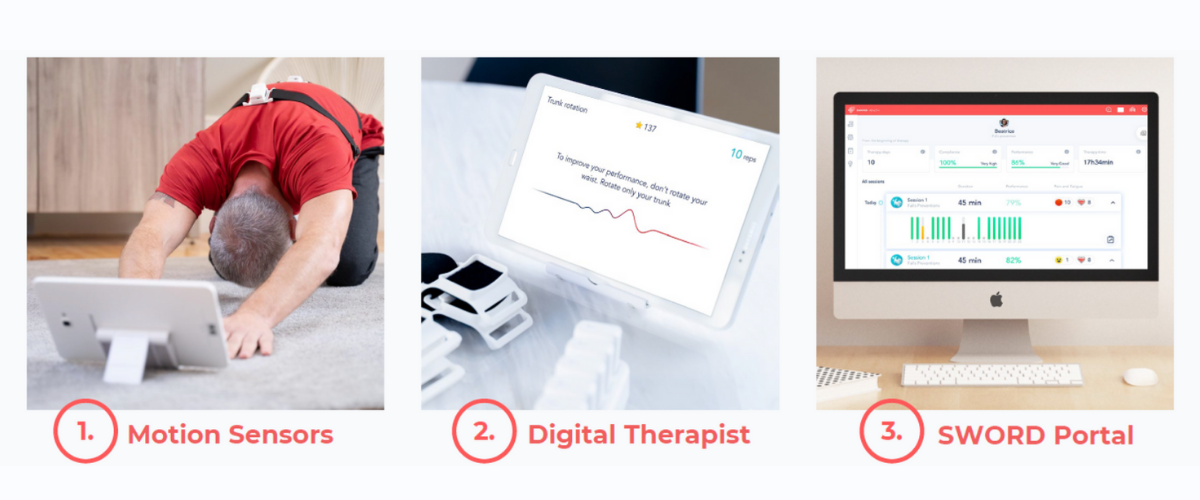
That’s why, we’re thrilled to partner with Founder and CEO, Virgilio (“V”) Bento, and the entire team at SWORD Health, to lead their $163 million Series D. SWORD Health is a digital MSK care platform that works with employers and uses sensors, tablets and licensed physical therapists to treat patients virtually. With its best-in-class sensor-based, AI-driven technology, SWORD health allows patients to receive the support and care whenever and wherever they need it.

A Pervasive and Costly Problem

MSK conditions are a massive spend category for employers, often falling in the top three alongside cancer, diabetes and cardiovascular diseases. MSK conditions range from pain in the muscle, bone or joint, often stemming from injuries, overexertion or repetitive motion. Most common examples include lower back pain, knee pain, neck pain, arthritis and carpal tunnel syndrome. These conditions fall on a wide continuum–from low severity cases to acute and chronic pain. MSK conditions are extremely common and lead to more lost workdays than any other condition, costing an estimated $213B each year in medical costs and lost productivity.

Despite how common MSK conditions are, traditional approaches like physical therapy and surgeries are not easily accessible or applicable to everyone. Due to its ubiquitous nature and limitations in the existing healthcare system, such as access constraints to in-person physical therapy and over reliance on costly pain medications and surgery (one elective surgery can cost up to $110,000), MSK is consistently ranked as one of the highest spend categories for companies, and puts immense strain on both the employee and employer.

A digital MSK solution like SWORD helps drive substantial cost savings for employers as a result of surgeries avoided, productivity days regained and so on. SWORD members report a 70% reduction in pain, 64% reduction in surgery intent, 48% reduction in medication consumption, 52% reduction in depression and a 35% reduction in anxiety.

Democratizing Access to MSK Care 

The pandemic has exposed our healthcare system’s strong reliance on in-person care delivery and created a paradigm shift in the way we receive care with the rapid adoption of telemedicine. Digital health platforms have now become a core part of every employer’s healthcare strategy. With virtual care, patients enjoy greater convenience, access and cost benefits while care providers experience better flexibility, reach and efficiency. We believe MSK conditions are a key category that can leverage technology to deliver superior care virtually and drive highly meaningful impact on individuals’ lives.

With SWORD, patients first fill out a questionnaire to gauge location of pain, duration, severity, range of motion, existing treatment plans if any, comorbidities, etc. The questionnaire gives the patient’s licensed physical therapist (PT) baseline information to discuss during a 1:1 consultation session over video call where the patient and PT align on an initial treatment plan.  When completing these exercises at home, SWORD’s Digital Therapist uses data from the sensors to provide real-time feedback on quality of movement (i.e. “don’t bend your knee” or “lean forward more”) to ensure proper adherence and prevent further injuries. Licensed PTs can see all of their patients’ data, including compliance, self-scored satisfaction, range of movement at various degrees and difficulty/ measured strain during exercises. PTs can double-click into any individual to see exercises they’re struggling with, observe their progress over time, adjust future sessions and message them through the portal (via 1:1 text or face-to-face telemedicine as necessary).

SWORD aims to solve the biggest barriers to successful MSK care today by providing clinically proven, virtual physical therapy anywhere anytime, leveraging best-in-class motion detection technology to track strain and ensure the right level of movement real-time, and utilizing AI to make PTs more efficient and thus pass cost savings to patients.

Compassionate Team Dedicated to Changing Lives

Virgilio (“V”) Bento, (Founder & CEO) founded SWORD Health after witnessing first-hand his loved ones face incredible challenges with receiving adequate MSK care.From our very first interactions with V, we resonated deeply with his unrelenting drive, passion and dedication to revolutionizing the way MSK care is delivered. It is not every day that we get to hear customers  talk about how “incredible and life changing” a product is like what we’ve heard consistently from SWORD’s customers.

Sapphire is proud to invest in companies we believe to be of real consequence. We have a long history of partnering with category-leading companies in digital health and wellness with the likes of LivongoBetterUpMedableFitbit23andMeUnmindTonal and Breathwrk. With Virgilio and his team’s deep commitment to improving individuals’ quality of life, SWORD Health aligns squarely with Sapphire’s values. We are dedicated to supporting the health and wellbeing of our employees and are here to help our portfolio companies such as SWORD Health along their journey. We couldn’t be more thrilled to be partners.


Digital Accessibility Series, Part 1: What is Digital Accessibility and Why is it Important?

When you build a business, product or website, digital accessibility probably isn’t the first thing that comes to mind, or the second, or the third. But for many businesses, digital accessibility is fast becoming an opportunity to tap into an underserved market and get ahead of looming regulations.

Here’s what you need to know about digital accessibility.

What is digital accessibility?

Digital accessibility is the idea that websites, tools and technologies should be designed and developed so that every single person can perceive, understand, navigate, interact and contribute digitally.

However, these considerations are often overlooked which creates barriers that exclude people with disabilities. For example, people with dyslexia require text-to-speech accommodations to experience the web. Without this assistive technology, here is what text on a website would look like to them.

And this is just the tip of the iceberg. One in four non-institutionalized U.S. adults (an estimated 61.4 million people) report having a disability that poses accessibility challenges. These include:

  • Physical disabilities, like limitations of muscular control or missing limbs, which often make it difficult to navigate websites, browsers and authoring tools that don’t provide full keyboard support or supply sufficient time to respond to prompts.
  • Auditory disabilities range from moderate to substantial and uncorrectable hearing loss (deafness), and can make audio or video content without captions, transcripts or sign language impossible to parse.
  • Cognitive, learning and neurological challenges, which can affect how well people hear, move, see, speak and understand information – and are not necessarily reflective of the intelligence of a person. Challenges include seizure disorders like epilepsy and migraines, which can be triggered by visual flickering or audio signals at certain frequencies.
  • Speech disabilities, which include difficulty producing speech. For example, the clarity of someone’s voice might be difficult to understand, which makes voice-only interactions and websites that offer phone support as the sole way to communicate a challenge.
  • Visual disabilities, which range from mild or moderate vision loss to blindness. Additionally, some people have reduced, lacking or increased sensitivity to certain colors. This means images, controls and videos that don’t have text alternatives are difficult to use.

Assistive technologies and adaptive strategies

Assistive technologies are software and hardware products that help people with disabilities interact with the web. Examples include:

  • Screen reader softwarewhich processes content on desktops and in web browsers to convert it to other forms such as text-to-speech and Braille. Examples include JAWS for Windows, NVDA, or Voiceover for Mac. Screen readers are typically used by people with visual impairments or severe dyslexia.
  • Screen magnification software, which allows people with visual impairments to control the size of text and or graphics on the screen. Screen magnifiers typically emulate the experience of using a handheld magnifier and may provide other functionality such as text-to-speech.
  • Head pointers, which are devices worn on the user’s head that can be used to push keys on a keyboard or interact with a screen. This device is typically used by individuals who have lost the use of their limbs. Eye-tracking systems are another technology in this category that can help people with disabilities control a mouse pointer and initiate mouse clicks through eye movement and blinking.
  • Sip and Puff deviceswhich are also used by people who have lost the use of their limbs. Users “take a sip” or “blow a puff” of air into a straw-like instrument to create air pressure. This air pressure sends a signal to the sip and puff device to initiate certain commands just like a keyboard or mouse. Depending on the type of device and how it has been configured, a puff may initiate navigation through a webpage, and a sip may open links and click on buttons.
  • Speech input software, which provides an alternate way to type text. Voice commands can also be mapped to mouse and keyboard actions making it easier to use the web. A wide range of users can benefit from speech input software including people with visual impairments, people with physical disabilities, people with cognitive impairments and in general users looking for a more convenient way to access the web.

In addition to using assistive technologies, many people with disabilities also use “adaptive strategies” to interact with the web. Examples include increasing text size settings, reducing mouse speed, using browser plugins that block pop-ups and animations, keyboard navigation (particularly when skip links are available) and turning on captions where provided. These adaptive strategies can be used with standard software, with mainstream web browsers and with assistive technologies.

Digital accessibility standards

The Web Content Accessibility Guidelines (WCAG) sets out internationally recognized accessibility standards that come in 3 levels: A, AA, AAA. In the US, the WCAG 2.0 AA is considered the minimum standard by legal experts. However, it is recommended that organizations work towards conformance with WCAG 2.1 AA. The WCAG outlines four basic principles of the digital accessible web:

  1. Perceivable: Information and user interface components should be presented in ways users can perceive. This means providing text alternatives for non-text content, captions and other alternatives for multimedia, and creating content that can be consumed with different senses without losing meaning.
  2. Operable: Users must be able to operate and navigate interface components (the interface cannot require interaction that a user cannot perform). That means making all functionality available from a keyboard, giving users enough time to read and use content and not using content that could cause seizures.
  3. Understandable: Users must be able to understand information, as well as the operation of the user interface. This means making text readable and understandable, presenting content in predictable ways and helping users avoid and correct mistakes.
  4. Robust: Content must be robust enough to be interpreted reliably by a wide variety of user agents and assistive technologies. This means users must still be able to access content as technologies advance.

Why is digital accessibility important?

Most people would agree that making digital experiences accessible to all people regardless of variations in ability is simply the right thing to do. However, it is also important to highlight that there is a business case for investing the time, effort and resources it takes to develop and maintain a digital accessibility program.

Tap into a market of 1.5B+ people spending $1.5T+ annually

In its 2020 Global Economics of Disability report, the Return on Disability Group estimates the global population of people with disabilities at 1.85 billion with an annual disposable income of $1.9 trillion annually. And that number balloons to $13 trillion when you include 3.4 billion friends and family who are naturally biased towards organizations that prioritize accessibility.

And people with disabilities do vote with their attention and wallets. The 2019 Click-Away Pound report shows that 81% of people with disabilities prioritize accessibility higher than price when making spending decisions and 71% of people with disabilities simply leave a website immediately if it is not accessible. That means the companies that prioritize digital accessibility stand to tap a significant market that has been critically underserved.

Address the aging boomer population that controls $2.5T+ in annual spend

Baby Boomers range in age from 57–75 and account for a significant $2.6 trillion in annual spend or 32% of total consumer expenditure.

Aging adults often experience obstacles such as an inability to read small type, decreases in fine motor skills, hearing loss, visual impairment and other challenges that could limit their access to the web unless significant efforts are undertaken to accelerate digital accessibility. Organizations that are successful at this stand to gain the loyalty of an influential group that is already familiar with using the web.

Implementing digital accessibility improves the user experience for all

Adhering to digital accessibility best practices has a spillover effect on all other users as well. This is often referred to as the “curb cut effect”, a phenomenon whereby disability-friendly features are used and appreciated by a larger group than the people they were designed for.

The name comes from curb cuts, which were initially designed to help war veterans in wheelchairs move onto or off a sidewalk with ease, but also benefited people using a walker or cane, people pushing strollers or carts, etc.

An example from the digital realm is closed captions, which were designed to help people with impaired hearing understand movies without needing to hear the dialogue and sound effects. However, closed captions are also useful to people in noisy areas, people who are multitasking and to students who find them useful as a learning aid.

Improved organic search results

Several digital accessibility best practices also have the benefit of boosting SEO, which can lead to improvements in search results. In general, practicing digital accessibility leads to websites that have better structure and a larger corpus of text-based content for potential indexing by search engines.

For example, when header tags (e.g. <h1>, <h2>, etc.) are properly implemented, people using screen readers can easily understand their location on a page. From an SEO standpoint, the more systematic the page structure the more favorably a site is likely to be ranked by search engines. Other examples of digital accessibility and SEO practices that are closely aligned include adding alternative text to images, transcribing audio files, providing audio descriptions and captions for videos, etc.

Digital accessibility is increasingly becoming a prerequisite to doing business

In recent reports, both Forrester and Gartner highlight that blue-chip clientele, like the largest companies, nonprofits and educational institutions, increasingly expect vendors to demonstrate a commitment to digital accessibility and comply with the latest WCAG standards.

As a result, billions are expected to shift towards technology and services vendors that are nimble enough to adopt digital accessibility best practices ahead of their competition.

Digital accessibility litigation and regulation continue to rise

The number of digital accessibility lawsuits has been steadily growing by ~25% annually since 2018. In 2020, cases reached 3,550 or approximately 10 lawsuits every business day. And the number of lawsuits appears to be accelerating as evidenced by a 50% increase comparing just the second half of 2020 to that of 2019. While concentrated in retail, lawsuits spanned every other industry imaginable, including education, entertainment & leisure, financial services, healthcare, travel & hospitality, etc.

The financial, reputational and organizational costs of lawsuits can be significant and businesses would do well to adopt digital accessibility best practices before they are hit with a lawsuit. According to Gartner, business leaders should expect enforceable legal standards related to digital accessibility to be ratified in the coming years, potentially leading to a “GDPR moment” in which businesses scramble to achieve compliance.

Diversity, equity and inclusion encompasses people with disabilities

People with disabilities are a significant portion of the population which renders incomplete any diversity, equity and inclusion program that does not contemplate this group.

Adopting digital accessibility best practices will be a critical way for businesses to show their commitment to diversity, equity and inclusion externally to their customers and users as well as internally to their employees.

In fact, business leaders can take things one step further by not only practicing digital accessibility on customer-facing products but also ensuring that employee-facing resources are also held to the same standards.

Digital accessibility is on the rise

If you take one thing away from this article, it’s this: digital accessibility is fast becoming a matter of great importance driven by the large addressable market, the shift towards vendors who prioritize accessibility, impending regulation and the overall importance of inclusiveness. Finally, embracing digital accessibility early is an opportunity to improve your website and service in a way that all your users will benefit from.

This is part 1 in a 3 part series on digital accessibility. Part 2 in this series covers the steps businesses can take to build accessible products and services.
 

Nothing presented within this article is intended to constitute investment advice, and under no circumstances should any information provided herein be used or considered as an offer to sell or a solicitation of an offer to buy an interest in any investment fund managed by Sapphire Ventures, LLC (“Sapphire”). Information provided reflects Sapphires’ views as of a time, whereby such views are subject to change at any point and Sapphire shall not be obligated to provide notice of any change. Nothing contained in this article may be relied upon as a guarantee or assurance as to the future success of any particular company. Companies mentioned in this article are a representative sample of portfolio companies in which Sapphire has invested in which the author believes such companies fit the objective criteria stated in commentary, which do not reflect all investments made by Sapphire. A complete alphabetical list of Sapphires’ investments made by its direct growth and sports investing strategies is available here. Various content and views contained within this article represent those of third party guests, which do not necessarily reflect the views of Sapphire. Such views are subject to change at any point and do not in any way represent official statements by Sapphire. While the Sapphire has used reasonable efforts to obtain information from reliable sources, we make no representations or warranties as to the accuracy, reliability, or completeness of third-party information presented herein, which is subject to change. Past performance is not indicative of future results.

Automating Cloud Management for DevOps: Why We’re Excited to Back Zesty

Public cloud adoption and its associated complexities have been top of mind for us for the better part of the last decade. Since 2011, we’ve backed more than 155 companies, the majority of which being B2B SaaS startups. Since our early days, we saw this inflection point and have had a front-row seat for just how quickly cloud adoption has been taking off.

Today, we’re excited to announce that we are investing in Zesty which enables companies to automate the management of cloud resources and cut cloud costs. Founded in 2019, the company leverages the cloud’s flexibility to its full extent by automatically adjusting resources based on application needs. We’re also thrilled to continue to invest in Israel’s world-class technology hub. We’ve backed numerous Israeli companies including recent IPOs monday.com, Kaltura and Jfrog, as well as recent investments Verbit, OwnBackup and now Zesty. The Israel start-up ecosystem has proven that it can produce innovative, next-generation companies, and we see Zesty as one of those companies.

Back in 2016, we invested in CloudHealth (Acq. by VMware), initially predicting the importance of managing cloud cost complexities and were compelled by the company’s multi-cloud cost management platform. Almost 6 years later, we have again invested in this space because managing the cloud-computing infrastructure has become much more complex and is not only about cost management anymore. It’s more about automation and taking action rather than just providing simple dashboard based analytics.

A Beneficial, Yet Costly Relationship with the Cloud

Cloud computing adoption is going on at an unprecedented pace and it has accelerated in recent years. Organizations are deeming it an absolute essential to maintaining their competitive edge. It’s no wonder that IDC estimates public cloud spend to grow from $393B in 2021 to $834B in 2025.

While there are many benefits to the cloud, it doesn’t come without its challenges and massive associated costs that are oftentimes much more than expected. In recent studies by Capita and Flexera, 58% of organizations found the shift to the cloud has been more expensive than initially thought, and 23% of companies were above their allocated cloud budget in 2020.

As organizations see an uptick in cloud spend, margin pressures and profit erosion emerge as major hurdles. We often hear companies struggling to understand the intricacies of their cloud computing budget, finding it difficult to forecast capacity and associated spend, which more often than not, contributes to cloud waste. On average, 35% of all cloud spend goes to waste which is an enormous number. This wasted spend is so high due to over-provisioning and under-utilization, unscheduled and/or idle resources, on-demand instances and stale snapshots and images.

The ROI of the Cloud Promised Land with Zesty

Zesty was founded in an effort to address these pervasive challenges, save money, and, ultimately, bring back, and potentially even enhance, the promised ROI of the cloud.

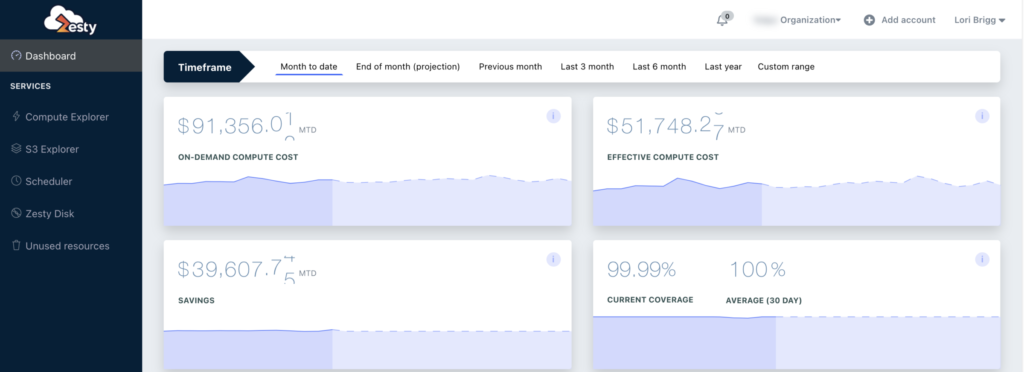
Its Commitment Manager product addresses several of the mentioned culprits right off the bat. By automatically purchasing and selling reserved instances, companies can maximize their commitment savings, overcoming the lack of stability and reliability in forecasts. In the process, they help customers achieve more than 50% savings effortlessly.

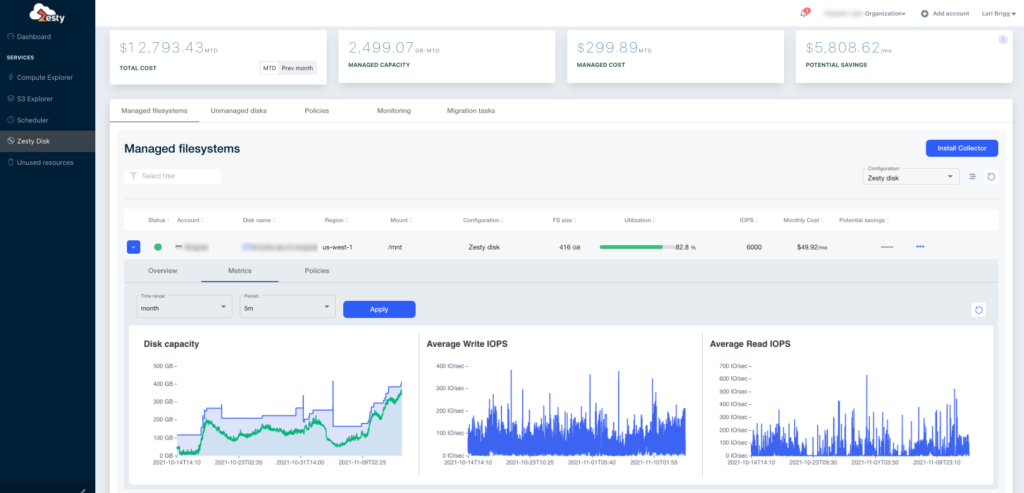
In addition, Zesty provides a next-gen auto-scaler for cloud storage volumes with its Zesty Disk solution. Continuously monitoring and managing EBS volumes is humanly impossible, and can lead to service degradation, EBS failures or overprovisioning. With Zesty Disk, users can automatically monitor EBS performance metrics, predict usage trends and automate thousands of actions. Furthermore, not only does the Zesty engine bring higher performance and require far less maintenance, but also by disentangling key engineering talent from manually having to grapple with infrastructure, expensive engineering teams can focus on what truly matters–building great products.

We believe that Zesty is truly differentiated with a best-in-class, action-oriented AI engine. The seamless user experience, fast-time-to-value, top-tier support and significant savings are core tenants of the Zesty platform–all of which resonated with us. Even pre-Series A, the company has already begun to drive tangible value for their customers. As the cloud cost optimization problem only becomes greater (driven by the rise of Kubernetes and continued cloud deployments), customers will increasingly find value in the Zesty platform. Zesty’s rapid growth, often into greenfield opportunities, and strong retention metrics are clear indicators of product-market-fit and proof that the vision to be the system of record for cloud management has tremendous merit.

40 Years of Combined Cloud Expertise

After extensive conversations with both founders and Zesty customers, we found that Maxim Melamedov (CEO & Co-Founder) and Alexey Baikov (CTO & Co-Founder) are down-to-earth, driven, talented and technical leaders with the aptitude needed to build and scale a successful business. Customers loved the dynamic duo noting their professionalism, empathy towards customers, engagement and leadership capabilities.

Pairing these qualities with the duo’s 40 years of combined expertise in cloud technologies, there’s no one we’d rather have leading the charge than Maxim and Alexey. They have an obsession with their customer’s success, delivering a phenomenal product and cost optimization, and we are confident in their vision to become the system of record for the cloud. Sapphire is looking forward to help build another company of consequence in cloud computing coming out of the Israeli ecosystem.


The #OpenLP Podcast Miniseries: Saul Klein of LocalGlobe and Latitude – Champion of the European Tech Ecosystem

#OpenLP is doing a mini-takeover of Notation’s Origins podcast. Listen to episode one featuring Notation, and episode two featuring Kim Lew of the Columbia University endowment.

In this episode of the #OpenLP podcast miniseries, Sapphire Partners’ Thomas Moon chats with Saul Klein, Partner and Co-founder of LocalGlobe and Latitude. LocalGlobe is the preeminent seed fund based in London, and Latitude is LocalGlobe’s sister fund that invests in breakout companies at the series B. Saul also co-founded SeedCamp, and was formerly a general partner at Index for eight years. He has had significant operational experience, having been part of the original executive team at Skype, and co-founded LoveFilm, which ultimately sold to Amazon.

Saul has been, and continues to be, an early champion of the European tech ecosystem. 

During the conversation, Thomas and Saul touch on the following topics:

  • What Saul had to “unlearn” as he transitioned from operator to investor
  • European venture then vs now. If you think it was always like today – think again!
  • The people side of venture – How Saul thinks about developing and training VCs
  • The philosophy behind how LocalGlobe structures carry and donates profits
  • The potential for European venture moving forward

LISTEN ON ITUNES

LISTEN ON SPOTIFY


DataRobot: Enabling Knowledge Workers to use Boring AI

When people think of Artificial Intelligence (AI) and Machine Learning (ML), they often think of elusive, sophisticated systems that aren’t fully within human control. Driverless vehicles, animal-like robots — these machines make headlines but don’t necessarily make good investments.

At Sapphire Ventures, we love AI/ML — but not in the way you might think. The AI/ML we gravitate towards is quite boring but focused on making the work lives of knowledge workers less boring by automating the mundane and mindless everyday tasks. Automated customer support, smart email categorization, expense report auditing — these are the places where AI/ML is universally practical. And the demand for these types of tools is skyrocketing. A 2018 study from McKinsey showed that while many companies have experimented with AI/ML capabilities — few have realized their full potential and embedded them across multiple business units. The $9 billion global AI/ML software market, including natural language processing and machine learning applications, grew by more than 50% last year — and is projected to expand another 711% to over $100 billion by 2025 as organizations transform and start adopting AI/ML at large scale to drive innovation and value.

DataRobot logoDespite this surge in popularity, AI/ML tools still feel out of reach for many enterprise employees. Enterprises sometimes have experienced data scientists who are tasked with using AI/ML to build models and predict the future direction that a business should take while automating mundane tasks. However, it can be daunting for the average business analyst or knowledge worker to make the shift away from familiar analytic platforms like Excel, Tableau, and Google Sheets and start using AI/ML.

For this reason, we’re thrilled to announce our lead Series E investment in DataRobot, a company committed to making AI/ML tools accessible to everyone and convert every knowledge worker into a data scientist. We led DataRobot’s Series D financing in 2018 and decided to increase our commitment in 2019 and lead their Series E given the company’s quick progression, consistently impressive team, and thriving industry.

DataRobot is in the business of democratizing AI/ML for the enterprise. This means they develop tools that allow any logical thinker to generate deep and valuable insights from the given data and predicting the future direction of the organization. From predicting customer retention and churn to figuring out new ways to personalize products and services to optimizing processes and mundane daily tasks like data-entry, DataRobot’s software and AI/ML tools enables teams to get to the next level of strategy and decision making. 

While DataRobot empowers knowledge workers at all levels to quickly and easily build accurate and transparent predictive AI/ML models with company data, it’s also a secret weapon for data scientists. The software’s extensibility allows data scientists to customize and optimize their AI/ML models much faster and deeper by automating data preprocessing, in-depth feature engineering, and parallel model building. Once they are built, these models can also be put into production very rapidly with only a few lines of code. DataRobot shoulders routine tasks, freeing these highly skilled data scientists to focus on more complex and valuable AI/ML modeling tasks.

Much of DataRobot’s success comes down to its extraordinary leadership. Co-founder and CEO Jeremy Achins deep commitment to spreading the adoption and usage of data science gives the company its competitive edge in this highly competitive industry. He’s also been able to attract an incredibly talented executive team — all with extensive backgrounds in, and with a firm dedication to making data science more user-friendly and accessible. The team is well on its way to achieving this goal by enabling knowledge workers to build 2.5 million AI/ML models on the platform each day and having had over a billion models built on it already. 

The entire Sapphire Ventures team is proud to continue to partner with DataRobot in their next phase. “Boring” applications of AI/MLhave paradoxically proven to be some of our most exciting investments — including AllyO, which harnesses conversational AI to improve job recruiting; and Punchh, which supports brick-and-mortar retailers with a suite of AI and machine learning-driven marketing and revenue optimization products. We have been evangelists in the space for years — and look forward to continuing to explore ways to deliver the value of AI/ML to more curious individuals with DataRobot.


The Database of the Future: Why We’re Excited to Lead Yugabyte’s Series C

Traditionally, companies have built applications with monolithic architectures that are large, on-prem and tightly coupled with non-horizontally scalable SQL databases. With the rise of containers and microservices, companies have started to develop cloud native applications, which are created in a modular framework of loosely coupled services that as a whole make up the application. 

But while applications have de-coupled into services and moved to the cloud, application architects have continued to use monolithic SQL databases (albeit sometimes running on a large server in a public cloud), and have been trying to fit a round peg in a square hole. These architects have discovered the limitations of traditional SQL databases for cloud-born apps and are entirely rethinking their cloud database of choice. This has created a massive new opportunity for cloud native and microservice-friendly SQL databases.

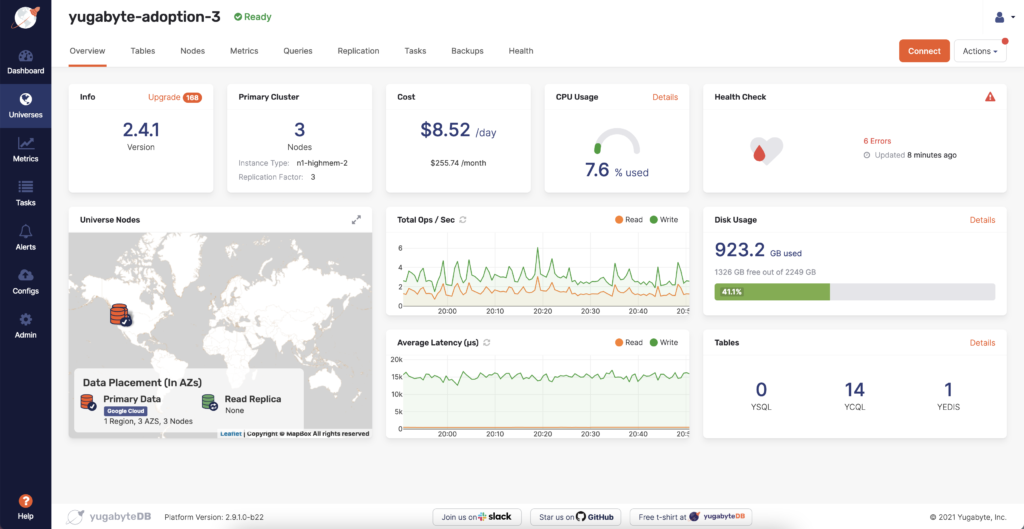
That’s why we’re excited to partner with Yugabyte and lead the company’s $188 million Series C. YugabyteDB is a cloud native, open source, distributed SQL database serving the immediate market need for a high performance geo-distributed relational database that can run on any cloud or on-prem virtual or Kubernetes environment. Founded by the early engineers of the Apache Cassandra project who helped scale Facebook’s platforms from 30 million to 1.4 billion users, Yugabyte’s database is an exceptional technology with a founding team we are thrilled to back. 

A Database Built for the Cloud’s Largest Applications

As more and more organizations rely on the cloud, they have found that legacy relational databases are behind on some of the most critical applications. As such, they are difficult to scale, inefficient and ultimately, ineffective. In other words, original SQL databases like Oracle, PostgreSQL and MySQL–while tried-and-true–are monolithic. Running cloud native applications on them requires significant overhead with unbearable latency.

Yugabyte provides companies a new, up-to-date approach with its distributed transactional SQL database. Its single logical database is deployed across multiple physical nodes (servers) with automatic data sharding and replication –all of which allow it to deliver elastic scale and high resilience. Distributed SQL databases, such as Yugabyte’s, actively manage data across multiple cloud providers as part of a cohesive application and data management strategy, relying on the foundation of multi-cloud capabilities, but adding the ability to access and use data across clouds in an operational context. YugabyteDB’s architecture enables high availability and horizontal scalability, working flawlessly with the heaviest and most mission critical workloads.

It’s no wonder that some of the largest corporations have chosen YugabyteDB for their most essential services. For example, a top retailer turned to Yugabye to help scale product mappings during peak retail season. Kroger leveraged YugabyteDB to build their next generation cloud native customer experience for their shopping cart, inventory and item pricing services And Xignite has been able to deliver financial data to more than 700 financial and fintech customers thanks to YugabyteDB.

On top of all of this, YugabyteDB is API compatible with both Apache Cassandra and PostgreSQL by reusing PostgreSQL’s query layer to achieve a high degree of compatibility with existing PostgreSQL applications or those that can be migrated to PostgreSQL. Given the high level of PostgreSQL developer mindshare, this means that developers can be productive immediately and experience zero friction as they transition to YugabyteDB.

Rockstar Founders with a Long Sapphire History 

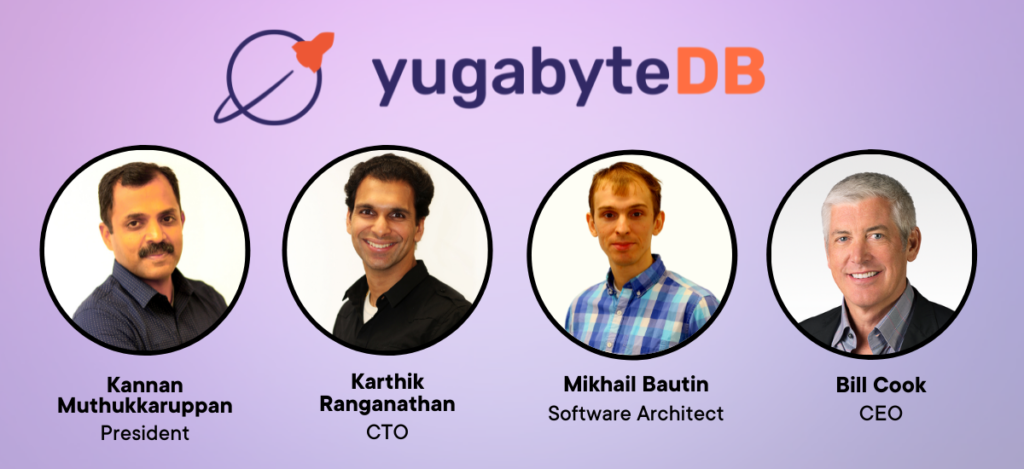
Yugabyte’s co-founders, Kannan Muthukkaruppan (President), Karthik Ranganathan (CTO), and Mikhail Bautin (Software Architect), are incredibly talented, and known database builders who met at Facebook in 2007. At Facebook, Muthukkaruppan and Ranganathan were early engineers on the Apache Cassandra project, and Ranganathan is credited for naming the open-source NoSQL database. Furthermore, the trio are creators and committers of Apache Cassandra and HBase. They also ran Facebook’s DBaaS at scale, achieving +1 trillion ops per day and 100 Petabytes. To add, they scaled data platforms at Facebook from 30 million to 1.4 billion users.

To help build GTM and scale commercial operations, Bill Cook, former Greenplum CEO and Pivotal President, joined Yugabyte as CEO in May 2020.  He is a known and steady hand and has an extensive history with Sapphire from when we backed Greenplum prior to an acquisition by EMC. We are looking forward to once again partnering with Bill, and investing in such an experienced and capable management team.

A Two-Pronged GTM Approach in a Massive TAM Opportunity 

IDC estimates that the aggregate database market was worth $49.3B in 2019 and will be worth $73.9B in 2024. Given the size of database budgets, the market is capable of generating tremendous outcomes including companies like MongoDB and Snowflake (a Sapphire investment at IPO).

Not only is Yugabyte executing well against its top-down GTM approach (selling to F500 companies), but it is also building a bottom-up developer-focused approach with their recently announced Yugabyte Cloud. Yugabyte Cloud promises to unlock the power of “any”–allowing organizations to run any app in the cloud at any scale, anywhere and accessible at any time. This fully managed offering delivers the power of distributed SQL with the ease of use of a cloud database service, enabling developers to create and connect to an infinitely scalable, resilient Postgres and Cassandra compatible database in minutes with zero operational overhead. Yugabyte Cloud allows the company to capitalize on its strong open source momentum with over 4.3K Slack users, 5.5k GitHub stars and 220 contributors.

We think that Yugabyte’s open source roots combined with their world class enterprise GTM chops create a compelling investment opportunity.

Over the years, Sapphire has invested in enduring data-focused companies like MySQL (Oracle), Greenplum (Pivotal), Alteryx, Looker (Google), Sumo Logic (NASDAQ: SUMO), and Segment (Twilio), as well as current portfolio companies Dremio, Privacera, InfluxData, DataRobot, Matillion, Alation, and Thoughtspot. Yugabyte is the latest addition to this list as we hope to help build Yugabyte into a company of consequence.