Every major platform shift in AI has created the need for new, foundational infrastructure. Baseten (a Sapphire portfolio company), Fireworks and Together AI emerged as the serving layer for language models as the category hit commercial inflection.
Media is now hitting the same inflection, but it is splitting into 2 distinct workload types. The first is familiar, a prompt goes in, a finished image or video comes out. The second is genuinely new. Videos and worlds that aren’t rendered and returned, but instead generated as they’re experienced, frame by frame, and shaped by every action the user takes.
This kind of media never returns a finished file. It runs live.
World models are the clearest expression of this shift. Where a video model produces a one-time, passive output, a world model produces a live, interactive simulation. These models are learned physics engines. By observing billions of examples, they internalize the underlying patterns, coming to understand that fires spread, water splashes and metal dents when struck. Users act inside the environment and the model responds frame by frame, in real time. The same demands are surfacing across real-time video, gaming and digital humans alike. Google, OpenAI and NVIDIA, among others, are all investing meaningfully alongside a fast-emerging cohort of startups.
But the infrastructure to run these models in production has not kept pace. Batch and real-time are fundamentally different architectures. Real-time requires stateful bidirectional streaming, persistent session state and geographic routing, all within latency constraints measured in milliseconds. That serving layer remains nascent and deeply underserved.
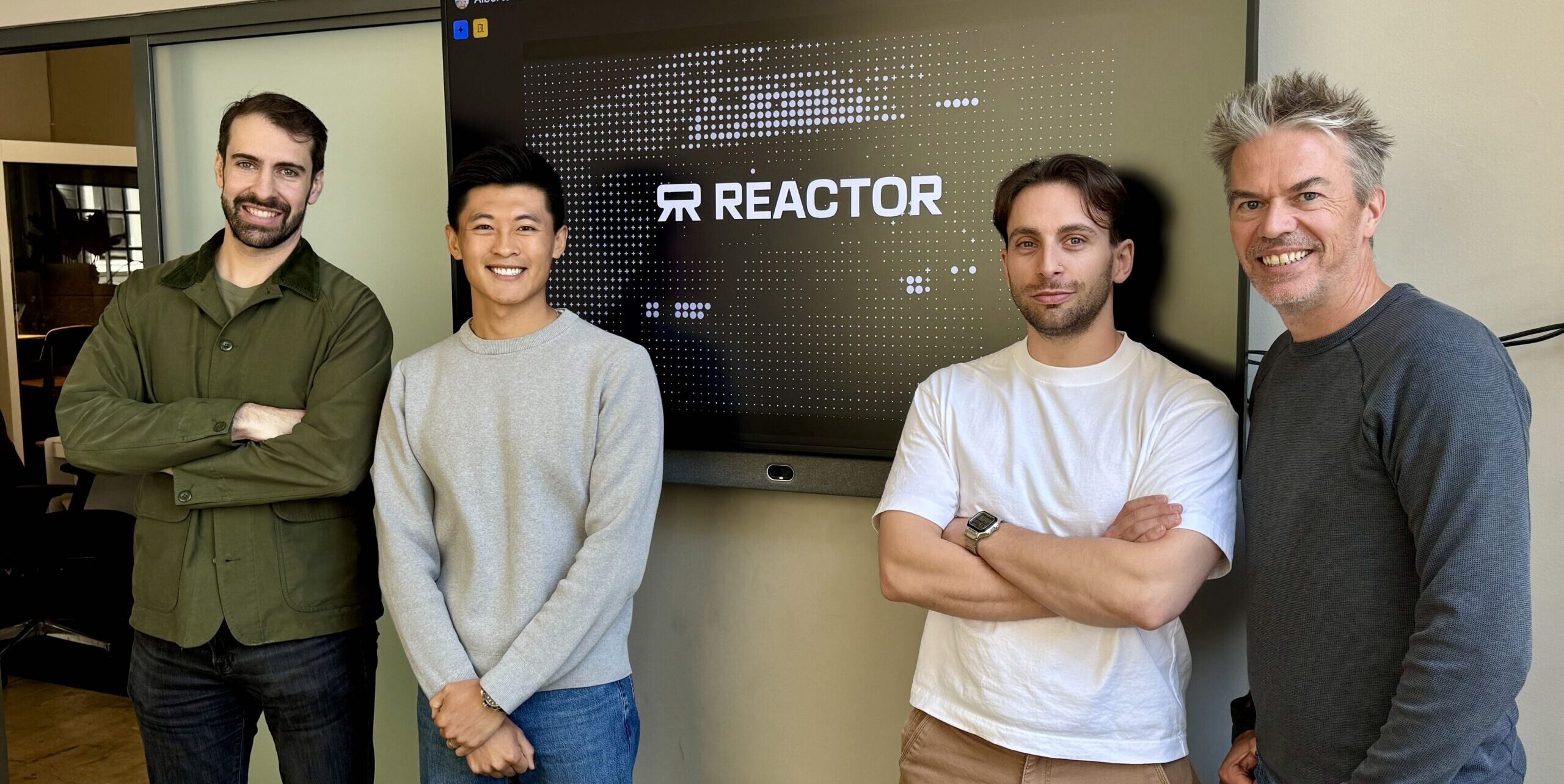
Reactor was founded in 2025 to close this gap. The platform is purpose-built to serve world models and real-time video inference in production and we at Sapphire are thrilled to partner with the team, alongside NVIDIA, as they enter their next stage of growth.
The Real-Time Serving Gap
Serving a model that runs live is a different engineering problem at every layer. A batch platform is done once the output is returned, so requests can sit in a queue, run wherever capacity is available and take a few seconds without consequence. A live session does not allow for that. The model has to hold the full context of an interaction for as long as a user stays inside it, streaming frames out while taking control inputs in over that same connection. And it has to do this fast, under 50 milliseconds, against an industry average above 400. Users have to be routed to GPUs physically near them, because latency across distance cannot be engineered away, and when a connection drops mid-session, the world has to be exactly where the user left it.
The demand compounds from there. A video model runs once per output, while a world model runs continuously for every second of every session, so inference grows with engagement itself rather than the number of requests. Every minute a user spends inside a world model is a minute of live GPU compute, which means serving captures the category’s growth no matter which models or use cases win.
Picks & Shovels for the World Model Ecosystem
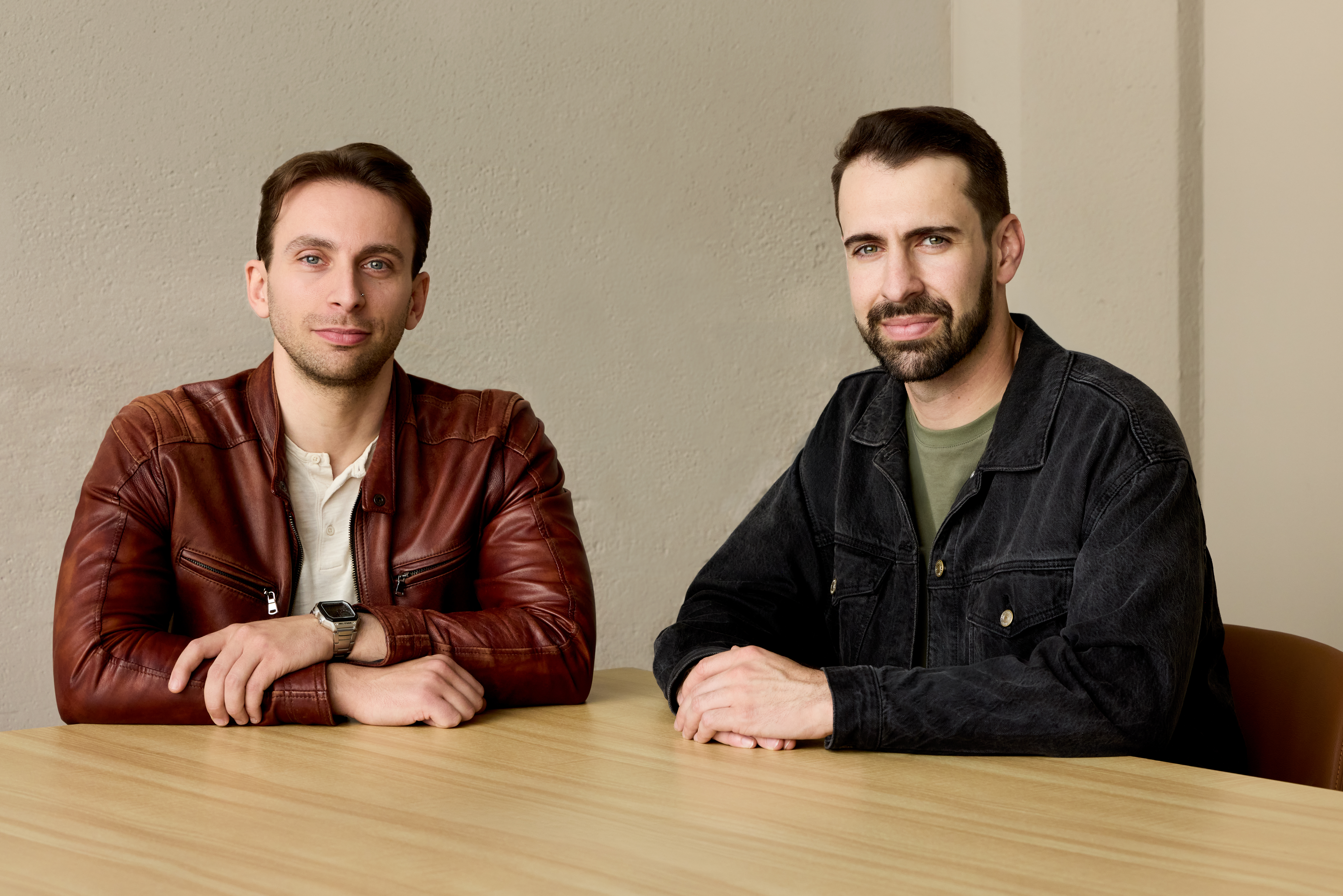
Reactor’s co-founders, Alberto Taiuti and Bryce Schmidtchen, ran into the infrastructure gap first-hand. In July 2025, the two built the first live world model demo on Alibaba’s Matrix-Game model and came away convinced that running one in production would require an entirely different infrastructure stack than anything the AI industry had built to date. So they set out to build it. Reactor is a picks-and-shovels layer that sits beneath the world model ecosystem and serves the labs building in the category, regardless of which architecture they choose.
Reactor is already seeing commercial traction for its platform. Overworld, a real-time diffusion world model platform for gaming, is the company’s first paying production customer. Visko.ai and Moonlake.ai are both live in production on the platform too. On compute, Reactor has locked in hundreds of top-tier NVIDIA chips through AWS and Nebius, with deployments live or coming online across the US, Europe, Japan and Korea.
The opportunity extends well beyond world models. Real-time inference touches entertainment, interactive gaming, advertising and many other use cases still forming. It reaches into robotics too, where physical intelligence models are outgrowing on-device compute and the model brain increasingly needs to stream sensor input and control signals through the cloud in real time. That is technically the same problem Reactor solves today, and each of these markets, while still taking shape, converges on the serving layer Reactor has already built.
A Conviction in Founders Who’ve Lived The Problem
When we met Alberto and Bryce, the founder-market fit was immediately obvious. The two met on the early Apple Vision Pro team, where they worked together on video models and real-time infrastructure and both served as technical leads on the product. Alberto, Reactor’s CEO, went on to co-found Luma AI as CTO, building the systems that brought generative image and video to creators at scale. Bryce, Reactor’s CTO, stayed deep in the stack, spending years on kernel optimization and computer vision for AR/VR across seven years at Apple, and holds 15+ patents in real-time AI and spatial computing. Between them, they cover both halves of world model serving, generative media at production scale and the low-level engineering that makes real-time systems feel instant, and few teams anywhere combine both.
In only just a couple of years, the duo has executed at an incredible pace, scaling quickly and attracting senior engineers from Replicate, Netflix, Epic Games and Apple, the companies that built the closest analogues to this problem.
Alberto and Bryce remind us of the founders we’ve backed at Temporal, LangChain and Baseten, deeply technical builders who understood a hard infrastructure problem before the rest of the market and moved first. At Sapphire, we pride ourselves on partnering with Enterprise AI founders building Companies of Consequence, and we believe the infrastructure layer beneath a new category is one of the most durable and valuable places to build. Reactor is that layer for real-time inference, and we could not be more excited to work alongside Alberto, Bryce and the entire team as the category takes shape.
If you’re interested in learning more about Reactor or exploring open roles, you can find more information here.
Key Takeaways:
- Reactor is partnering with Sapphire Ventures, alongside NVIDIA, as the company enters its next stage of growth.
- World models require continuous, frame-by-frame inference rather than a single returned file, demanding stateful, low-latency, bidirectional streaming under 50 milliseconds. Reactor built a serving layer specifically for this workload, rather than repurposing batch infrastructure.
- Reactor customers include Overworld, Visko.ai and Moonlake.ai, with compute secured through AWS and Nebius across the US, Europe, Japan and Korea.
- The founder-market fit was immediately obvious when we met Co-founders Alberto Taiuti (CEO) and Bryce Schmidtchen (CTO). Alberto and Bryce met on Apple’s early Vision Pro team. They cover both halves of world model serving, generative media at production scale and the low-level engineering that makes real-time systems feel instant, and few teams anywhere combine both.
Legal disclaimer
This article is for informational purposes only. Nothing presented within this article is intended to constitute investment advice, and under no circumstances should any information provided herein be used or considered as an offer to sell or a solicitation of an offer to buy an interest in any investment fund managed by Sapphire. Information provided reflects Sapphires’ views as of a time, whereby such views are subject to change at any point and Sapphire shall not be obligated to provide notice of any change. Companies mentioned in this article are a representative sample of portfolio companies in which Sapphire has invested in which the author believes such companies fit the objective criteria stated in commentary, which do not reflect all investments made by Sapphire. A complete alphabetical list of investments made by Sapphire’s Growth strategy is available here. No assumptions should be made that investments listed above were or will be profitable. Due to various risks and uncertainties, actual events, results or the actual experience may differ materially from those reflected or contemplated in these statements. Nothing contained in this article may be relied upon as a guarantee or assurance as to the future success of any particular company. Past performance is not indicative of future results.