Bringing a new medicine to patients takes 10 to 15 years and well over a billion dollars. Pharma is one of the most valuable industries in the world, yet the long timelines persist. AI is starting to change that, reaching biology that was previously inaccessible. We believe AI will fundamentally reshape how medicines are discovered, making drug discovery one of its most consequential applications, and Chai is leading the way.
Chai builds frontier AI models that find better molecules faster, giving pharma teams the potential to design new medicines from scratch instead of screening a limited set of candidates. In just two years, Chai has gone from an open-source model the field rallied around to a commercial platform backed by a founding team that understands both AI and biology. For these reasons and more, we are proud to partner with Chai Discovery and participate in its $400M Series C.
We believe AI-enabled drug discovery is one of AI’s largest and most consequential opportunities, and that Chai Discovery is at the forefront.
How Chai Designs Medicines From Scratch
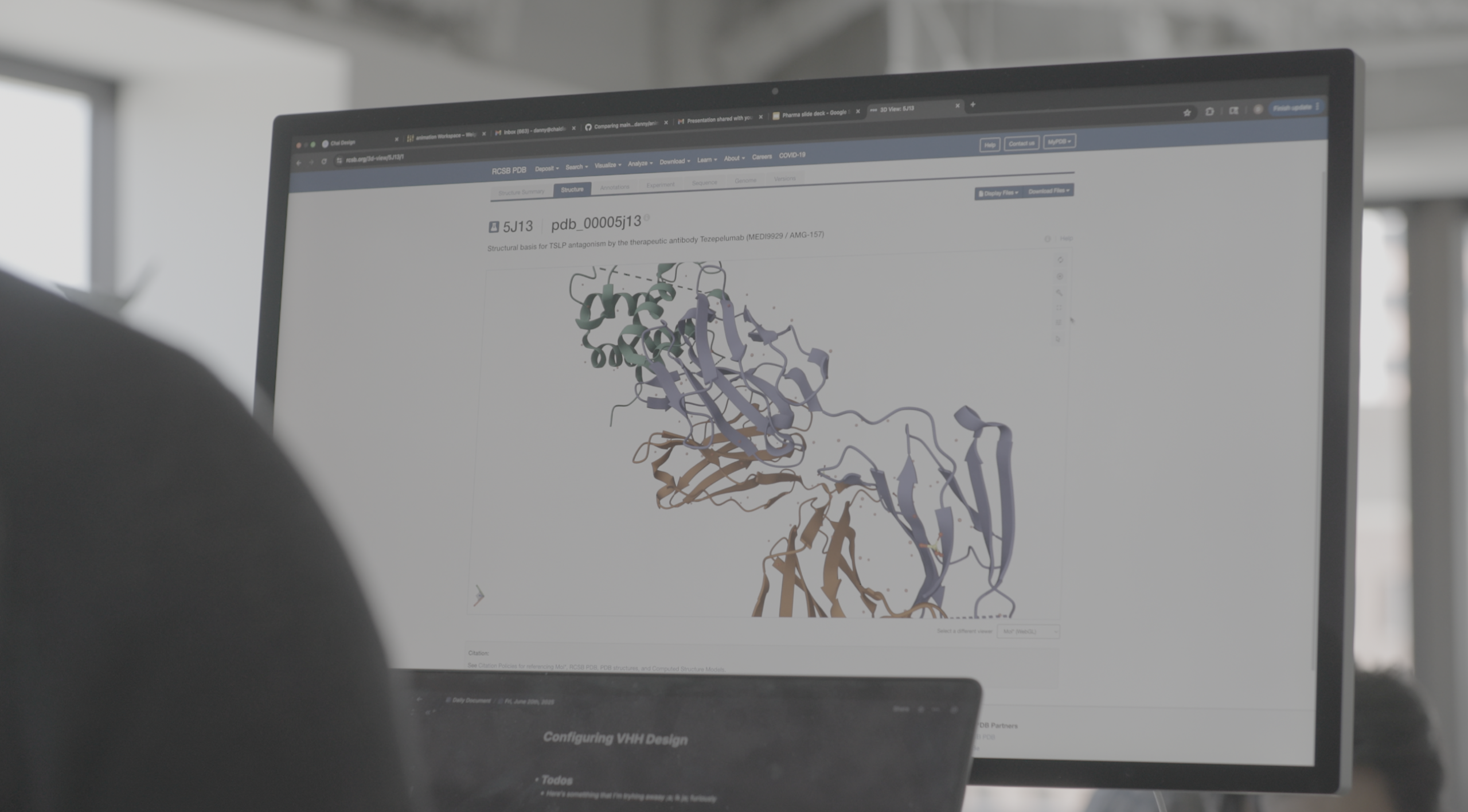
Many diseases come down to a protein misbehaving. For example, some drugs attach to a protein to stop it, like a key fitting a lock. There are roughly 20,000 protein-coding genes in the human genome, but only several hundred have an approved drug that targets them today. Finding the right key, especially for challenging targets, can be difficult, yet is a foundational step. Everything after depends on getting it right.
Some traditional computational tools rank candidates from a library you already have, so if the right molecule was never in the library, you never find it. In contrast, given only a target protein, Chai’s models generate entirely new antibody candidates from scratch, a technique known as zero-shot, or de novo, design: no existing library, no target-specific examples, just a blank page. The result is access to classes of biology that were previously out of reach.
Traditional tools rank the candidate molecules you give them. Chai finds the ones you’d never have thought to try.
We believe the performance speaks for itself. Chai’s latest model, Chai-3, produces antibodies that in about half of cases bind their targets with therapeutic affinities, roughly doubling the target success rate of its predecessor, Chai-2. Chai-2 was the first zero-shot platform to reach double-digit experimental hit rates in de novo antibody design, a 100x improvement over prior methods that hovered near 0.1%, cutting discovery time from months or more to weeks.
Some of the largest pharma companies in the world are already on board. In January 2026, Chai announced a partnership with Eli Lilly, one of the world’s most valuable drugmakers, to design novel therapeutics with its models. Chai has since signed major collaborations, including with Pfizer and Novartis.
Trust in drug discovery is earned one validated result at a time, and that’s finally starting to happen at scale.
Why Antibody Design is Only the Beginning for Chai
The market Chai touches is enormous. The top 20 pharma companies alone spent ~$190 billion on R&D in 20241, and Chai plays at an early and consequential layer of that spend, where a wrong decision can make everything downstream irrelevant. Whoever wins that layer sits at the centre of how the whole industry operates.
This is the layer Chai occupies, and its ambition reaches beyond any single drug. It’s not a point solution. But rather a shift in how the industry finds medicines in the first place, the same kind of leap chip design made when it moved off the lab bench and onto the computer and rebuilt an entire industry around a handful of platform companies.
The human stakes are hard to overstate. A single new medicine can reach millions of people, and the drugs for diseases still out of reach are often the ones the world needs most.
The competitive edge in pharma is moving underneath the pipeline itself, to the design platform used to build it.
The Founding Team Pushing the Frontier of Drug Discovery
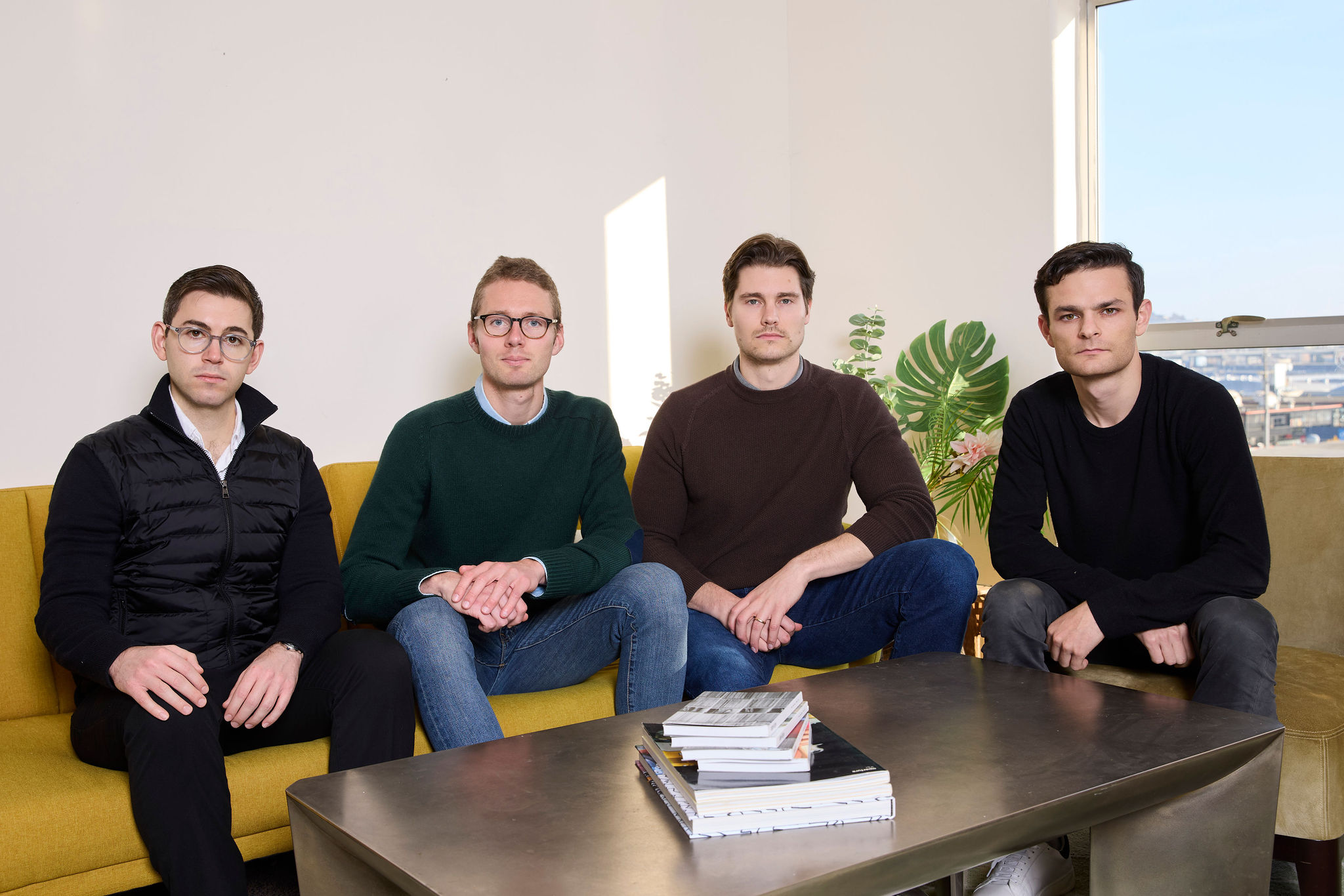
Chai Discovery Co-founders. From left to right: Joshua Meier, Jacques Boitreaud, Matthew McPartlon, Jack Dent.
Winning in AI drug discovery takes a rare combination of frontier AI research, deep biology, and the product and commercial instincts needed to earn the trust of pharmaceutical companies. We believe Chai’s founders have them all.
Joshua, Co-founder and CEO, spent his career becoming fluent in AI and biology, training in Harvard’s Feng Zhang genome-editing lab, then at OpenAI, where he became convinced language-model techniques could unlock the “language of biology.” He co-authored foundational AI-biology work at Meta, co-creating ESM-1, the first transformer-based protein language model, and later served as Chief AI Officer at Absci.
Jack, Co-founder and President, who met Josh on day one of Harvard CS, brings the product and commercial instincts pure research teams often lack, sharpened while leading flagship products at Stripe. Together with co-founders Matthew McPartlon, who worked alongside Josh at Absci on antibody modeling, and Jacques Boitreaud, who led AI at Aqemia, they’ve built a team pairing frontier AI pedigree with PhD-level computational biology training.
When we first sat down with Josh and Jack in August 2025, months before Chai had started commercializing, we were blown away by their vision to change what medicine could do for humanity.
Chai’s culture is a rare combination of technical depth, ambition and relentless energy, and that impression grew stronger as we got to know the team. Customers love working with Chai, praising not only the product, but the team’s speed, thoughtfulness and commitment to solving hard problems.
Josh and Jack remind us of the founders behind some of our portfolio companies, including Baseten, Clay, Cyera, Elise AI, Gamma, Glean, LangChain, and Temporal. Each spotted a category before it had a name and built the company that came to define it. We believe Chai is doing the same for drug discovery, and we are proud to partner.
If you want to learn more about Chai Discovery or explore open roles, you can find more here.
Key Takeaways:
- Chai Discovery raised a $400M Series C, with Sapphire Ventures participating in the round.
- Chai’s AI models design new antibodies from scratch, rather than searching an existing library.
- Chai’s latest model, Chai-3, binds targets with therapeutic affinities, roughly doubling the target success rate of its predecessor, Chai-2, and cutting discovery time from months to weeks.
- Chai already partners with global pharmaceutical organizations, including Eli Lilly, Pfizer, and Novartis.
- Chai’s work carries real human stakes. A single new medicine can reach millions of people, and by unlocking biology previously out of reach, Chai has the potential to help address diseases that still lack sufficiently effective treatments.
- Sapphire’s conviction is rooted in the Chai team. Co-founders Joshua Meier (CEO) and Jack Dent (President), with Matthew McPartlon and Jacques Boitreaud, pair frontier AI pedigree with commercial instincts. That belief took hold in August 2025, in a first meeting with the team months before Chai began commercializing.
Legal disclaimer
1 IQVIA Institute for Human Data Science. Global Trends in R&D 2025: Progress in Recapturing Momentum in Biopharma Innovation. IQVIA, Mar. 2025, makingpharmaindustry.it/wp-content/uploads/2025/03/iqvia-institute-rd-trends-2025-forweb.pdf.
This article is for informational purposes only. Nothing presented within this article is intended to constitute investment advice, and under no circumstances should any information provided herein be used or considered as an offer to sell or a solicitation of an offer to buy an interest in any investment fund managed by Sapphire. Information provided reflects Sapphires’ views as of a time, whereby such views are subject to change at any point and Sapphire shall not be obligated to provide notice of any change. Companies mentioned in this article are a representative sample of portfolio companies in which Sapphire has invested in which the author believes such companies fit the objective criteria stated in commentary, which do not reflect all investments made by Sapphire. A complete alphabetical list of investments made by Sapphire’s Growth strategy is available here. No assumptions should be made that investments listed above were or will be profitable. Due to various risks and uncertainties, actual events, results or the actual experience may differ materially from those reflected or contemplated in these statements. Nothing contained in this article may be relied upon as a guarantee or assurance as to the future success of any particular company. Past performance is not indicative of future results.